
This year will be the first true AI-powered Black Friday. Driven by AI shopping assistants, agents, and new methods of search and discovery.
Shoppers will be expecting AI to handle the heavy lifting, from product research, alerts, and price checks. The brands that have optimized and appear in these results or actions will be the ones that profit.
The stakes are high. If AI doesn’t show your offer, you don’t get the sale. Competition for that visibility is already intense. Last year, there was a 1,300% jump in traffic to retailers from generative AI chat during the holiday season, and one in three U.S. consumers say they’ll use AI to shop this year (source).
Buyer behavior is moving faster than most brands can keep up.
Here are ten ways AI will impact Black Friday.
| AI Impact | Impact on Shopper Experience | Impact for Brands |
|---|---|---|
| AI Shopping Assistants | Shoppers find, compare, and decide inside one conversation, so fewer products reach the shortlist. | Recommendation ranking becomes more important than classic search position. |
| AI Models for Planning & Buying | People use ChatGPT, Perplexity, and Claude to research, summarize reviews, and plan purchases in advance. | More buyers arrive with AI-informed decisions, shifting which deals gain traction first. |
| AI Personalization | Recommendations, emails, and landing pages adapt to each user’s context, reducing noise and guesswork. | Higher intent and conversion, while generic offers feel dated beside individualized experiences. |
| Retail Media + AI | Targeting and creative adjust in real time as demand and inventory shift during the event. | More efficient spend and faster performance lift as bids and creatives adapt. |
| AI Customer Service | Chatbots deliver instant, contextual help using conversation history and orders. | Quicker recovery and stronger retention when issues appear at peak volume. |
| Dynamic AI Pricing | Prices adjust with demand and stock, surfacing timely deals without endless hunting. | Margin protection and smarter short-window discounts as pricing responds live. |
| AI Demand Forecasting | Fewer stockouts, better substitutes, and faster fulfillment during peak windows. | Inventory flow matches demand, reducing stranded stock and emergency markdowns. |
| Fraud & Bot Defense | Cleaner checkout with fewer false declines and less scalping friction. | Revenue and reputation protected as threats are blocked quickly. |
| Visual & Multimodal Search | Image and mixed-input discovery finds closer matches than keywords alone. | Image quality and visual metadata decide discoverability when traffic surges. |
| Compounded Influence | AI touches every step, so choices feel faster and clearer. | Influence stacks across touchpoints, reshaping how attention and spend concentrate. |
AI Shopping Assistants Will Change Black Friday Discovery
AI shopping assistants are moving into the center of e-commerce. They act like digital assistants, listening to what a shopper wants, comparing products instantly, and finding the best deals in one conversation. For Black Friday, that means millions may end up automating their search and discovery process.
AI adoption across the buyer journey is already happening.
Klarna’s AI now handles two-thirds of customer chats and is expanding into product discovery, with 30 million users in its first year (source). Amazon launched Rufus to answer natural language questions and recommend products directly in its app. Shopify rolled out Sidekick, giving merchants an assistant they can deploy at checkout.
Assistants compress the buyer journey. Instead of multiple searches and comparisons, discovery happens in one step. Intent is stronger when a shopper sees your product, but competition is tighter, because only a few options are shown.
If assistants become the first stop for consumers, brands must send the right signals.
That means ecommerce sites must optimize their catalogs and feeds, structure product data clearly (schema, attributes, stock status), and maintain consistency across channels.
Those brands that optimize their infrastructure for AI will improve recommendation and discovery.
More Shoppers Will Use AI To Plan And Buy
Instead of sifting through Google results, deal pages, and product sites, shoppers are relying on AI tools like ChatGPT, Gemini, or Perplexity. So much so that nearly 60% now bring AI into their shopping journey, with many trusting its recommendations as much as friends (source).
They can ask a model to summarize reviews, compare prices, or find the strongest offers in seconds. That convenience doesn’t just speed up research, it moves buying intent earlier in the funnel. This results in discovery starting before most brands even launch their campaigns.
Aside from AI tools, a growing number of ecommerce apps now include ‘Ask AI’ chat or search overlays that let users ask for suggestions driven by AI. Behind the scenes, these features pull from live inventory, pricing, and user behavior models. Others use guided conversations that walk shoppers through ‘What features matter to you?’ before showing filtered results.
In some pilot programs, retailers are also letting AI adjust a shopper’s live collection or cart, nudging bundle ideas, suggesting add-ons, and updating options when new deals drop nearby in time or stock. For Black Friday, that could mean shoppers won’t leave the brand’s domain to decide.
If shoppers are building AI wishlists or purchase plans, early positioning becomes everything. Deals inside AI engines will capture intent before the rush begins. That puts pressure on brands to optimize their data, pricing, and content for AI.
Instead of competing for clicks in real time, this year brands will compete for awareness and inclusion in AI. For marketers, Black Friday won’t just happen on a dedicated sales page. It’ll happen inside the model.
Buyers Will Experience Targeted Personalization
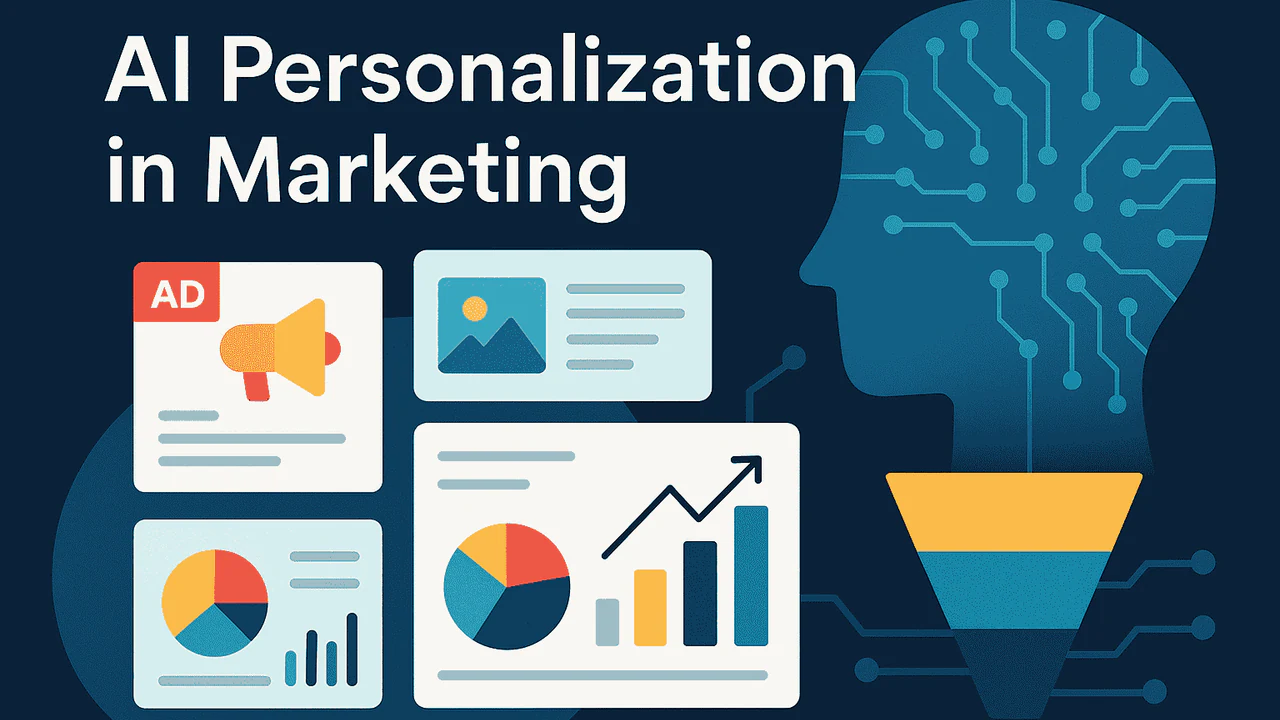
AI has changed what’s possible with personalization in marketing and this year it will be implemented heavily.
Black Friday shoppers won’t just see sitewide promos or static banners. They’ll see dynamic offers, emails, and landing pages built around their behavior, past purchases, and live activity.
AI-driven product recommendations already account for over a third of online sales, and those personalized interactions deliver conversion rates up to 4× higher than generic ones (source).
Brands using AI for content and offer personalization report faster engagement and stronger repeat purchase intent. An edge that’s needed with the chaos of Black Friday promotions.
This personalization might be noticeable in three ways:
- Product recommendations will improve: AI will skip the basic ‘also bought’ logic. It will read browsing patterns, linger time, and filters to show alternatives or bundles that fit individual behavior. The result is higher precision and more relevance.
- Messages will match context: Email flows and notifications will align with what shoppers browse or abandon. Timing, urgency, and bundle offers will adjust per user. Generic campaigns will feel outdated next to AI personalization.
- Pages will adapt live: Two shoppers can land on the same homepage and see different deals. One might get ‘Wireless earbuds under $100,’ another ‘Gaming chair offers you viewed last week.’ AI modules will change banners, tiles, and layouts as data updates.
The one-size-fits-all dedicated page will start to change. Buyers will expect experiences that feel built for them.
Brands that meet that expectation will capture higher conversions and repeat visits when it counts most.
Retail Media Performance Will Change
Global retail media spend is expected to pass $175B in 2025, up nearly 13.7% year over year (source). Now, retail networks are using AI models to predict demand, personalize placements, and automate creative. This impacts how retail media operates, from how ads are placed to how budgets move across campaigns.
According to one report, 46% of marketers are using AI for automated bidding and optimization this year. This Black Friday, AI is going to be the advantage over the competition, where a few minutes of delay can mean missing entire windows of opportunity.
Here’s where AI will drive the biggest change this Black Friday.
- Real-time bidding and budget shifts: AI can detect which products or regions increase in real time and allocate spend instantly.
- Creative optimization at scale: Static ads will lose ground. AI can cycle images, headlines, and CTA’s in seconds, learning which version pulls the highest click-to-cart ratio throughout the day.
- Precision targeting and personalization: Individual signals like past purchases, browsing behavior, and intent decide what message or offer a shopper sees.
- Clearer attribution and measurement: AI models now link exposure to conversion with better accuracy, closing attribution gaps and clarifying lift.
- Agentic retail media: Ads are starting to compete for the attention of AI agents. Brands will need to consider how their offers appear to shopping assistants and recommendation systems.
AI Customer Service Will Drive Retention
On Black Friday, speed and accuracy matter as much as discounts. Shoppers expect instant help. AI-driven customer service will be one of the strongest points of retention going forward.
AI chatbots now handle the bulk of support tasks, with about 67% of consumers using a chatbot for help in the past year (source). Modern bots have been noted to be able to resolve up to 80% of standard queries (source). That kind of scale becomes essential when looking at Black Friday strategies.
AI bots shorten wait times, deliver consistent answers, and free human capital for complex issues, all of which improve satisfaction and loyalty. Bots are also able to remember context and user history, which improves engagement intent. Customers are also 2.4× more likely to stick with a brand when problems are resolved quickly (source).
Here’s how that plays out this Black Friday.
- Faster recovery from issues: AI can detect delivery problems or mismatched orders instantly and guide fixes before frustration builds. Resolution speed becomes part of the customer experience.
- Consistent, complete conversations: With most AI systems resolving full interactions, shoppers won’t bounce between a bot and an agent. Keeping experiences smooth when pressure peaks.
- Context-aware personalization: AI service tools can recognize past orders, browsing activity, and viewed deals. They can offer replacements or discounts live when stock runs out or pricing changes.
- Proactive retention follow-up: AI can flag customers with poor experiences and trigger recovery offers or loyalty credits before churn happens.
Dynamic AI Pricing Will Push Black Friday Offers
Instead of fixed discounts, algorithms now adjust prices by the hour, reacting to demand, competitor moves, and stock levels. That dynamic focus will decide which brands stay profitable while others burn margin to keep up.
Retailers already using AI for pricing report strong results. In one case study, rolling out a real-time pricing model drove a 15% revenue increase over one month (source). Connected tools also sync pricing engines with promotion systems, allowing instant changes instead of waiting for manual clearance cycles.
For shoppers, this introduces more opportunity for deals; a product that’s $89 at noon might be $92 by evening if inventory tightens or $50 if nothing moves.
Here’s what you might see this Black Friday:
- Flash-discount windows; AI can launch short, targeted promotions based on live traffic or stock signals. Ten-minute deals on selected products build urgency without margin loss.
- Contextual price shifts: Prices can adapt by region, stock level, or competitor moves. A product could drop locally if a rival pushes it hard, while holding steady elsewhere.
- Margin protection under pressure: AI can scale back discounts through traffic spikes or low supply, preserving profit while keeping offers competitive.
- Smart bundle and variant pricing: AI can test bundles, add-ons, and variants in real time, finding the combination that converts best. Popular variants could have smaller discounts while slower ones could have bigger cuts.
- Coordinated pricing and advertising: AI can sync promotions with ad spend, deciding when to pair a price drop with paid media. Algorithms can learn to coordinate pricing and promotion to maximize return under high search costs.
AI Forecasting Will Tighten Inventory Control
AI isn’t just changing how products sell, it’s changing how they move. Smarter forecasting and inventory control will be one of the biggest behind-the-scenes impacts for Black Friday this year.
Traditional forecasting relied on past sales and seasonal averages. AI pulls from live inputs like on-site traffic, regional search trends, marketing calendars, and even social conversation. That allows systems to adjust dynamically as signals change.
When a product suddenly surges in one region or gets featured in a viral TikTok video, AI forecasting can flag it, reroute inventory, and update delivery windows before it becomes a problem.
For Black Friday. brands that align demand forecasting with marketing and pricing data will know exactly when to push an offer or hold it back. Those still relying on static inventory models will end up with either no stock or warehouses full of products.
Here’s what AI could do with inventory:
- Sharper allocation: AI can detect demand increases by region or SKU and redirect stock before shortages hit. Retailers like Walmart and Target already use it to spot gaps and move inventory within hours (source).
- Smarter substitutions: When a product sells out, AI can recommend close alternatives or direct shoppers to better variants. That keeps carts full and prevents drop-offs.
- Lower inventory risk: AI reads live signals like social trends, price changes, even weather to balance supply before problems spread. Fewer overstocks and fewer items sold out.
- Precision forecasting: Forecasts can now adjust hourly by product, size, and region. The result is improved stock, fewer buffers, and tighter margins.
AI Fraud Is Likely To Surge On Black Friday
Fraud isn’t slowing down, it’s getting smarter. The same AI tools that improve the buyer experience are also out to scale attacks, hide activity, and exploit trust. Buyers and retailers should be aware and take necessary precautions.
Radware reports that during the 2024 holiday season, nearly 31% of shopping traffic came from malicious bots, and bots made up 57% of all e-commerce visits overall (source). Mobile-focused attacks more than doubled year over year. Sift adds that AI-driven scams, deepfakes, fake identities, and personalized phishing are also on the increase.
Here’s what to expect this Black Friday.
- Smarter evasion: Bots will act like people, adding pauses, mouse moves, and realistic session patterns to dodge filters and IP blocks.
- Account takeovers: Login surges create cover for stolen credentials. Account takeover attempts tripled right before Black Friday last year.
- Price scraping and data theft: Competitors and fraud rings will scrape prices, SKUs, and stock updates.
- Ad and click fraud: Fake clicks take spend and skew analytics. Roughly 5% of clicks in 2024 were fraudulent, costing brands billions (source).
- Fake identities and deepfakes: AI now generates realistic customer profiles and payment data, making detection harder.
- Refund and return abuse: Hacked accounts will trigger fake returns and credit claims, hiding behind peak-volume chaos.
- System overload: Mass bot attacks flood systems, causing false alerts and delayed response times.
Visual & Multimodal Search Will Change Discovery
Shoppers can now upload an image of a product or combine text and visuals to describe what they want. Visual searches jumped 70% year over year, and Google now processes more than 20 billion Lens searches a month, with 4 billion tied directly to shopping (source). Visual input is quickly becoming a normal way to buy.
That changes how products get found and how brands are going to get visibility during Black Friday.
For example, a consumer could upload a photo of a jacket, a screenshot of a living room, or a mix of text like ‘something similar but cheaper.’ It’s discovery through context, not syntax. Brands need to optimize for this by focusing on visual quality, accurate metadata, and consistent product tagging.
Here’s how that impacts this season.
- Discovery starts with inspiration: Shoppers might spot a jacket in a photo and use their camera to find that exact item or similar ones. Search no longer starts with text.
- Images will decide what ranks: Clean, high-quality photos with clear angles and color accuracy will show more often. Visual metadata is very important.
- Multimodal queries: A shopper can upload a photo of a lamp and say ‘vintage style,’ or show a scarf and ask for ‘lighter fabric.’ These prompts help AI narrow results fast through thousands of deals.
- Shopping becomes interactive: Tools like Amazon Lens Live let users point their phone at items to shop for similar ones instantly. Image appeal and context outside the product page now influence conversion.
- Returns and bounce rates drop: When visual matches are accurate, shoppers get what they expect. Meaning fewer returns and less friction on the busiest day of the year.
AI’s Impact On Black Friday Might Be Bigger Than Expected
AI already plays a huge role in the buyer journey and holiday spending. During the 2024 holiday season, AI tools and agents influenced $229 billion in global online sales. This was about 19% of all purchases, up six points from 2023 (source). But what’s changing this year is scale and visibility.
It’s more than AI quietly working behind the scenes to optimize, it’s customers interacting with it. That behavior is starting earlier, spreading wider, and influencing more final decisions than most brands are prepared for. One study projects that AI-linked sales could reach $263 billion in 2025 (source).
What that means for Black Friday:
- Assist, not replace: AI won’t make every decision for shoppers, but it will narrow their choices and speed up buying. Even a small group of AI buyers could influence spend toward brands that appear early in that journey.
- Early visibility matters: When AI highlights a product, that attention increases. A single early mention can drive far more clicks and sales than comparable products that stay hidden.
- Margin and tracking pressure: As AI directs shoppers toward lower-margin items or bundles, profit tracking gets harder. Brands will need to separate AI conversions from other traffic to see true results.
- Influence across the buying journey: AI now touches pricing, personalization, inventory, and service. Each area adds up, and together they can alter results more than any single update could.
FAQ
AI will act as a personal shopping assistant, helping buyers compare prices, find deals, and even complete purchases inside chat or voice interfaces. Instead of browsing multiple websites, many shoppers will rely on tools like ChatGPT, Amazon Rufus, and Klarna’s AI to make quick, data-driven decisions. This shift shortens the buying journey and changes how brands compete for visibility.
Adobe data suggests that over 50% of U.S. consumers plan to use generative AI for shopping tasks, up from 39% in 2024. That means AI-driven discovery and recommendations could influence more than half of all purchase decisions this season.
AI enables real-time, dynamic pricing, allowing retailers to adjust discounts by demand, inventory, and region. Brands using AI pricing tools see 10–15% higher revenue and fewer unnecessary markdowns (SuperAGI). Instead of static discounts, shoppers will encounter flash deals and adaptive bundles that change by the hour.
AI personalization means every shopper sees different offers, emails, and landing pages based on their browsing and purchase behavior. Retailers now use AI to tailor messages, timing, and product recommendations in real time — boosting engagement and conversion rates when competition peaks.
AI is making retail media smarter, optimizing which products appear in ads, who sees them, and how budgets shift during high-traffic hours. With global spend expected to hit $170 billion in 2025 (Insider Intelligence), brands that use AI to automate bidding and creative testing will outperform static campaigns.
Both. AI helps retailers detect fraud faster, but criminals are also using it to create more realistic scams, bots, and fake identities. Radware reports that 31% of holiday traffic in 2024 was malicious. Brands will need advanced AI defenses to stay protected.
AI chatbots and virtual agents will handle the majority of service requests, offering instant support when wait times spike. Systems that use context and history can resolve up to 69% of issues without human handoff, improving satisfaction and retention even during heavy traffic.
Marketers should optimize product data for AI discovery, integrate dynamic pricing tools, strengthen fraud detection, and ensure personalized experiences across channels. Most importantly, they should test how their offers appear in AI shopping assistants and retail media systems — because visibility there will decide who wins the sale.