
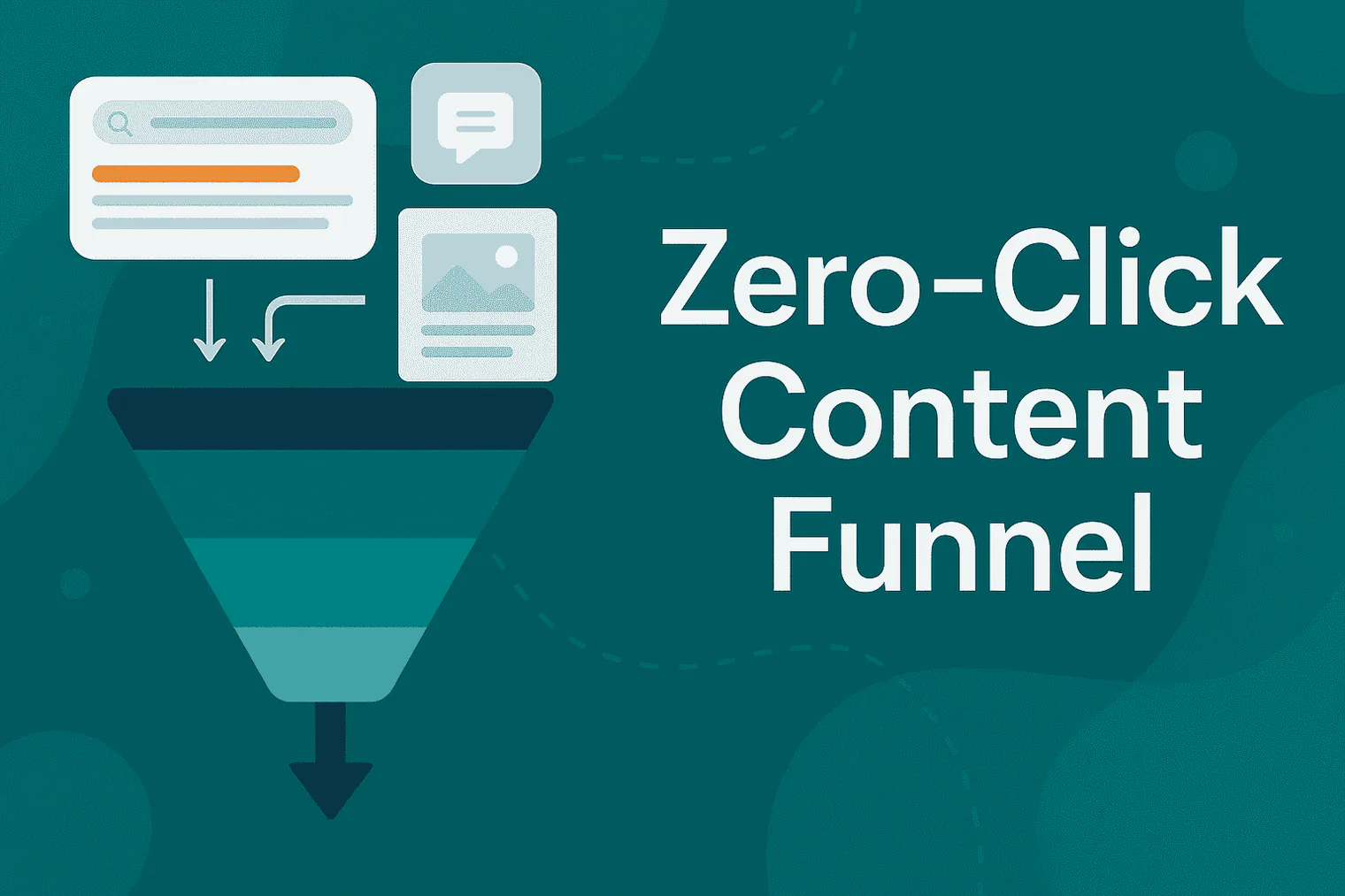
If you’re still running a funnel based on clicks, landing pages, and site sessions, stop. That model is collapsing in real time. As AI Overviews, search foundations, and social algorithms are changing, users get answers without clicking through.
According to a 2025 study, Google AI Overviews can slash CTR by up to 64% for pages not included in that summary, a clear sign that traffic isn’t coming back any time soon (source). Meanwhile, brands featured in those AI overviews may actually see higher engagement despite zero clicks.
But zero-click doesn’t mean zero impact.
At least if you have a zero‑click funnel strategy that delivers value and drives action within platforms, removing friction. Think in-app purchases, pre-filled lead gen forms, and TikTok Instant Pages, no redirects, no drop-off. For marketers, this means entire funnels, awareness, consideration, and conversion, can now live entirely inside platforms like Google AI, LinkedIn, TikTok, and Instagram.
This article lays out the zero‑click funnel blueprint: how to attract awareness with platform-native content, nurture trust through engagement and AI visibility, and capture conversions, all while keeping your audience exactly where they are.
How Have Funnels Changed from AIDA to Zero-Click?
AIDA is the original blueprint for digital funnels: Awareness > Interest > Desire > Action. It shaped how marketers thought about guiding people step-by-step toward conversion, with each stage triggered by a click deeper into brand-owned content.
Blog post to email signup. Email to landing page. Landing page to purchase. Because it’s so widely recognized, it’s the clearest reference point for showing how today’s zero-click environments break that logic.
The change starts at the top. Awareness now happens inside search engines, social media, and AI assistants, with no step onto your site.
- Search: AI Overviews, featured snippets, and People Also Ask boxes give users the answer before they ever see an organic result.
- Social: Carousels, short videos, and long‑form native posts deliver the full message in‑feed, not as a teaser for an external link.
- AI tools: ChatGPT, Perplexity, and Gemini show brand mentions or quotes directly inside their answers, an impression that doesn’t register in your analytics.
Interest and desire are no longer nurtured in long blog posts or gated PDFs. Instead, they grow through a sequence of platform‑native interactions. A TikTok tutorial might lead to a saved post. A LinkedIn carousel might trigger a follow. These are micro‑conversions, algorithm‑friendly actions that move people down the funnel without ever leaving the platform.
Action has shifted too. Platforms have closed the loop with in‑app conversion features:
- TikTok Instant Pages and Instagram Shops handle purchase flows on‑platform.
- Meta Lead Ads collect data without redirecting.
- LinkedIn Lead Gen Forms pre‑fill details from user profiles, removing the landing‑page step entirely.
The result is a compressed, click‑light funnel where awareness, engagement, and conversion all happen in the same digital environment. Content isn’t just a traffic driver anymore, it’s the funnel itself. And success depends on designing that content to both deliver standalone value and guide the audience toward the next in‑platform action.
What Are the Stages of a Zero‑Click Funnel?
A zero‑click funnel moves the entire customer journey, awareness, consideration, conversion, inside the platform. No redirects, no tab changes, no loading screens. Just attention, trust, and action all in one place.
Awareness: Zero‑Click Content That Sticks
The first touchpoint is where you show up in‑platform and in‑search without demanding a click. That means:
- Search placements: Featured Snippets, People Also Ask, AI Overviews. These deliver instant answers while putting your brand in the user’s line of sight.
- Platform‑native formats: LinkedIn carousels, X threads, Instagram infographics, TikTok tutorials, complete value packaged for in‑feed consumption.
The goal here isn’t traffic. It’s recall. If you own the answer, you’ve already won the first step.
Consideration: Building Trust Inside the Platform
Once they’ve seen you, they need to believe you. Zero‑click consideration content builds this through:
- Algorithm capital: High dwell time, comments, shares, signals that make your content more visible and trusted by the platform.
- AI citations: Being referenced by ChatGPT, Perplexity, or Google’s AI Overviews instantly elevates authority, even without a visit to your site.
- Repetition in context: Consistently appearing in a buyer’s feed or search builds familiarity. Familiarity becomes preference.
Conversion: Closing Without the Click
The last stage is where most traditional funnels fail in a zero‑click world. Instead of dragging users to a site:
- Use native lead‑gen tools (Meta lead forms, YouTube lead ads).
- Deploy Instant Pages on TikTok or in‑app checkout in Meta Shops.
- Trigger Tap‑to‑DM or Tap‑to‑Text micro‑conversions for personal follow‑up.
Here, the ‘action’ happens in‑platform. Payment, signup, or opt‑in takes seconds, no extra steps to lose them.
In a zero‑click funnel, every stage lives where the user already is. The job isn’t to push them to your site, it’s to guide them from first impression to final action without breaking the flow.
Zero‑Click Funnel in Action
As an example, say a B2B SaaS brand wants to generate demo requests without relying on blog traffic or traditional landing pages. They build a funnel that starts in search and social, flows through in‑platform trust building, and closes inside the platform.
Awareness: Being Seen Without a Click
In the zero-click funnel, awareness happens inside the platform where the audience already spends time. Instead of teasing content with a link, the full value is delivered natively, whether that’s a featured snippet, a carousel, or an AI citation. The result is instant visibility and authority without requiring the user to leave their feed or search result.
| Channel / Placement | Format | Purpose |
|---|---|---|
| Google Search | Featured Snippet for ‘how to track revenue by channel’ | Delivers a concise, branded answer in 40–60 words. User sees your expertise immediately. |
| Carousel: ‘5 Proven Ways to Attribute Revenue Without Cookies’ | Swipeable mini‑guide with full insights. Designed to earn shares and save‑for‑later engagement. | |
| ChatGPT & Perplexity | AI citation from your latest research | Appears as a quoted source when users ask ‘best revenue attribution tools.’ No click, but instant credibility. |
Goal: The audience now recognizes your brand as an authority before they’ve ever touched your site.
Consideration: Building Trust In‑Platform
Consideration is earned through repeated, platform-native touchpoints that show expertise. By sharing case studies, tutorials, and relatable content directly in-feed, the brand builds trust without asking for extra effort. Each interaction builds familiarity and positions the solution as reliable and proven.
| Channel | Format | Purpose |
|---|---|---|
| Text post with narrative hook: ‘Here’s how we fixed a $500k attribution blind spot’ | Builds emotional and problem‑solution trust. Ends with a prompt for comments. | |
| X (Twitter) | Thread breaking down a real client case study | Delivers proof in‑feed, no link needed. Each tweet reinforces authority. |
| Meta (Instagram) | Short Reel tutorial: ‘3 ways to check attribution health in 60 seconds’ | Retains attention and demonstrates expertise visually. |
Goal: They’ve now seen your solution across platforms, multiple formats, multiple touchpoints, without a single outbound link. Familiarity is locked in.
Conversion: Closing Without Leaving
Conversion no longer requires a landing page, platforms now provide seamless, built-in tools to capture intent. Pre-filled forms, instant pages, and in-app messaging mean the user can act on interest immediately. The friction of extra clicks disappears, making action part of the same environment where awareness and trust were formed.
| Platform | Tool | Action |
|---|---|---|
| Lead Gen Ad targeting engaged viewers from awareness posts | Pre‑filled form inside LinkedIn captures demo request instantly. | |
| TikTok | Instant Page for product overview | Lightweight, mobile‑optimised explainer with ‘Book a Demo’ CTA,loads instantly in‑app. |
| Facebook Groups | Pinned post with ‘Message Us’ button | Converts group members directly into Messenger conversations. |
Goal: The user completes the action without ever opening a browser tab or waiting for a landing page.
Why This Zero‑Click Funnel Works
- No friction: Every step is native to the platform the user is already on.
- Multi‑touch reinforcement: Awareness + trust building happen across channels without relying on one entry point.
- Platform alignment: Formats are optimised for dwell, engagement, and visibility in each algorithm.
- AI visibility: Being cited in AI assistants ensures you appear in top‑of‑funnel research, even if the user never searches Google again.
A Full Zero‑Click Funnel Flow
Imagine an SaaS B2B brand is launching a new analytics tool in 2025. They want awareness, engagement, and conversions, but without relying on traditional click‑through funnels.

Awareness: Own the First Impression
Post a LinkedIn carousel titled ‘3 ROI Shortcuts Using [Tool Name]’.
- Optimised for LinkedIn discovery (carousel dwell time, keyword‑rich slide titles).
- Structured so it’s easily parsed by AI Overviews and assistant models.
- Delivers three clear, actionable tactics in‑platform, no ‘read more’ link.
LinkedIn boosts native carousels and text posts without links. AI tools can lift your phrasing directly into summaries, giving you SERP‑level visibility without a visit.
Consideration: Build Trust Through Depth
Follow with a Twitter/X thread answering the most common questions about the tool.
- Each tweet contains a complete answer, no one needs to click out.
- Invite conversation: ‘What’s your team’s biggest analytics struggle?‘
- Reply mid‑thread to keep the algorithm pushing it longer.
Threads drive dwell time and multi‑touch visibility. Even users who never click will see you as the go‑to voice on the topic.
Conversion: Capture Without the Redirect
Run a LinkedIn native lead‑gen ad synced to your CRM.
- Pre‑filled form fields remove friction.
- The offer: ‘Get a free benchmark audit of your analytics setup.’
Layer in TikTok Instant Pages or a YouTube form extension for other audience segments, offering the same trial/demo sign‑up inside the platform.
These tools cut the redirect step entirely, which increases completion rates, especially for mobile users.
Nurture: Keep Value Flowing Post‑Capture
Once the lead is in your CRM, send deeper owned‑channel resources (case studies, product walkthroughs, webinars).
Meanwhile, maintain zero‑click touchpoints in their feed:
- More LinkedIn insights.
- Quick TikTok explainers on features.
- Group posts that answer ‘how to’ queries without linking out.
Ongoing visibility prompts recall and positions you as the trusted expert, so when they are ready to buy, you’re already top of mind.
The Zero‑Click Funnel Blueprint
| Funnel Stage | Zero‑Click Tactics | Goal |
|---|---|---|
| Awareness | LinkedIn carousels, AI‑friendly answers | Brand discovery + recall |
| Consideration | Twitter/X threads, in‑feed FAQs | Engagement + trust signals |
| Conversion | LinkedIn lead forms, TikTok Instant Pages | In‑platform sign‑up |
| Nurture | Native posts, private groups, in‑app events | Retention + expansion |
What Zero-Click Funnel Metrics Should You Track
When the funnel lives inside platforms, your old analytics aren’t telling the full story. The metrics that matter now measure visibility, trust, and in‑platform action, not just site visits.
Platform‑Native Performance Signals
Clicks are optional; engagement isn’t.
- Impressions: The baseline reach your content earns inside feeds or search results.
- Engagement rate: Comments, shares, saves, and reactions relative to reach; these feed the algorithm’s ‘quality’ score.
- Dwell time/watch time: How long users stay on your carousel, video, or thread. High dwell signals depth and relevance.
- Native lead-gen completion rates: If you’re using in‑platform forms (LinkedIn Lead Gen, TikTok Instant Forms, Meta Lead Ads), completion rate is a direct conversion metric.
Brand Lift & Demand Signals
Zero‑click visibility should encourage brand momentum, even without referral traffic.
- Follower/subscriber growth: Shows your addressable audience is expanding inside the platform.
- Branded search volume: Track impressions and clicks for searches containing your brand name in Google Search Console.
- Direct/none traffic spikes: Users who saw you in‑platform but typed your URL later, a classic dark social footprint.
- Self‑reported attribution: Add ‘How did you hear about us?’ to lead forms and check for platform mentions (‘Saw your LinkedIn post’, ‘From TikTok video’).
AI Citation Tracking as a KPI
AI models like ChatGPT, Perplexity, and Google AI Overviews are now part of your distribution.
- Track the number of times your brand or content is referenced in AI‑generated answers, even without a click, this is high‑value visibility.
- Include AI citations in the same reporting layer as PR mentions, they’re the new credibility signal in search and AI ecosystems.
Funnel Velocity & Conversion Lag
Your zero‑click funnel health isn’t just about who engages, it’s about how fast they convert.
- Measure time‑to‑convert: the gap between first in‑platform interaction and an owned‑channel action (newsletter sign‑up, free trial, purchase).
- Look for patterns: high engagement but long lag = awareness play; short lag = ready‑to‑buy audience.
Zero‑Click Funnel Metrics Table (2025)
| Metric Category | Specific KPI | What It Measures | Why It Matters in a Zero‑Click Funnel |
|---|---|---|---|
| Platform‑Native Performance | Impressions | Total in‑feed or in‑search reach | Visibility is the top‑of‑funnel fuel when clicks aren’t guaranteed |
| Engagement rate | Reactions, comments, shares vs. reach | Signals quality to algorithms and extends post lifespan | |
| Dwell time / watch time | Time users spend on your post, carousel, or video | Directly boosts algorithm ranking in LinkedIn, TikTok, YouTube | |
| Native lead‑gen completion rate | % of users completing in‑platform lead forms | Tracks actual conversions without leaving the platform | |
| Brand Lift & Demand | Follower / subscriber growth | Net audience increase in‑platform | Expands your owned reach without ad spend |
| Branded search volume | Searches for your brand name in Google Search Console | Indicates rising awareness from zero‑click visibility | |
| Direct / none traffic | Users typing your URL after platform exposure | Captures dark social impact that analytics can’t track directly | |
| Self‑reported attribution | ‘How did you hear about us?’ responses | Qualitative link between zero‑click activity and pipeline | |
| AI Citation Visibility | AI citations | Times your brand/content is referenced by ChatGPT, Google AI Overviews, Perplexity | Establishes authority in AI‑powered search, even without traffic |
| Funnel Velocity | Time‑to‑convert | Days/weeks from first interaction to conversion | Reveals how fast zero‑click engagement turns into sales or sign‑ups |
Challenges for Zero‑Click Funnels
Zero‑click funnels work because they meet the user where they are. But that convenience comes with downsides that marketers need to plan for, especially if your funnel is now heavily dependent on platforms you don’t control.
Control vs. Convenience
When you move conversions inside the platform, you trade autonomy for reach. TikTok Instant Pages, Meta Shops, and LinkedIn lead forms are built for speed, but they also keep your data, limit your ability to fully customise the journey, and can change without warning. If a platform retires a feature or adjusts its rules, your funnel could break overnight.
Measurement Gaps
Without a click to track, your attribution model gets weaker. GA4 won’t tell you if a LinkedIn carousel drove the decision to convert via a native form. Dark social makes the trail even harder to follow. You’ll need to rely on self‑reported attribution (‘How did you hear about us?’) and brand lift indicators like branded search volume to connect platform activity with pipeline impact.
Resource Demands
Zero‑click funnels aren’t quick hacks, they require constant delivery of high‑value, platform‑native content plus tight integration with your CRM or automation tools. You’ll also need creative tailored to each format (short video, carousels, AI‑optimised copy) and to stay compliant with platform ad and content guidelines.
Not Suitable for Every Product
High‑consideration or complex B2B purchases often need more than a 90‑second video or carousel to close. In those cases, the zero‑click funnel works best as a feeder into deeper owned‑channel content (webinars, detailed case studies, demos), not as the only journey stage.
Best Practices & Funnel Optimization Tips
A zero‑click funnel isn’t just a sequence of posts, it’s a deliberate architecture that mixes awareness, trust‑building, and native conversion triggers without breaking the platform’s engagement flow.
Start with Awareness, Not CTAs
Lead with platform‑native formats designed to rank in both feeds and AI outputs: LinkedIn carousels, TikTok tutorials, Google snippet‑ready Q&As. Make them standalone, valuable, and AI‑readable so they surface in generative search layers.
Build Audience Layers First
Before asking for anything, establish algorithm capital, the trust signals that come from consistent engagement (shares, comments, dwell time). Only after that should you start introducing low‑friction calls‑to‑action.
Use CTAs Sparingly
When you do introduce a conversion ask, make it algorithm‑friendly:
- Place the link in a first comment or follow‑up reply to avoid post suppression.
- Use native lead forms, Instant Pages, or platform shops to capture interest without redirects.
Repurpose Across Surfaces
High‑performing content should be repackaged for multiple discovery points, a LinkedIn carousel can be re‑edited into an Instagram infographic, a TikTok clip, and a Google‑optimised snippet. The more places you appear on, the more often you’re recalled in search or AI answers.
Test Micro‑Conversion Paths
A/B test native lead forms against Instant Pages or tap‑to‑chat flows. Measure not just completion rates but downstream conversion quality, some tools deliver more leads but with lower intent.
Minimize Friction
Use pre‑filled mobile forms, single‑tap opt‑ins, and chat‑based capture. Every second you shave off the process can significantly improve form completion rates in a mobile‑dominant environment.
Changing Mindset
The strongest funnels don’t push users away from where they already are, they deliver value in‑place and close the gap between interest and action without a redirect.
A zero‑click funnel doesn’t replace your website, it reframes it.
Your owned channels become the place where the most motivated prospects go for depth, resources, and purchase. The early‑ and mid‑funnel? That now lives inside LinkedIn, TikTok, YouTube, Google SERPs, and even AI chat responses.
When you align your funnel with user behaviour (instant answers, minimal friction) and platform incentives (longer dwell, higher engagement, more native actions), you’re not fighting the algorithm, you’re working with it.
The marketers who win in this environment will be those who:
- Own the conversation where buyers already spend their time.
- Optimise for AI visibility so their brand appears in answers even without clicks.
- Use native conversion tools to capture demand on the spot.
The click isn’t gone, it’s just no longer the primary signal.
Attention, trust, and in‑platform action are now the metrics that define a healthy funnel.
FAQ: Zero‑Click Funnels
A zero‑click funnel is a marketing journey designed to capture attention, build trust, and convert prospects without requiring them to leave the platform they’re on. It uses zero‑click content formats (like LinkedIn carousels, TikTok tutorials, or Google snippets) and platform‑native conversion tools (lead forms, Instant Pages, in‑app checkout).
Traditional funnels rely on clicks to move users from social/search into owned websites for conversion. A zero‑click funnel keeps early‑ and mid‑stage engagement inside the platform, only pulling prospects into owned channels when they’re ready to buy or need deeper content.
Platforms like Google, LinkedIn, and TikTok are designed to keep users in‑platform longer. AI overviews, featured snippets, and social algorithms demote link‑heavy content. This means top‑of‑funnel discovery and even conversions now happen without a site visit.
Key metrics include:
On‑platform engagement (impressions, dwell time, saves, comments)
Native lead‑form completion rates
Branded search growth
Direct traffic lifts
AI citation frequency (being referenced in ChatGPT, Perplexity, Google AI Overviews)
Yes, but clicks become a secondary outcome. By building algorithm capital with zero‑click formats, you can strategically introduce links that perform better because the audience is already primed.
Popular tools include: LinkedIn Lead Gen Forms, TikTok Instant Pages, Meta Shops, YouTube Lead Form Extensions, and platform‑native DM/Chat triggers. These remove friction and let prospects convert instantly.
It works best for brands with a clear, easy‑to‑grasp offer and a strong content engine. Highly complex or regulated purchases may still need a more traditional funnel with longer-form owned content.
Use clear, factual, Q&A‑structured content. Include concise, snippet‑ready answers, schema markup where possible, and consistent brand/entity signals so AI systems can identify and cite you.