
Google AI Overview is a search feature that generates an AI-written summary at the top of a results page. It appears when Google detects a complex or multi-step query and compiles information from trusted web pages into a contained result. Each summary includes short text, inline citations, and direct links to the sources used.
The goal is speed and context, giving users a quick summary of a topic without scrolling through every result. For brands, it means a part of site visibility and click-throughs depend on whether Google’s AI chooses to quote their content.
Early data shows AI Overviews appear in about 13% of searches, often citing pages that don’t hold top positions. Clicks haven’t collapsed, but user behavior is actively changing through AI answers.
There are no new SEO rules to qualify for AI Overviews. Google states that standard best practices remain valid. Yet evidence from marketers shows that GEO/AEO practices: structured, clearly written, and frequently updated pages are cited more often.
This is everything you need to know about Google AI Overviews.
What Is Google AI Overview?
AI Overview is Google’s generative layer that appears when a question needs more than a simple answer. It combines insights from multiple site pages into a short, sourced summary displayed above the standard results.
Unlike a featured snippet, which pulls a single excerpt from one page, the AI Overview combines multiple perspectives. It’s built for queries that require reasoning, comparison, or context, the kind of searches where users want a quick understanding before deciding what to read next.
The feature doesn’t show up for every search. Google only triggers it when the AI can add value beyond regular results. Direct or time-sensitive questions often skip it entirely. Each summary includes inline citations, shown as numbered links, that lead to the pages used to form the answer.
How AI Overviews Work
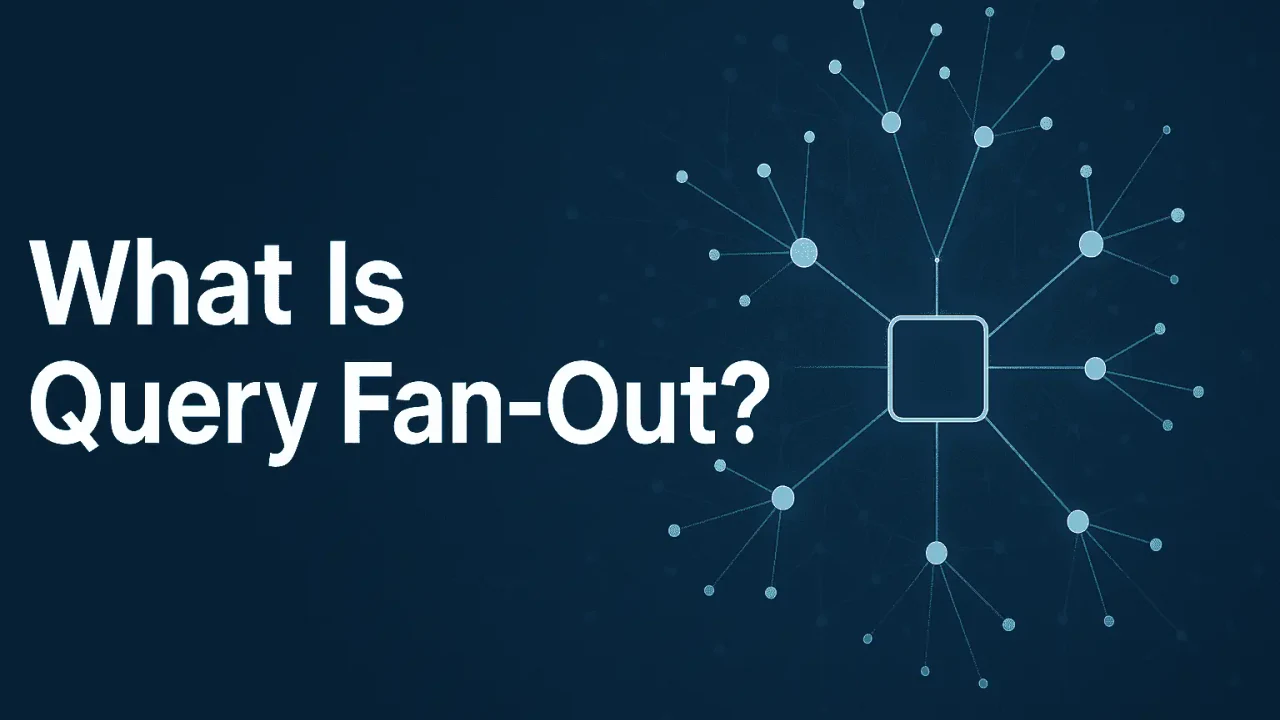
AI Overviews are built by Google’s Gemini model, the same system that powers its newer generative features across Search. When a query is entered, the model doesn’t run one search, it runs multiple. This process, called query fan-out, sends parallel searches across related topics to collect a wider set of results. The AI then combines the results into a single summary to provide the user with an answer to the main question directly.
The information isn’t pulled from a fixed database or set of learnings. It comes from the live web, using the same index that normal search uses. That means AI Overviews can show the most up to date information almost as quickly as regular results, though what appears can vary as the AI can change which pages it deems most relevant.
Citations are chosen automatically from the pages that are included the AI Overview. Some are linked inline, others may not be referenced at all if the AI thinks the point is general knowledge. The selection isn’t consistent, running the same search twice can show different sources.
There’s no special markup or feed to be included. Any page that Google can crawl, index, and display as a snippet can appear in an AI Overview. The same SEO principles apply: accessible content, clear structure, and accurate information. What changes is that Google’s AI now decides how those elements are combined and presented above the results.
What’s The Difference Between AI Overview And AI Mode?
AI Overview and AI Mode are two separate parts of Google’s generative search system. AI Overview appears directly in the main search results as a short, sourced summary. AI Mode is a different interface that lets users chat, ask questions, or add images and voice input for deeper search.
AI Overview

Displayed at the top of the standard search page, AI Overview gives a single, static answer built from multiple web pages. It’s non-interactive and designed for quick reading, showing numbered citations that link to supporting sources.
AI Mode

AI Mode sits in a separate tab and is more like a conversation. Users can ask follow-up questions, upload visuals, and see a smaller set of cited pages below the AI’s expanded response. It’s built for multi-step reasoning rather than fast summaries.
| Feature | AI Overview | AI Mode |
|---|---|---|
| Placement | In main search results | Separate AI interface |
| Interactivity | Static summary | Conversational and ongoing |
| Input | Text-based | Text, image, or voice |
| Citations | Many inline links | Fewer reference cards |
| Brand Mentions | Limited | Frequent |
| Volatility | High | Moderate |
Impact On SEO And Rankings
Google claims that AI Overviews don’t change how pages are ranked. They’re generated from the same index, using the same systems that decide organic placement. In other words, there’s no new ranking signal, only a new way for existing content to appear.
The best practices for SEO remain relevant for AI features in Google Search (such as AI Overviews and AI Mode). There are no additional requirements to appear in AI Overviews or AI Mode, nor other special optimizations necessary. That said, it’s always good to review the fundamental SEO best practices. – Google
However, data now shows a gap between where a page ranks and how often it’s actually seen or clicked when an AI Overview appears above the results.
One report found that roughly 82% of pages cited in AI Overviews are deep internal pages, often three or more clicks from a homepage (source). In comparison, homepages account for less than 1% of citations. This suggests that Google’s AI Overview cites from detailed, context-rich pages rather than high-level entry points.
The same study showed that overlap between cited URLs and top-100 organic results rose from 37% to 41% after the 2025 update, meaning many AI citations still come from pages already performing well but with a wider spread across domains.
Click behaviour tells a similar story. Research showed an average 20% drop in organic CTR for queries where an AI Overview appeared, increasing to 27% for results outside the top three positions (source). Another report found that only around 8% of users click a link when an AI Overview is shown, compared to 15% when it is not (source).

That doesn’t mean rankings have collapsed, but it does show that AI summaries now take a portion of the traffic that would previously have reached the sites directly.
Another data study showed that overall Google search impressions grew by about 49% year over year, yet average CTRs dropped by nearly 30% (source). More searches are happening, but fewer end in a click. But those who do click are more intentional.
For example, Google’s internal testing shows that users coming from AI Overview citations spend longer on-page and convert at higher rates, suggesting the AI filters for intent rather than volume.
Education, finance, and health queries show the biggest impacts as AI Overviews replace snippets for complex explanations. E-commerce and local search remain stable because transactional intent still drives users to listings.

Regardless of industry and site, volatility is high. Daily citation changes are recorded at around 30%, meaning being included in one search doesn’t guarantee it in the next.
While organic results and SEO best practices should still be a priority for marketers, there’s no denying that AI Overviews have impacted SEO in some form. Not even considering LLMs like ChatGPT.
What’s The Impact On Traffic, CTR, And Other Metrics?
The impact of AI Overviews is still being assessed due to extended rollout periods and the time needed to monitor. But several studies show a more balanced picture than many expected.
Data from early 2025 suggests that AI Overviews has not caused the traffic decline many predicted (source). In an analysis of over 10 million U.S. desktop queries, overall clicks remained consistent, with zero-click searches decreasing slightly from 38.1% to 36.2% after AI Overviews appeared. The same study found that users who did click through were more intentional.

Dotdash Meredith, one of the largest digital publishers, reported a negligible traffic impact across its portfolio, even though AI Overviews appeared on roughly 15% of its queries (source). Engagement time per visit held steady, and in some categories (finance and health), users from AI Overview spent longer reading pages.
Other independent reviews found that while referral volumes fluctuate, AI Overviews are redistributing impressions rather than removing it (source). Some brands that rarely held top rankings now appear in citations, improving awareness even if it doesn’t result in increased traffic.
Informational searches tend to hold or grow traffic. Transactional searches may not as users get what they need directly in the summary. Analysts at Bain & Company state that early AI integrations across search have affected engagement quality more than volume, fewer casual visits, more decisive clicks.
AI Overviews haven’t completely killed off organic traffic, but they’ve changed how users get information and click through. Expect fluctuations, but aside from the panic of zero-click, so far, most data points to steadier CTRs, longer engagement, and a slow redistribution of visibility rather than loss.
How to Show Up in AI Overviews
Google’s stance is there’s nothing new to optimize. AI Overviews use the same index, crawl systems, and ranking logic as traditional search. Pages that are accessible, well-structured, and factually correct can appear. There’s no markup, feed, or opt-in program, eligibility depends entirely on standard SEO practices.
But marketers aren’t leaving it there. As AI search continues to trend, they are focusing efforts on Generative Experience Optimization (GEO) or Answer Engine Optimization (AEO). Strategies built around making content easier for AI bots to interpret and summarize, improving retrieval and citations. These methods aren’t officially recognized, yet early evidence shows they improve visibility and citation rates in generative results.
What Google Confirms
Google’s documentation outlines a few requirements:
- Allow crawling and snippets. Using
nosnippet,data-nosnippet, or blocking text limits inclusion. - Keep information structured and concise. Clear hierarchy (H1, H2, H3) and short paragraphs help Google understand page flow.
- Ensure accuracy and transparency. Use credible references and current facts.
- Keep content fresh. AI Overviews pull live web data; outdated information reduces relevance.
- Follow E-E-A-T principles. Demonstrate experience, expertise, authority, and trust.
These determine if a page can be indexed and trusted enough to be quoted, but mostly apply to SEO practices anyway.
What Marketers Are Doing
Marketers experimenting with GEO and AEO are focused on making pages ‘answer-ready.’ Generative engines prefer structured content that can be parsed and rewritten with certainty.
Common practices include:
- Opening sections with short, definition-style statements that summarize key terms in a single sentence.
- Using question-based headings to mirror how users phrase searches (‘What is,’ ‘How does,’ ‘Which tool’).
- Adding FAQ blocks or collapsible Q&A sections at the end of articles. These often match the natural questions AI systems extract.
- Presenting data in lists, tables, or compact summaries so AI can take structured information directly.
- Publishing original data; case studies, benchmarks, or survey findings to boost authority and make the page worth citing.
- Expanding topical coverage around a subject to show expertise; related pages strengthen the overall signal of authority.
These come from observation and testing, not confirmed ranking factors, but the correlation is there. One report showed that content using concise headings and answer blocks was 27% more likely to appear in AI citations, while pages with proprietary data had a 45% higher inclusion rate than generic summaries (source).
Why It Works
AI Overviews extract information the same way users do, by skimming for structure, clarity, and completeness. Pages that lead with the what, how, and why of a topic are easier for the model to put into summaries. Long introductions, lots of jargon, or clickbait titles make parsing harder and reduce the chance of citation.
What to Track and How to Know if You’re Included
Google Search Console doesn’t yet separate AI Overview data from standard search metrics. There are AEO tools and GEO tools out there, but accuracy is unclear. However, you can still monitor inclusion through a mix of manual checks and indirect signals:
- Search manually for target queries. Look for your brand or page URL within the numbered citations.
- Watch impression and CTR trends. A sudden rise in impressions without a rank change may indicate visibility in AI Overviews.
- Use third-party SGE or AI tracking tools. Platforms like Semrush now flag generative result appearances.
- Log volatility. Because sources rotate quickly, repeated checks over several weeks give a clearer picture than a one-off test.
Key Strategy Takeaways
- Follow fundamentals first. Eligibility still depends on technical SEO, crawlability, and quality signals.
- Structure for clarity. Short sentences, clean formatting, and logical subheadings improve machine readability.
- Add answer blocks. Give Google clear, extractable summaries and definitions.
- Demonstrate authority. Support statements with data, experience, and external references.
- Audit performance over time. Track changes in impressions and engagement to spot early signs of inclusion.
FAQ
Run your target searches directly in Google and look for your page in the numbered citations beneath the AI Overview. Google Search Console currently combines AI Overview impressions with standard search data, so manual checks or third-party SGE trackers are the most reliable way to confirm inclusion.
Yes. Adding a nosnippet or data-nosnippet tag blocks your text from being used, but it also removes eligibility for AI Overview citations. Google recommends allowing snippets if visibility is a priority.
No. AI Overviews pull from the same search index as regular results and don’t introduce new ranking signals. However, appearing in a citation can increase visibility even if your page isn’t ranking on page one.
No additional schema or feed is required. Existing structured data, such as FAQ, How-To, or Article schema, helps clarify page intent but isn’t mandatory for inclusion.
Citations change frequently. Studies from BrightEdge and Semrush show that the pages referenced in AI Overviews can shift weekly as Google’s systems test new sources and refine relevance.
Not at this stage. Featured snippets and AI Overviews can appear separately or together on the same results page, depending on the query type and complexity.