
AI is rewriting the rules of affiliate marketing
AI in affiliate marketing has cut tasks like keyword research, comparison content creation, and landing page testing from hours to minutes. That means speed, scale, and lower entry barriers for anyone starting out. It also means a flood of machine-generated content competing for the same clicks, commissions, and partner slots.
For newcomers, AI can skip years of trial and error: producing professional assets, automating outreach, and personalizing offers from day one. For experienced affiliates, it can sharpen targeting, tracking, and partner management, but it also forces adaptation to AI-driven search results, zero-click answers, and social algorithms throttling outbound traffic.
This guide covers both sides of the equation: where AI is expanding opportunity, where it’s squeezing margins, and how to position for growth in a market where speed, personalization, and data-driven decision-making are a priority.
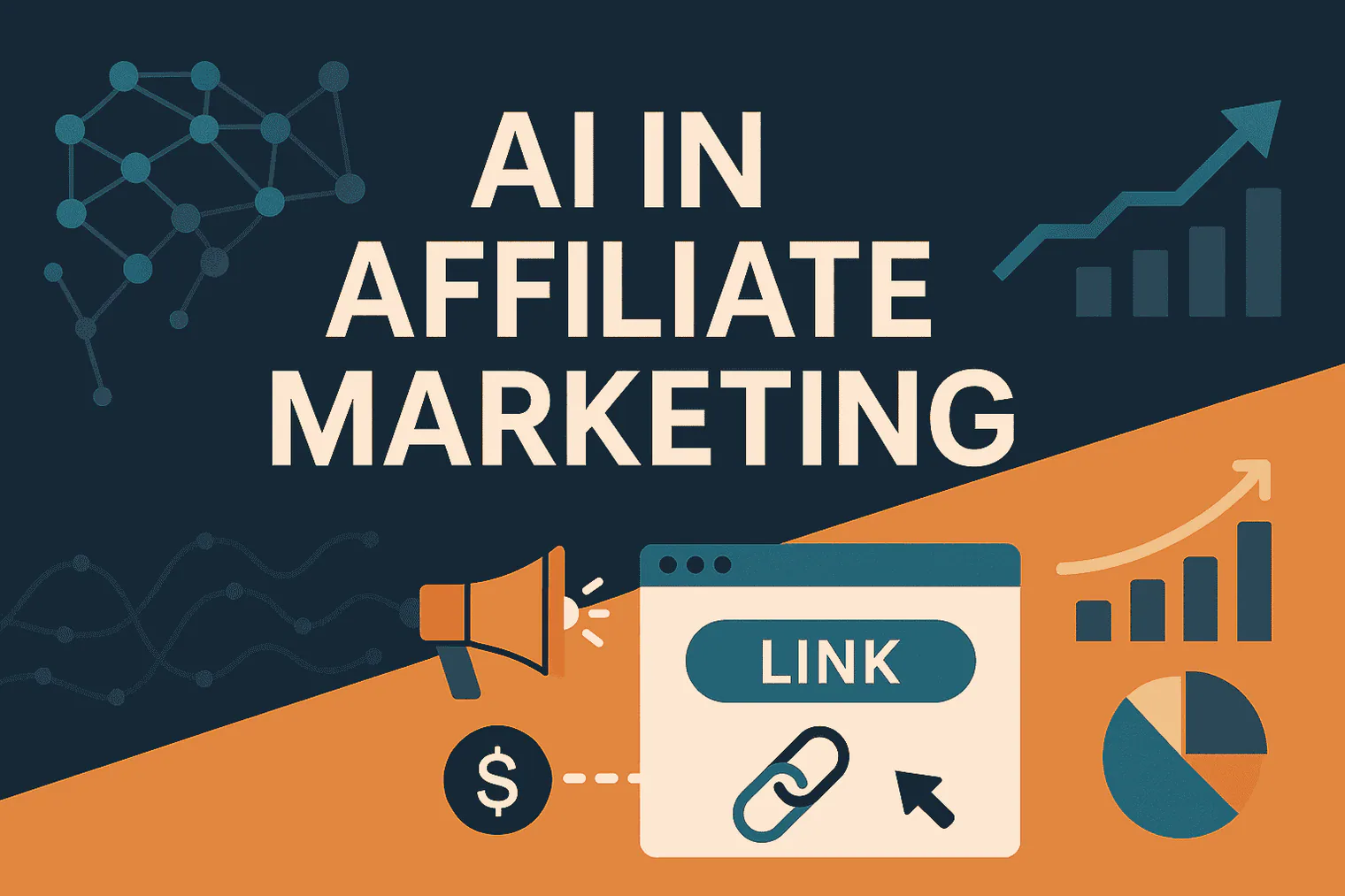
AI in Affiliate Marketing
Affiliate marketing has moved from static banner swaps in the late ’90s to a $17 billion global industry in 2024 (Influencity), embedded in almost every sector of digital marketing. For years, growth came from better tracking, smarter attribution, and the rise of content‑driven commerce. The 2022 arrival of mainstream generative AI was the next leap and the most disruptive.
By the end of 2025, over 50% of all digital marketing strategies are expected to use AI in some form (Influencity). In affiliate, that means tools like ChatGPT, Jasper, and SurferSEO aren’t just helping with copy, they’re producing optimized buying guides, analyzing performance data to predict conversions, and even sourcing untapped affiliate partnerships.
AI is impacting affiliate marketing on multiple fronts:
- Content production at scale: AI writing assistants draft high‑quality copy in minutes, with SEO tools like SurferSEO or Clearscope aligning it to ranking factors.
- Real‑time decision‑making: AI dashboards process campaign data instantly, flagging underperforming offers or identifying high‑value traffic sources.
- Personalization: Behavioral data is used to deliver product recommendations tailored to a visitor’s profile, driving higher click‑through and conversion rates.
- Partner discovery: Machine‑learning models match brands to affiliates based on content relevance, engagement levels, and audience overlap.
Cristy Garcia, (CMO Impact), calls it a new level of precision: “In 2024, affiliates will leverage AI to analyze user behavior, preferences, and purchasing patterns, allowing for more targeted and personalized marketing strategies.” Hawke Media goes further, saying AI is “redefining how partnerships are formed, campaigns are managed, and performance is measured.”
But this growth comes with its challenges. Search engines are answering more queries directly on‑page, social platforms are restricting organic reach for outbound links, and AI‑generated content is crowding the SERPs. The affiliates that thrive won’t be the ones who publish the most; they’ll be the ones who use AI strategically, while maintaining quality, originality, and trust.
What Are the Benefits of AI in Affiliate Marketing?
AI boosts affiliate performance by speeding up content creation, improving ad targeting, and enabling real-time analytics. It helps affiliates personalize offers, discover new partners, and detect fraud faster. The advantage comes from combining automation with human editing to keep content accurate, relevant, and trustworthy.
Smarter Data Analysis & Real‑Time Insights
Affiliate marketing has always been data‑driven, but the old model relied on periodic reporting and backward‑looking analytics. AI turns that into a live feedback loop.
Modern analytics platforms like Google Analytics 4 with machine‑learning integrations, Optimizely, and AI‑powered dashboards from networks such as Impact can ingest millions of data points, conversions, clicks, user paths, and surface actionable insights instantly. Instead of guessing which product will convert best, AI models predict performance based on historical trends, audience behavior, and even external signals like seasonality.
That means affiliates can change offers in‑flight, target higher‑value geos, or double down on a product category that’s trending this week, not last quarter. In a space where the first‑mover often wins, the value of real‑time data is hard to ignore.
Campaign Optimization & Automated Attribution
Manual campaign tweaks can only take you so far. AI‑driven optimisation tools like TUNE, Adjust, and Impact’s attribution engine look at every touchpoint in the funnel, not just the last click, and automatically shift budget and focus toward the sources driving revenue.
This is a major shift from the old “last‑click” model that often miscredited conversions. Now, an affiliate who influenced awareness via a YouTube review but didn’t get the final click can still receive credit under multi‑touch attribution rules.
The same systems can also adjust commission rates dynamically. One subscription brand used AI to link payouts to customer lifetime value rather than flat fees, rewarding affiliates who brought in high‑retention customers. The result: fewer wasted payouts and stronger long‑term ROI.
Content Creation and SEO at Scale
Content remains the driver for most affiliate strategies, but AI has turned production timelines on their head. Tools like ChatGPT, Jasper, and Claude can produce structured product reviews, comparison tables, and listicles in minutes. Paired with AI SEO platforms such as SurferSEO, Frase, and Clearscope, affiliates can generate copy that’s already aligned with search intent and competitive benchmarks.
This doesn’t remove the need for human editing, in fact, it makes it more critical. Publishing raw AI output risks duplication, thin content, or factual errors. The winning workflow is AI‑human hybrid:
- Use AI to generate the outline, headings, and core copy.
- Layer in unique data, personal insights, and original photography or video.
- Optimize with AI‑powered keyword and entity analysis.
Done right, this approach can double content production without sacrificing the authority signals that search engines and audiences expect.
Personalized Targeting & On‑Site Recommendations
AI’s most profitable impact for affiliates might be personalization.Behavioral algorithms similar to Amazon’s recommendation engine can now be embedded into affiliate sites via platforms like Nosto, Dynamic Yield, or custom machine‑learning scripts.
These systems adapt in real time: a visitor who’s read three camping gear reviews might see more hiking‑related offers, while another browsing tech gadgets gets smartphone accessories. Personalization extends to email, too. AI‑powered tools can segment subscribers automatically and send variant content based on past clicks or purchases.
According to affiliate marketing stats and Hawke Media, 88% of marketers implementing personalization report clear performance improvements. For affiliates, that often means higher CTR, more conversions, and better repeat traffic.
Ad Targeting & AI‑Generated Creative
For affiliates running paid campaigns, AI is effectively an autopilot for targeting and bidding. Google Ads’ Performance Max and Meta’s Advantage+ campaigns use AI to continuously refine audience targeting, bidding strategy, and creative placement.
On the creative side, tools like AdCreative.ai, Canva’s Magic Studio, and Runway can produce multiple ad variations instantly, often with predictive performance scores baked in. That allows affiliates to A/B test dozens of headlines, images, and CTAs without exhausting their design budget.
Example: An affiliate specialising in niche fitness equipment uses AI to generate 20 ad variants, each personalized to a micro‑audience segment. Meta’s AI bidding optimizes delivery automatically, resulting in a 3× improvement in ROAS compared to their manually managed campaigns.
Affiliate Discovery & Partner Matching
Finding the right partnerships used to be manual, digging through forums, scanning competitor backlinks, or cold emailing bloggers. AI has made it programmatic.
Platforms like Refersion, Partnerize, and Endorsely use machine‑learning models to analyze content relevance, audience engagement, and even sentiment to identify potential affiliate partners. Some tools can scan your competitor’s active partners and surface those with similar audiences, giving you a ready‑made prospect list.
Fraud Detection & Compliance Automation
Affiliate marketing’s growth has always attracted fraud, cookie stuffing, fake leads, and bot‑driven clicks among the most common. AI has become the industry’s front‑line defence.
Fraud detection platforms like Forensiq, Fraudlogix, and network‑native AI tools continuously monitor traffic patterns for anomalies: sudden spikes from a single IP range, unusual conversion rates, or mismatches between device and location data. When a retailer implemented AI‑driven fraud detection, they cut fraudulent payouts by 90% in six months, freeing budget for legitimate partners.
Compliance monitoring is another win. AI content scanners can check affiliate pages for required disclosures, brand‑safe language, and adherence to industry regulations (critical in niches like finance and health). That not only prevents legal issues but also builds long‑term trust with networks and advertisers.
| AI Use Case | Example Tools | Key Benefit | Potential Risk |
|---|---|---|---|
| Content Creation | ChatGPT, Jasper, SurferSEO | Fast SEO-optimized copy | Risk of duplicate/thin content |
| Analytics | GA4 ML, Optimizely | Instant performance insights | Data accuracy depends on inputs |
| Personalization | Nosto, Dynamic Yield | Higher CTR and conversions | Privacy compliance risk |
| Partner Discovery | Refersion, Partnerize | Finds high-fit affiliates | Quality of matches may vary |
| Fraud Detection | Forensiq, Fraudlogix | Blocks invalid leads/clicks | False positives can cut valid traffic |
Discover more benefits of affiliate marketing.
What Are the Downsides of AI in Affiliate Marketing?
The speed and scale of AI can backfire when it leads to traffic loss, suppressed social reach, or generic content that blends into competitors’ output. Search engines, social platforms, and changing tracking rules are making it harder to get clicks and prove conversions, forcing affiliates to adapt their approach.
Zero‑Click Search
The most visible disruption is happening in search. AI‑driven features like Google’s Search Generative Experience (SGE) and Bing’s AI summaries are answering user queries directly on the results page. That means no click‑through to the affiliate’s carefully crafted review or comparison table.
It’s a fast‑growing behavior. In 2024, 58% of all Google searches ended without a single click (SparkToro). For queries like “best wireless earbuds,” Google now displays an AI‑curated answer with pros and cons, satisfying the searcher’s intent without ever sending them to a third‑party site. For affiliates, that’s lost traffic and lost commissions.
The threat isn’t going away. Affiliates who relied exclusively on organic clicks from high‑intent product searches are already seeing drops in visibility and need to adjust their approach to be cited within AI answers, focusing on generative engine optimization (GEO) and answer engine optimization (AEO).
SEO & Traffic Decline
Even without zero‑click results, organic traffic is harder to win. Search algorithms are evolving to reward depth, originality, and freshness, penalizing thin or duplicated content, especially when it’s clearly AI‑generated.
Google’s Helpful Content Updates have been explicit: sites publishing “SEO‑first” articles with little human value will struggle to rank. In practice, affiliates who pump out generic AI‑written “Top 10” lists without unique insights risk disappearing from page one entirely.
Voice search is another factor. With more queries coming through Alexa, Siri, and Google Assistant, the number of SERPs users actually see is shrinking. If your content isn’t structured in a way AI can easily parse and read aloud, clear headings, concise answers, schema markup, you may never make it into that single spoken result.
Social Platform Suppression
Search isn’t the only problem. Social platforms are using AI in their algorithms to prioritise native content and keep users inside their ecosystem. Posts containing outbound affiliate links often get reduced reach.
LinkedIn, for example, has been shown to give posts without external links up to 10× more reach than those with links (Affiliate Summit). Instagram and TikTok have similar tendencies, promoting short‑form video or carousel posts over link‑drives.
For affiliates relying on organic social to feed their funnel, this means a choice: pay for visibility through ads, or adapt content formats to work within the platform’s native engagement goals, often requiring more creativity and less direct selling.
Attribution and Tracking Losses
Even when an affiliate manages to influence a sale, proving it is getting harder. Privacy changes, cookie deprecation, and the widespread use of ad blockers are breaking traditional tracking methods.
An estimated 43% of internet users in Europe now use ad blockers by default (Affiliate Summit), and AI‑powered browsers are increasingly stripping tracking parameters from URLs. The result is the “dark funnel” effect: affiliates drive awareness or intent that never shows up in their reporting, meaning no commission despite influencing the purchase.
Multi‑touch attribution and promo code tracking can soften the blow, but they require cooperation from merchants and networks, something not every affiliate has access to.
AI‑Generated Content
AI has lowered the barrier to entry for content creation so much that SERPs and social feeds are becoming saturated with near‑identical affiliate articles. When everyone’s using the same models, trained on the same public data, originality suffers.
Google is actively demoting “low‑value, unoriginal content,” whether it’s human‑written or AI‑generated. Affiliates that fail to differentiate with personal testing, unique data, or brand voice risk blending into the noise or being filtered out entirely.
There’s also the issue of AI hallucination: models inventing specs, prices, or features that don’t exist. In sectors like finance or health, unverified AI content isn’t just bad for rankings, it can be a compliance nightmare.
Cost & Technical Barriers
Not all AI benefits are free or easy to implement. While entry‑level tools are accessible, advanced AI integrations, like custom recommendation engines, automated fraud detection, or enterprise‑level analytics, often come with significant subscription costs and technical setup.
Smaller affiliates may struggle to justify these investments, especially if revenue has already dipped due to traffic loss. This creates a widening gap: large affiliate operations with budgets for advanced AI will pull further ahead, while smaller players either find creative low‑cost workarounds or narrow their focus to survive.
How Will AI Change Affiliate Marketing in 2025 and Beyond?
AI will increasingly influence how consumers discover products, how affiliate rewards are calculated, and which brands win visibility in AI-powered search results. Affiliates will need to focus on creating original, human-driven content while using AI to improve speed, personalization, and data-led decision-making.
Newcomers Entering Affiliate Marketing for the First Time
The biggest barrier for new affiliates used to be the skills gap, learning SEO, understanding analytics, writing persuasive copy, building websites, and managing partnerships all at once. AI has lowered that barrier dramatically.
Today, an aspiring affiliate can use ChatGPT or Jasper to draft product reviews, SurferSEO to optimize them for target keywords, and Canva’s Magic Studio to design site visuals, all without needing a professional writer, SEO consultant, or designer. Keyword research that once took hours can be handled in minutes with AI‑powered tools like SEMRush’s Keyword Magic or Ahrefs’ AI‑driven content gap analysis. Link management, too, can be automated with platforms like ThirstyAffiliates or Pretty Links, removing another layer of manual work.
It’s easy to get hooked on the “AI can do it all” mentality and fall into the trap of producing generic, low‑value content at scale. That might get you a quick spike in impressions, but it rarely builds sustainable traffic or revenue, especially with search engines tightening quality filters.
For newcomers, the smarter play is to treat AI as a co‑pilot:
- Use it for first drafts, not final copy.
- Combine AI‑generated outlines with personal product testing or original insights.
- Lean on AI for admin (keyword tracking, link management) so you can spend more time on strategy and brand building.
The result is a faster launch, but still rooted in the authenticity and trust that affiliate audiences respond to.
Experienced Affiliates
Veteran affiliates are facing a different reality: they know how to generate traffic and conversions, but the playbooks that worked for years are producing less.
In many cases, the drop‑off isn’t due to declining skill. It’s the platforms changing the rules. Zero‑click search features, AI‑driven feed curation, and reduced organic reach for outbound links are all cutting into visibility. Social algorithms that once rewarded link‑driven content now penalise it. Even loyal audiences may now be finding their answers via AI summaries instead of clicking through.
The first step is diagnosis. That means auditing:
- Traffic sources – Are declines concentrated in organic search, social, or both?
- Keyword positions – Have SERP rankings shifted, or are CTRs simply down because of new AI‑powered results?
- Content quality – Does your content still deliver unique, up‑to‑date value, or is it blending into the AI‑generated noise?
- Affiliate reporting – Are you losing attributions because of tracking changes, ad blockers, or privacy settings?
Once you know the cause, the recovery strategy is clearer:
- Diversifying traffic – Building email lists, running paid campaigns, or investing in platforms less vulnerable to AI‑driven suppression.
- Doubling down on value‑based content – Long‑form guides, personal testing, data‑driven comparisons, formats harder for AI to replicate convincingly.
- Niche focus – Targeting specific sub‑markets where deep expertise still beats generic AI output.
The key is resisting the urge to fight AI head‑on by simply publishing more. Volume rarely beats relevance, authority, and adaptability.
Where AI Is Essential vs. Optional
AI is essential where scale and speed drive revenue. It’s optional where depth and community are the competitive ground.
Essential:
- Competitive SEO niches where content speed matters.
- Paid media campaigns that rely on precise bidding and segmentation.
- Programmatic personalization, where every visitor sees a tailored offer.
- Fraud prevention for large‑scale affiliate programs.
Optional:
- Niche sites with low competition and strong direct traffic.
- Affiliates with unique, experience‑driven content that competitors can’t replicate.
- Smaller operations where manual partner management and content updates are manageable without automation.
How Much AI Adoption Is “Enough” for Competitive Relevance
For most affiliates, the sweet spot is selective integration, adopting AI where it removes bottlenecks or opens new opportunities, without letting it dilute originality. A practical benchmark:
- AI should save you measurable time or budget.
- It should improve performance in a way you can track (better CTR, faster publishing, higher ROAS).
- It should never be your only differentiator, because competitors can copy the same toolset.
If AI is making your processes faster and your offers sharper without affecting your brand’s unique value, you’re using ‘enough.’
Tactics to Use Now With AI and Affiliate Marketing
AI isn’t a strategy on its own, it’s a toolkit. The affiliates gaining ground right now are applying AI in targeted ways that directly move the needle on traffic, conversions, and partner relationships. Here’s where you can start applying it today.
Prompt Frameworks for Faster Content Ideation & Drafting
Generic prompts (“write a blog post about X”) lead to generic results. The difference between mediocre and high‑performing AI‑assisted content is in the structure of the prompt.
Example framework for affiliate product reviews:
Write a [word count] SEO‑optimized product review for [product name], targeting the keyword [target keyword]. Include a pros/cons table, 3 unique use cases based on real‑world scenarios, and a comparison with [competitor product]. End with a call‑to‑action that encourages readers to click an affiliate link.
Buying Guide Prompt:
Create a 1,200‑word SEO‑optimized buying guide for [product category], targeting the keyword [exact keyword]. Include a comparison table of the top 5 products, unique benefits of each, and a verdict section for different use cases (budget, premium, best overall). Use a tone that blends authority with approachability.
Email Sequence Prompt:
Write a 3‑email follow‑up series for [affiliate product], aimed at users who visited the sales page but didn’t purchase. Include persuasive subject lines, social proof elements, and a time‑sensitive offer in the final email.
Video Script Prompt:
Draft a 60‑second TikTok script reviewing [product name] that hooks viewers in the first 3 seconds, highlights 3 standout features, and ends with a direct CTA to check the product via my affiliate link.
Competitor Gap Content Prompt:
List 10 long‑tail keywords my competitors rank for in [niche] but my site does not. For each, suggest an article title and meta description aimed at high‑intent searches.
Using a framework like this ensures you get structured output you can refine, cutting research and drafting time without impacting quality. Pair this with AI‑powered SEO tools like Frase or SurferSEO to shape the headings and keyword placement for maximum ranking potential. Not forgetting the human review/editing.
AI‑Powered Competitor Analysis and Keyword Gap Research
Tools like Ahrefs, SEMRush, and SpyFu now integrate AI to surface keyword and content gaps faster. Instead of manually scanning competitor sites, you can generate a list of:
- Keywords they rank for that you don’t.
- Affiliate products they promote but you don’t cover.
- Content formats they use (e.g. video reviews, buying guides) that you haven’t tapped yet.
Using AI to Test Ad Creatives and Landing Page Variants
In paid campaigns, small creative changes can mean double‑digit swings in CTR or ROAS. AI tools like AdCreative.ai, Copy.ai, and Canva’s Magic Switch allow affiliates to produce multiple ad variants in minutes, each targeting a different audience segment or emotional trigger.
For landing pages, platforms like Unbounce and Instapage use AI to auto‑generate variant headlines, hero copy, and CTA placements, then test them in real time. This means you can run A/B or multivariate tests at scale without the traditional design bottleneck.
Dynamic Personalization of Affiliate Offers by Segment
Personalization isn’t just for big e‑commerce sites anymore. With AI‑driven tools like Mutiny, Nosto, or Optimizely, affiliates can dynamically swap out product recommendations, headlines, or CTAs based on visitor behavior, location, or referral source.
Example: A travel affiliate serving global traffic could promote European city tours to visitors from the US, local getaway packages to visitors in the UK, and Asia‑specific travel gear to users from Singapore, all on the same landing page. This level of contextual relevance can significantly boost conversion rates.
AI for Creating Supplemental Content Formats
Affiliate sales aren’t always made on the first click. AI makes it easier to stay visible and relevant across multiple touchpoints.
- Email sequences: Use tools like Copy.ai or HubSpot’s AI to draft multi‑email follow‑up campaigns tailored to different buyer stages, product research, post‑purchase, seasonal promotions.
- Social snippets: Repurpose your long‑form content into tweet threads, LinkedIn posts, or Instagram captions with AI summarisation and tone adjustment.
- Video scripts: For YouTube or TikTok product demos, AI can generate structured scripts complete with talking points, CTA placement, and even B‑roll suggestions.
This content layering ensures your affiliate offers stay top‑of‑mind, even if the initial visit doesn’t convert.
What Marketers Need to Know Before Integrating AI
AI isn’t a ‘switch it on and watch the revenue roll in’ move. Successful integration requires clear boundaries, realistic investment, and a plan for keeping the tech aligned with your brand and goals. These are the key factors to address before bringing AI deeper into your affiliate workflow.
Compliance (Disclosure, Privacy, Accuracy)
Affiliate marketing already carries compliance obligations, AI adds new layers.
- Disclosure: Any AI‑generated content promoting affiliate products must still carry clear affiliate disclaimers. Some jurisdictions are also moving toward requiring disclosure that AI was used in content creation, especially in consumer‑facing copy.
- Privacy: AI‑powered personalization relies on data. Tools that collect or process user behavior must comply with GDPR, CCPA, or other regional laws. Affiliates need to ensure their tech stack respects consent requirements and provides opt‑outs.
- Accuracy: AI hallucinations are a real risk. If an AI tool generates incorrect product specs or pricing and it goes live, you could breach merchant agreements or mislead consumers, damaging trust and potentially triggering legal issues. Always fact‑check AI output before publishing.
Budgeting for AI Tools and Integrations
The promise of AI efficiency is real, but so are the costs. While some tools offer free tiers, advanced features, like predictive analytics, fraud detection, or dynamic personalization, often require monthly or annual licensing.
Factor in:
- Core tools (content creation, SEO optimisation, analytics)
- Specialist tools for affiliate workflows (link management, compliance, partner discovery)
- Integration costs if you need developers to connect AI tools to your CMS, CRM, or affiliate tracking platform
The ROI calculation is straightforward: if the AI tool can reduce time to publish, improve CTR, or raise conversion rates in measurable ways, it can justify its cost quickly. But adding tools without a clear performance link can quietly erode margins.
Training Teams on Prompt Engineering and AI Oversight
AI’s value often depends less on the tool itself and more on how you use it. Teams that understand prompt engineering, structuring detailed, context‑rich instructions, will consistently get better results than those using generic queries.
Training should cover:
- How to design prompts for different content types (reviews, ads, emails)
- When and how to fact‑check and edit AI output
- Guidelines for AI usage in your niche
Even solo affiliates benefit from building a prompt library of proven instructions for repeatable tasks, saving time and keeping quality consistent.
Setting Measurable KPIs for AI‑Driven Affiliate Initiatives
Without clear KPIs, it’s impossible to know if AI is working for you, or just adding noise to your process. Define metrics before rollout. Examples include:
- Content speed: Reduction in average time from ideation to publish
- CTR uplift: Improvement in click‑through rates on AI‑generated vs. manual creatives
- Conversion rate: Lift on personalized offers vs. generic versions
- Fraud reduction: Percentage drop in invalid clicks or leads
Review these metrics monthly, and be ready to adjust prompts, tools, or workflows if results plateau. AI is a moving target; what works today may need re‑tuning in six months.
Strategies to Adapt & Win with AI
AI isn’t a silver bullet, but it’s also not an inevitable threat. Affiliates that learn to work with it, maximising strengths while protecting against risks, will outperform those clinging to pre‑2023 playbooks. These strategies combine speed, relevance, and trust so you can scale without losing what makes your brand valuable.
Publish High‑Value, Humanized Content
The affiliates thriving now are those producing content AI can’t easily replicate, deep product tests, first‑hand comparisons, or unique market insights. Use AI for speed on the back‑end, but make the final product unmistakably human.
Example: Instead of a generic “Top 10 headphones” list, create “The Best Headphones for 10‑Hour Flights, Tested by Frequent Flyers,” with personal notes and original photos.
This approach hits Google’s E‑E‑A‑T signals (Experience, Expertise, Authoritativeness, Trustworthiness) while building credibility that AI‑only content can’t match.
Optimize for AI‑Search & Zero‑Click
If AI search features are here to stay, you need your content to be the source those engines pull from.
- Structure content with question‑based headings and concise, direct answers.
- Add FAQ schema and structured data to make your answers easy for AI and voice assistants to parse.
- Target long‑tail, conversational keywords (“Which camping stove works best in high wind?”) instead of just broad terms.
This focuses on earning citations inside AI summaries, keeping you visible even with zero‑click challenges.
Diversify Traffic: Email, Community, Video
The less dependent you are on a single algorithm, the more resilient your business becomes.
- Email lists give you direct reach and conversion opportunities.
- Communities (Discord, Slack, private Facebook groups) build loyal audiences less likely to bypass you via AI summaries.
- Video content, especially YouTube, still drives high purchase intent and is less vulnerable to zero‑click suppression.
Affiliates who pair these channels with AI‑driven workflows (personalized email offers, automated community moderation, or AI‑assisted video scripting) get the best of both worlds.
Use AI for Ideation & Drafting Only
The most effective affiliates treat AI as the assistant, not the author. Use it to:
- Generate content outlines and SEO‑informed heading structures.
- Suggest variant headlines and CTAs for split‑testing.
- Draft first‑pass copy that you enrich with personal experience and fact‑checked details.
This keeps content production fast but avoids the pitfalls of generic AI text that search engines and audiences can spot instantly.
Monitor AI Content Performance & Iterate
Set clear KPIs for AI‑assisted content and track them consistently.
- CTR, conversion rate, time on page, and bounce rate will tell you whether AI output is resonating.
- Use AI analytics tools (like GA4 with ML insights or Impact.com’s performance dashboards) to see what’s working and double down.
- Retune prompts quarterly to account for platform changes or audience feedback.
AI tools evolve quickly, your usage should too.
Explore New Models
Affiliate marketing is expanding into new spaces thanks to AI.
- Conversational AI: Chatbots that recommend affiliate products in real‑time based on user queries.
- Voice search optimisation: Preparing content so smart assistants can surface your recommendations verbally.
- Influencer hybrids: Combining human creators with AI‑generated visuals or scripts to scale content without losing personality.
Early movers in these spaces will have less competition and more time to establish authority.
Maintain Compliance & Audience Trust
AI doesn’t remove your legal or ethical responsibilities, it increases them.
- Always disclose affiliate relationships and AI usage where required.
- Fact‑check AI outputs rigorously, especially in regulated niches.
- Avoid over‑automation that strips away your brand voice or makes your content feel impersonal.
Trust is still the currency that drives conversions. Lose it, and no amount of AI efficiency can buy it back.
What’s Next for AI & Affiliate Marketing
The next phase of AI in affiliate marketing won’t just be about faster content creation or better targeting, it’s going to reshape how consumers discover products, how merchants reward affiliates, and how affiliate sites position themselves in the buyer journey.
AI‑Powered Product Recommendation Engines Getting More Sophisticated
Today’s recommendation widgets are basic compared to what’s coming. Generative AI models will be able to combine multiple data points, search history, in‑session behavior, purchase history, and even contextual cues like time of day, to deliver hyper‑relevant product suggestions.
For affiliates, this could mean:
- On‑site recommendations that adapt in real time, showing different products to the same user on repeat visits.
- Network‑level recommendation systems that route visitors from multiple publishers to the highest‑converting offer based on AI‑predicted purchase intent.
The more accurate these systems get, the more affiliates who embrace them will see higher average order values and better conversion rates, while those ignoring personalization may see CTRs stagnate.
AI Assistants Influencing More Purchase Decisions
ChatGPT, Google Gemini, and other conversational AI tools are already answering product queries directly. As adoption grows, these assistants could become the first stop for purchase research, replacing traditional search for many buyers.
The challenge for affiliates:
- How do you get your content or recommendations into the datasets and sources these assistants trust?
- How do you build brand mentions and citations so AI sees you as an authority?
Forward‑thinking affiliates will focus on AI visibility, structuring their content, partnerships, and citations to be surfaced inside these assistant responses. Those who crack the “how to be recommended by AI” puzzle early could dominate high‑intent purchase queries in the next two years.
Program Models Shifting Toward Visibility‑ and Influence‑Based Rewards
As attribution challenges grow (thanks to zero‑click searches, privacy updates, and AI‑driven browsing), merchants and affiliate networks may move away from strict last‑click commissions toward models that reward visibility and influence.
This could look like:
- Hybrid deals combining flat fees for brand exposure with performance bonuses.
- Rewards for assisted conversions, even if the sale happens days later without a tracked click.
- Tiered commissions based on audience reach, engagement metrics, or AI‑verified influence scores.
For affiliates, this means relationship‑building with merchants will matter more than ever. The ones who can prove their brand drives awareness and intent, whether or not it results in an immediate click, will secure better deals in this evolving ecosystem.
AI in Affiliate Marketing Summary
- AI can accelerate content creation, targeting, and analytics, but only delivers sustainable growth when paired with human input.
- Zero-click search and social link suppression mean affiliates must diversify traffic sources.
- AI visibility depends on structured, question-based content with clear, concise answers.
- Compliance, originality, and trust remain essential for long-term conversions.
FAQ
AI can speed up content creation, identify high‑value keywords, personalize product recommendations, and optimize ad targeting in real time. Affiliates using AI for data‑driven decisions often see higher click‑through rates and improved conversion rates.
Popular options include ChatGPT for content ideation, SurferSEO for optimisation, AdCreative.ai for ad testing, Mutiny for personalization, and Impact.com for performance tracking and fraud detection.
Yes. AI‑powered attribution tools like TUNE and Adjust analyse every touchpoint in the buyer journey, making it easier to assign credit beyond last‑click models. This can improve fairness in commission payouts.
AI in search engines, like Google’s Search Generative Experience, can answer queries directly on the SERP, reducing clicks to affiliate sites. Optimising for AI search means using question‑based headings, concise answers, and schema markup so your content is cited in these AI summaries.
Yes. Risks include publishing AI‑generated inaccuracies, failing to disclose affiliate relationships, or misusing personal data in personalized offers. Affiliates should fact‑check all AI output, follow disclosure laws, and comply with privacy regulations like GDPR and CCPA.
Absolutely. AI analytics can review historic conversion data, competitor activity, and audience behavior to predict which products are most likely to sell. This allows affiliates to focus on offers with the highest potential ROI.
Platforms like Instagram, TikTok, and LinkedIn use AI algorithms to prioritise native content and suppress posts with outbound links. Affiliates can adapt by creating platform‑native content, using AI to repurpose posts, and pairing organic reach with targeted paid campaigns.
AI‑powered CRO tools like Unbounce Smart Traffic or Optimizely can automatically test multiple page variations, adjusting headlines, CTAs, and layouts to maximise conversions for different audience segments.
Yes, if used strategically. AI can help smaller affiliates compete with larger operations by automating research, content drafting, and personalization, allowing them to focus more on creative and relationship‑driven work.