
Semrush and Ahrefs both help marketers understand and improve search visibility, but they do it in different ways. Semrush is built as a broader marketing suite that combines SEO workflows with competitive research, content tooling, PPC data, reporting, and optional local SEO. Ahrefs is more SEO-focused and goes deeper on backlink analysis and streamlined research, with a cleaner interface for core organic workflows.
Modern SEO performance is harder to diagnose with one metric. You need to know which keywords are worth targeting, which pages actually drive traffic, which backlinks are moving (and how fast), which technical issues block crawling and indexing, and how competitors are gaining ground across topics and SERPs.
The tool you pick changes how quickly you can answer those questions, and how much manual work you need between audits, rank tracking, keyword research, and link building.
This usually comes down to most teams comparing Semrush and Ahrefs directly. Both are built for SEO, but they fit different operating models and reporting needs.
Quick verdict:
- Choose Semrush if you want stronger technical and operating workflows (faster site audits, daily rank tracking without credit refresh friction), broader competitive intel (including paid and traffic analytics), and an AI visibility add-on that tracks AI answers.
- Choose Ahrefs if you want the strongest backlink analysis and link research workflows, a simpler UI for day-to-day SEO, keyword prioritization signals like Clicks and Parent Topic, and its Brand Radar add-on for tracking brand visibility in AI answers across major engines.
What Does Each Tool Do & Who Are They For?
Both Semrush and Ahrefs can be used for keyword research, competitor analysis, rank tracking, site audits, and backlinks. The difference is scope: Semrush expands into PPC, content ops, local, and reporting; Ahrefs stays tighter on SEO data and link analysis. Both now also offer AI search visibility add-ons to monitor how your brand shows up in AI answers.
Semrush overview
Semrush is an all-in-one SEO and marketing platform. It covers keyword research, competitive research, backlinks, site audits, rank tracking, and content tooling in one interface. It’s built to support ongoing workflows like campaign planning, weekly reporting, and multi-channel competitor reviews.
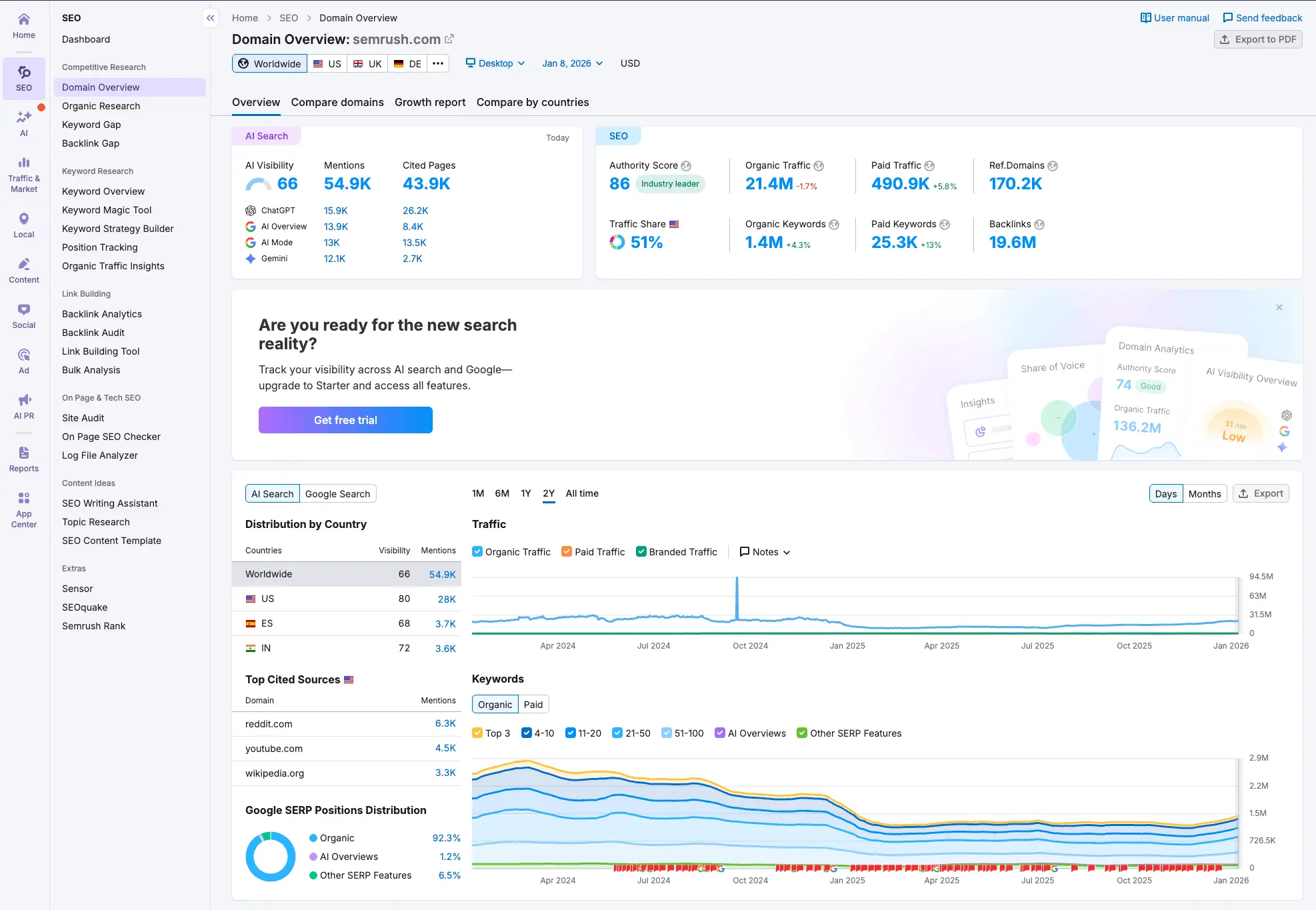
Semrush puts more planning context around SEO data. It adds search intent, CPC, competitive density, trend signals, and traffic analytics so you can connect keyword targets to budget, seasonality, and competitor spend patterns. It also tends to be stronger when you need packaged reporting and integrations for recurring updates.
Its less specialized than Ahrefs for link-only speed and deep link diagnostics. Its backlink tooling is strong, but the product emphasis is broader, so link builders who live in backlink reports all day often prefer Ahrefs’ flow. Semrush compensates by adding workflow features like outreach-style tracking and toxic link auditing.
Semrush also offers AI visibility tracking as an add-on, aimed at measuring how often your brand appears in AI answer surfaces and how that compares to competitors. It;s most useful when you want AI visibility metrics to sit next to your existing SEO projects, audits, and rank tracking without building a separate reporting flow.
It fits teams that need daily rank tracking, strong technical auditing, PPC-aware competitive research, and reporting that can be reused across stakeholders. It also fits teams that run content operations and want topic research, templates, and on-page recommendations in the same environment.
Semrush key features:
- Keyword research with intent, trend, CPC, and competitive density signals
- Site Audit with a large library of checks, fast crawls, and issue prioritization
- Daily Position Tracking by default with SERP features and visibility reporting
- Content toolkit for topic research, briefs/templates, and on-page recommendations
- Competitive research across organic and paid, plus traffic analytics and reporting
- AI visibility add-on for tracking brand presence in AI answer experiences
Ahrefs overview
Ahrefs is an SEO platform built for organic research and analysis. It’s best known for backlink data, but it also covers keywords, competitor research, content discovery, site audits, and rank tracking. The interface is designed to keep most workflows fast and uncluttered.
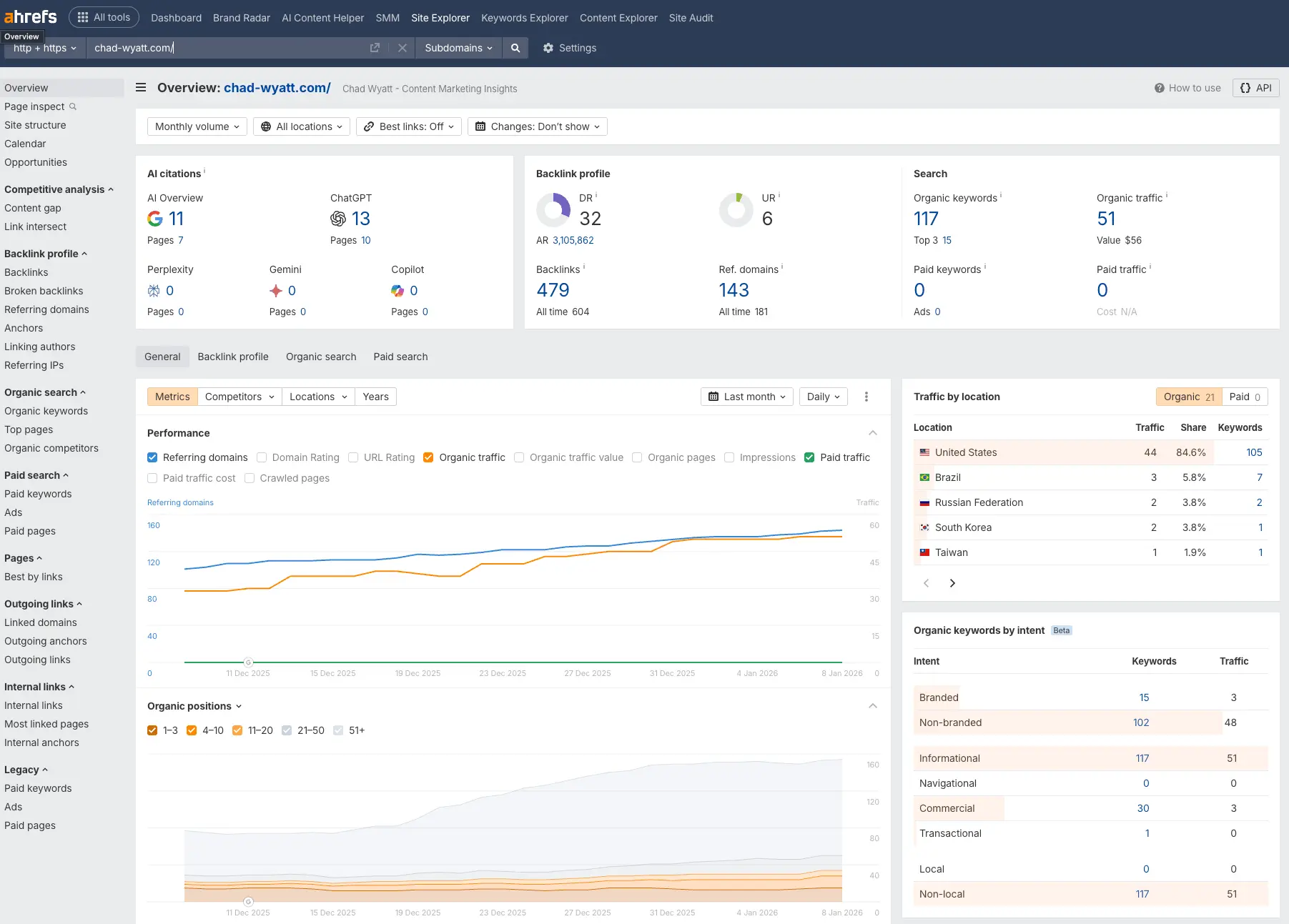
Ahrefs is built around quick investigation loops. Tools like Site Explorer, Keywords Explorer, and Content Explorer make it easy to move from what ranks to why it ranks using links, pages, and SERP-level context. It also focuses on metrics that help you prioritize effort, not just collect lists.
It doesn’t try to cover PPC workflows, local listings management, or broad marketing reporting in the way Semrush does. You can still do strong competitor analysis for organic search, but paid and local programs usually require additional tools. Reporting is improving, but it’s still more export-first than Semrush for many teams.
Ahrefs also offers Brand Radar as an add-on to track brand visibility in AI answers across major engines. It’s most useful when you want AI visibility benchmarking without changing your SEO research workflow.
Ahrefs fits teams that do heavy backlink analysis, care about fast link discovery, and want keyword prioritization signals that account for click behavior. It also fits teams that use content research to drive link acquisition, using Content Explorer to find patterns and outreach targets. For rank tracking, it works best when weekly refresh is enough or you plan around the credit model.
Ahrefs key features:
- Backlink analysis workflows (new/lost, broken backlinks, link intersect, anchors)
- Fast link discovery and frequent index updates
- Keywords Explorer metrics like Clicks, Parent Topic, and Traffic Potential
- Content Explorer for finding linkable content patterns and outreach targets
- Rank tracking with strong core metrics, but weekly updates by default unless you use credits
- Brand Radar add-on for AI answer visibility tracking
| Feature | Semrush | Ahrefs |
|---|---|---|
| AI Search Tracking | AI Search Toolkit add-on for AI answer visibility. | Brand Radar add-on for AI answer visibility. |
| Keyword Coverage | Strong US depth plus intent, CPC, and trends. | Broader country coverage plus click-based metrics. |
| Keyword Prioritization | Intent and competition signals for planning. | Clicks, Parent Topic, and Traffic Potential. |
| Backlink Index | Huge index, slower refresh on some domains. | Faster discovery and frequent updates. |
| Backlink Workflows | Toxic score, audit, and outreach-style tracking. | New/lost, broken links, intersect, anchors. |
| Site Audit | More checks, faster crawls, log file analysis. | Solid audits, can be slower on crawls. |
| Rank Tracking | Daily updates by default within limits. | Weekly by default; daily uses credits. |
| Content Tools | Topic research, templates, writing, on-page checker. | Content Explorer for content and link ideas. |
| Competitive Research | Organic + paid, traffic analytics, audience views. | SEO competitor research, strong SERP views. |
| Local SEO | Listings, reviews, local pack tracking (add-ons). | GBP Monitor plus local research; listings and reviews handled elsewhere. |
| Reporting & Integrations | Strong reports; GA/GSC/Looker Studio integrations. | More export-first; reporting add-on/enterprise. |
| Best Fit | Ops-heavy SEO, reporting, broader competitor intel. | Link-heavy SEO, fast research, clean UI. |
Which Tool Covers More of SEO and Marketing Needs?
The main difference between Semrush and Ahrefs is scope. Semrush is built to support SEO alongside adjacent marketing work, while Ahrefs stays focused on core organic SEO research. That difference affects how each tool fits into day-to-day workflows, team setups, and reporting expectations.
Semrush is more of a central platform for search-driven marketing. It connects SEO research with PPC data, content planning, local SEO, and reporting. Ahrefs is narrower by design. It prioritizes speed, clarity, and depth for organic search tasks like backlink analysis, keyword research, and competitor SEO intelligence.
If you need one tool to support multiple functions, Semrush usually covers more ground. If you want a dedicated SEO research tool that does a smaller set of jobs very well, Ahrefs is often the better fit.
Semrush coverage
Semrush is designed for teams that treat SEO as part of a broader marketing system. Its tools connect organic research to paid search data, content workflows, and performance reporting, which makes it easier to plan and explain work across channels.
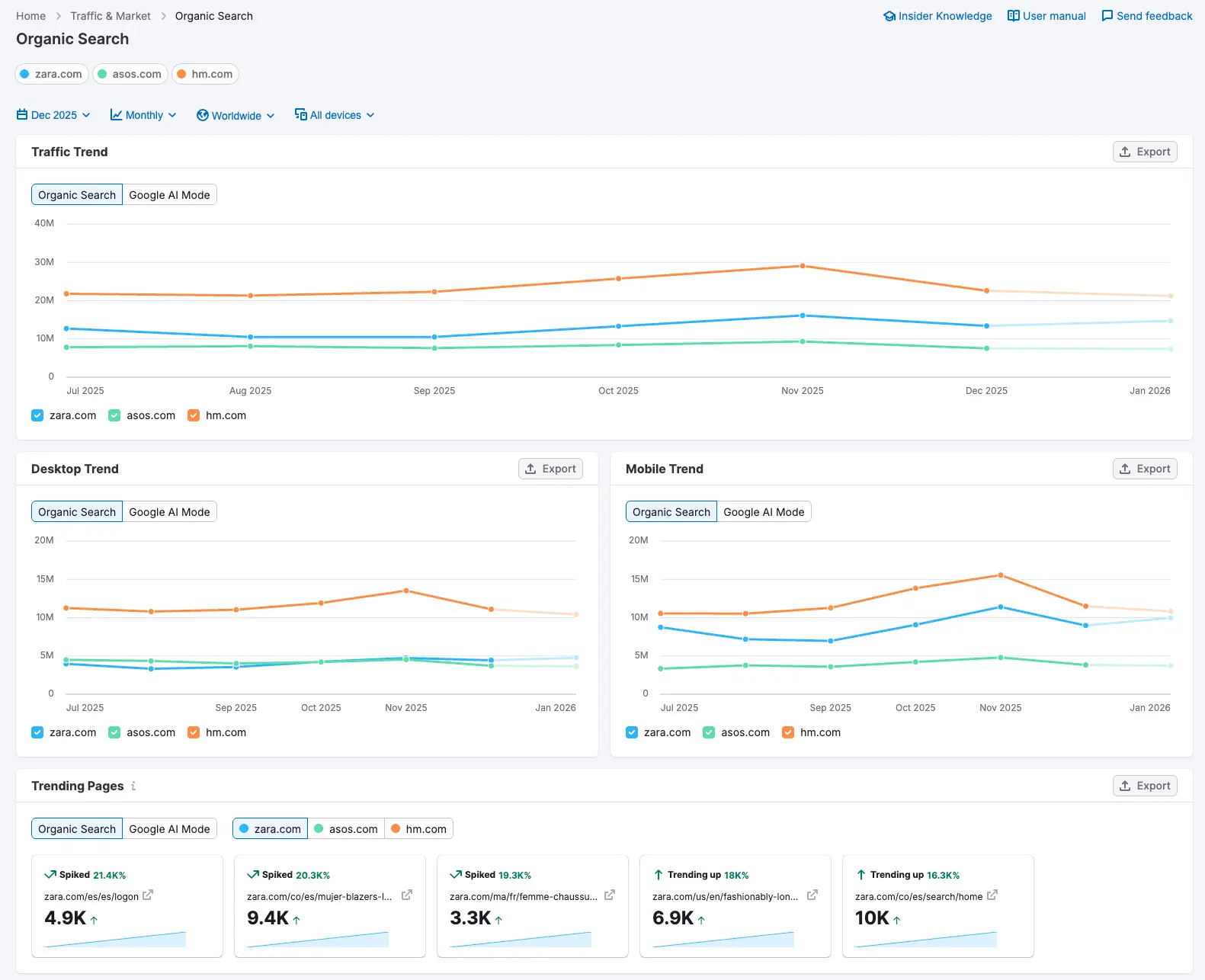
It also supports repeatable workflows. You can audit sites, track rankings daily, research keywords, analyze competitors, plan content, and generate reports without constantly moving data into other tools.
Semrush is typically a better fit when SEO needs to answer questions other than rankings alone.
Semrush covers:
- Core SEO research including keywords, backlinks, site audits, and rank tracking
- PPC research such as ad copy, CPC data, and paid competitor analysis
- Content planning tools for topic research, briefs, and optimization
- Local SEO workflows including listings management and local tracking
- Reporting features designed for clients, leadership, or cross-functional teams
This broader coverage is useful when stakeholders expect a single platform to explain what is happening in search, why it’s happening, and what to do next.
Ahrefs coverage
Ahrefs is built around organic search research and prioritizes depth and speed for core SEO tasks. While it has expanded into supporting areas like content research and Google Business Profile monitoring, it remains focused on SEO analysis rather than broader marketing workflows.
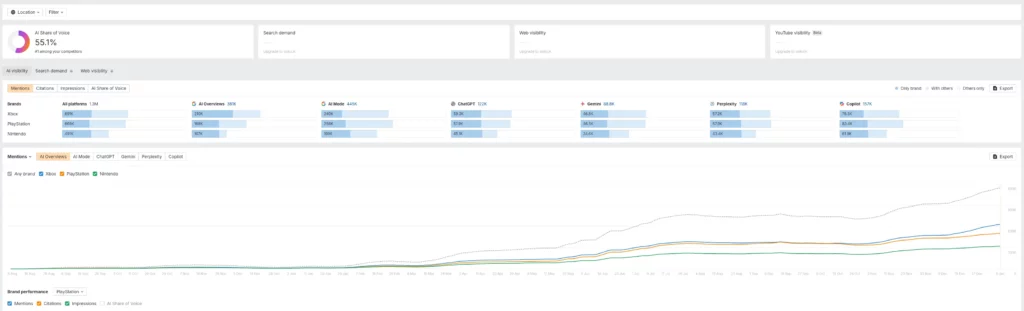
Ahrefs excels at backlink analysis, competitor SEO research, and keyword prioritization. Its tools are tightly integrated and fast, which makes it well suited for hands on SEO work where you are analyzing SERPs, links, and content opportunities daily.
It’s still more SEO first than marketing suite. Ahrefs has added reporting, web analytics, PPC research features, and GBP monitoring, but the platform remains centered on organic search intelligence.
Ahrefs focuses on:
- Backlink analysis and link growth monitoring
- Competitor SEO research and content gap analysis
- Keyword research with an emphasis on ranking potential
- Content research through Content Explorer
- Technical SEO insights related to crawl and link structure
Ahrefs is usually the better choice when you want an SEO led platform and you do not need a single tool to run every marketing workflow. In that setup, Ahrefs is the core SEO intelligence layer, with optional add ons like reporting, PPC research, and GBP monitoring where they fit.
Which Tool Has Stronger Keyword Research Data?
Semrush is stronger for high-volume keyword expansion and for adding marketing signals you can use to plan work, including intent labels, CPC, competitive density, and trend context. It’s also often stronger when your work is US heavy because its US keyword dataset is deeper and more granular.
Ahrefs is stronger for prioritization. Metrics like Clicks, Parent Topic, and Traffic Potential help you avoid keywords that look large by volume but produce limited traffic, and it tends to be stronger when you need consistent international coverage across many countries.
Semrush keyword research
Semrush’s keyword dataset is built to support expansion and segmentation. You can go from one seed term to large, grouped lists, then filter by intent, SERP features, difficulty, and trends to build topic coverage quickly.
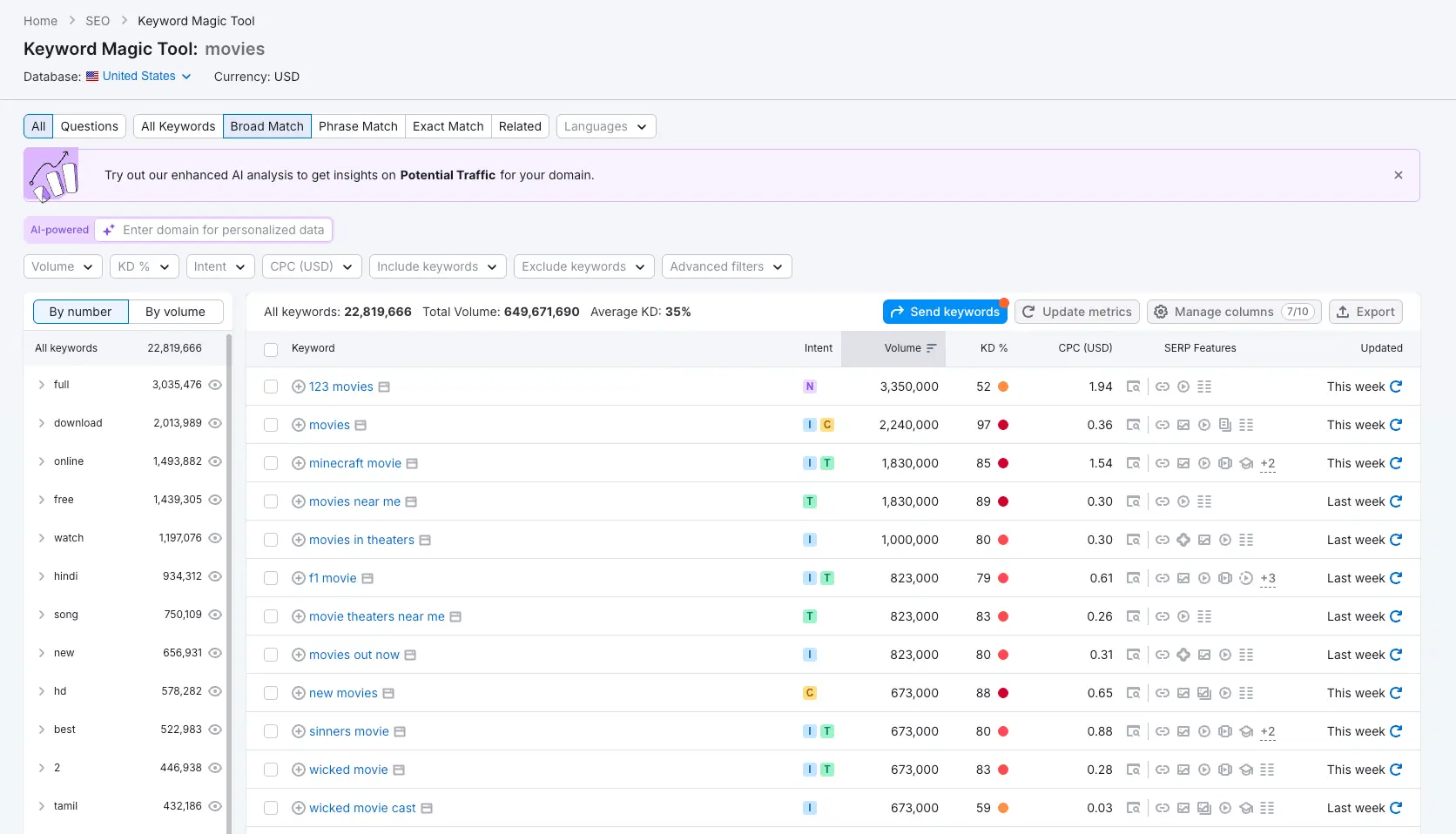
Semrush also includes more planning context around each keyword. Competitive density and CPC help you understand where paid competition exists, and intent labels help you separate informational, commercial, and transactional queries without creating your own classification system.
Semrush’s newer scoring features aim to tailor prioritization to your site, not just the SERP. Personalized Keyword Difficulty and topical authority style signals are designed to indicate which keywords may be more realistic for a given domain, rather than only showing overall competitiveness.
Semrush keyword research features
- Keyword Overview with volume, difficulty, intent, CPC, competition, trends, and SERP features
- Keyword Magic Tool for large-scale expansion, filters, and grouped keyword clusters
- Keyword Gap to compare your keyword set against competitors and identify missed opportunities
- Intent labeling and trend views to separate evergreen from seasonal demand
- Personalized Keyword Difficulty and topical authority style scoring for site-specific targeting
- PPC-oriented signals like CPC and competitive density to add commercial context to targeting
Semrush wins when you need to generate large keyword sets quickly and segment them by intent, trends, and commercial signals for planning and prioritization.
Ahrefs keyword research
Ahrefs’ keyword dataset is built to help you decide what is worth targeting, not just what exists. It emphasizes click behavior and topic hierarchy, which is useful in SERPs that include AI answers, featured snippets, knowledge panels, and other elements that reduce organic clicks.

Clicks per search changes prioritization because it separates searched often from clicked often. This helps avoid investing in keywords where the SERP satisfies intent without a visit or where clicks are heavily absorbed by ads and SERP features.
Parent Topic and Traffic Potential encourage fewer, stronger pages that capture broader demand. Instead of targeting many long-tail variations individually, you can focus on the parent topic and use Traffic Potential to estimate whether ranking is likely to produce engaged sessions.
Ahrefs keyword research features
- Keywords Explorer with volume, difficulty, CPC, and SERP-level context
- Clicks metric to estimate how many searches result in organic clicks
- Parent Topic to support topic clustering and consolidate content targets
- Traffic Potential to estimate total traffic from related queries if you rank well
- Strong international keyword coverage across many countries and languages
- SERP analysis views to evaluate ranking pages and link requirements quickly
Ahrefs wins when you need to prioritize targets based on expected clicks and topic structure, especially across multiple markets.
Which Is Better For Backlink Analysis and Link Building?
Ahrefs is usually the pick for backlink analysis speed, depth, and usability. It tends to show new links quickly and makes it easy to break link data into outreach-ready lists. Semrush is competitive on index size and adds execution workflows like toxic link auditing and built-in outreach tracking, which helps when you want link analysis and follow-through in the same platform.
Ahrefs backlinks
Ahrefs is built for link investigation loops. Reports like New and Lost Backlinks and New and Lost Referring Domains make it easy to monitor link velocity, spot sudden changes, and confirm whether new placements are being detected.
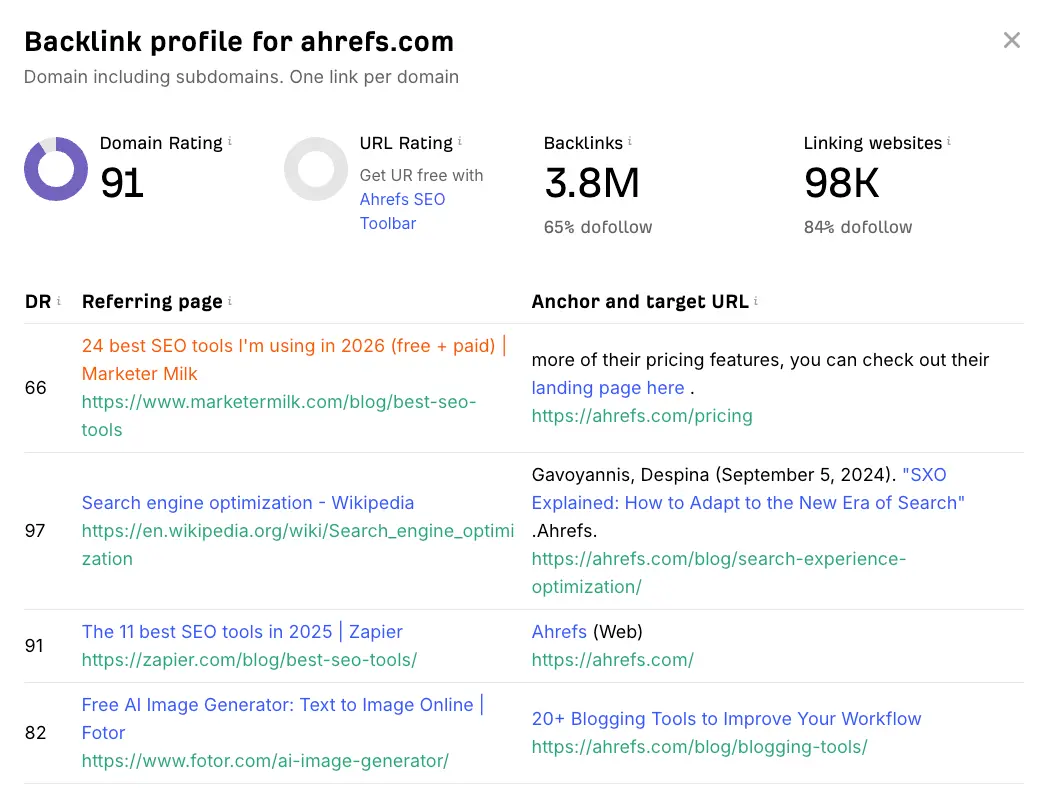
Its link-focused reports support practical link building and cleanup work. Broken Backlinks helps identify lost equity from 404s or removed pages, and Link Intersect highlights domains that link to competitors but not to you, which is a common starting point for prospecting.
Ahrefs is also known for efficiency at scale. Filtering by link type, follow status, platform, language, and other attributes is fast, and the interface makes it easy to move from analysis to outreach lists without heavy manual cleanup.
Ahrefs backlink features
- New and lost backlinks and referring domains with clear trend views
- Broken Backlinks for link reclamation and recovery opportunities
- Link Intersect to identify competitor-linked domains that do not link to you
- Fast filtering and exports for outreach lists, including anchors and link attributes
- Anchor text and linking page analysis for diagnosing link patterns
Ahrefs wins when link analysis and link prospecting are primary workflows, and you need fast, reliable data to support outreach.
Semrush backlinks
Semrush’s Backlink Analytics covers a wide range of backlink reports and long-term historical views, which makes it easier to review link growth, loss, and patterns over time.
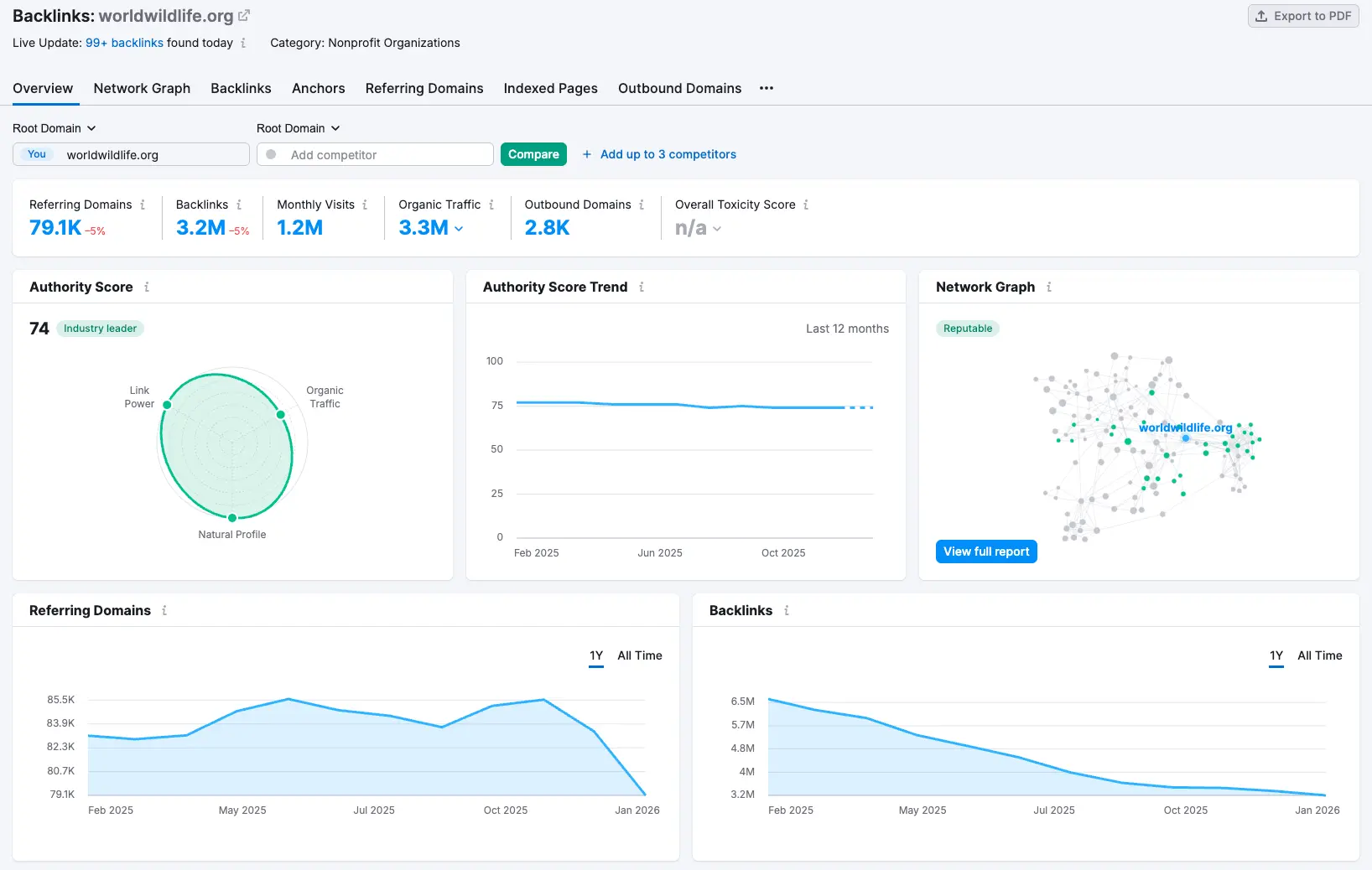
Semrush also includes more risk and maintenance features. Toxic Score and the Backlink Audit workflow are designed to show potentially harmful links and support disavow file creation, which can be useful for sites with older or more complex link profiles.
Where Semrush stands out is workflow support. The Link Building Tool turns competitor gaps into prospect lists and allows teams to track outreach status in a shared pipeline, which helps keep link building organized across campaigns.
Semrush backlink features
- Backlink Analytics with broad reporting and historical trend charts
- Backlink Audit with Toxic Score and disavow workflow support
- Link Building Tool for prospect discovery and outreach tracking
- Competitor backlink comparisons to identify gaps and opportunities
- Link monitoring and alerts for new and lost links
Semrush wins when you want backlink analysis combined with cleanup and outreach tracking in one system, especially for teams managing multiple sites or campaigns.
Which Is Better For Technical SEO Site Audits?
Semrush covers more of the site audit workflow. It gives you more checks, clearer issue grouping, and stronger tracking when you rerun audits after fixes. Ahrefs covers the main technical and on-page issues and is simpler to use, but it gives you fewer audit workflows for managing fixes over time.
Semrush audits
Semrush Site Audit is built to run often. It checks a site, groups issues by type and severity, and makes it easy to rerun crawls so you can see what changed after updates.

It also works well as a working list. Issues are organized in a way that helps you start with the problems that affect the most pages, which is useful when you need to fix the biggest blockers first.
Semrush also includes extra technical tools outside the crawl. Log File Analyzer helps you review what search bots visit on larger sites, so you can spot wasted crawling and missed areas that do not show up in an HTML crawl.
Semrush audit features
- Large set of audit checks with clear severity grouping
- Fast crawls and easy reruns for ongoing monitoring
- Crawl comparisons over time to track fixes and regressions
- Issue ordering that highlights problems affecting many URLs
- Log File Analyzer for bot crawl behavior on larger sites
Semrush fits teams that run audits often and need a clear way to track fixes week to week.
Ahrefs audits
Ahrefs Site Audit covers the main technical and on-page issues most teams check first. The reports are clean, and the site visuals for depth and internal linking help you spot structure problems fast.

Ahrefs is simpler, but it also has fewer advanced audit workflows. On some sites, crawls can take longer, and the check set is smaller, which can limit what you catch on larger or more complex builds.
Ahrefs works well for routine monitoring when you want a straightforward list of issues and clear site structure views. For deeper technical audits, many teams pair it with a crawler like Screaming Frog or Sitebulb for more control over rendering and custom checks.
Ahrefs audit features
- Core technical and on-page checks for routine audits
- Clear site structure views like depth and internal links
- Clean issue lists with fix notes
- Crawls can take longer on some sites
- Often paired with a specialist crawler for advanced audits
Which Is Better For Rank Tracking and SERP Monitoring?
Semrush works better when you need daily rank updates and regular reporting without managing credits. It supports continuous tracking across locations, devices, and SERP features, which makes it easier to maintain weekly updates for teams or clients. Ahrefs works well for weekly tracking and simpler views, but daily updates require credits, which affects how often you can refresh rankings at scale.
Semrush rank tracking
Semrush Position Tracking updates daily by default and supports multiple search engines, device types, and detailed location targeting. This is useful when you need consistent day to day ranking data without manual refresh steps.

Semrush also includes more SERP context around rankings. It tracks SERP features, shows visibility metrics for tracked keyword sets, and can flag cases where more than one URL ranks for the same query. This helps when diagnosing content overlap or ranking instability.
Reporting is one of the main reasons teams use Semrush for rank tracking. Charts, tags, and scheduled exports make it easier to turn ranking data into a repeatable weekly report without rebuilding it each time.
Semrush rank tracking features
- Daily updates by default
- Multiple engines and device options with local targeting
- SERP feature tracking and visibility metrics for keyword sets
- Cannibalization alerts and URL level ranking history
- Scheduled reports and export options for sharing
Semrush fits teams that need daily monitoring and repeatable reporting for stakeholders.
Ahrefs rank tracking
Ahrefs Rank Tracker is a simpler tracking setup. It supports broad country level tracking and shows core metrics like share of voice and SERP feature presence without adding many extra views.
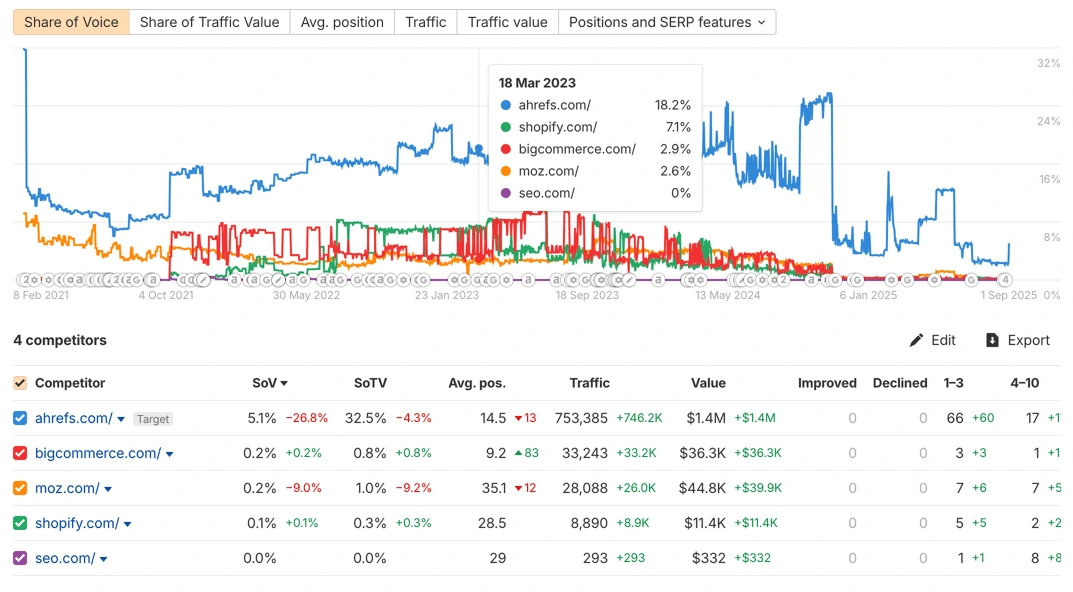
The main constraint is update frequency. Rankings refresh weekly by default, and daily updates use credits, which means tracking cadence needs to be planned when monitoring larger keyword sets.
Weekly tracking works well when the goal is to understand overall movement rather than daily changes. It also fits teams where rank tracking supports backlink and competitor research rather than acting as a primary reporting tool.
Ahrefs rank tracking features
- Weekly updates by default with optional daily refresh using credits
- Clean interface with core metrics like share of voice
- SERP feature tracking and competitor comparisons
- Works well for weekly checks and light monitoring
Ahrefs fits teams that want support with simple rank tracking, with weekly updates that complement backlink and competitor research rather than driving day-to-day reporting.
Which Is Better For Content Marketing and On-Page Optimization?
Semrush is better for end-to-end content planning and on-page execution inside the platform. It’s built to take you from topic ideation to a draft checklist to page-level improvements, then track impact over time. Ahrefs is better for content research at scale using Content Explorer, especially when you want to find topics that earn links and identify outreach angles.
Semrush content tools
Semrush’s content tooling is built around planning and production workflows. Topic Research helps you map subtopics and questions, SEO Content Template translates the top SERP into a brief, and SEO Writing Assistant scores drafts against the target and recommendations.
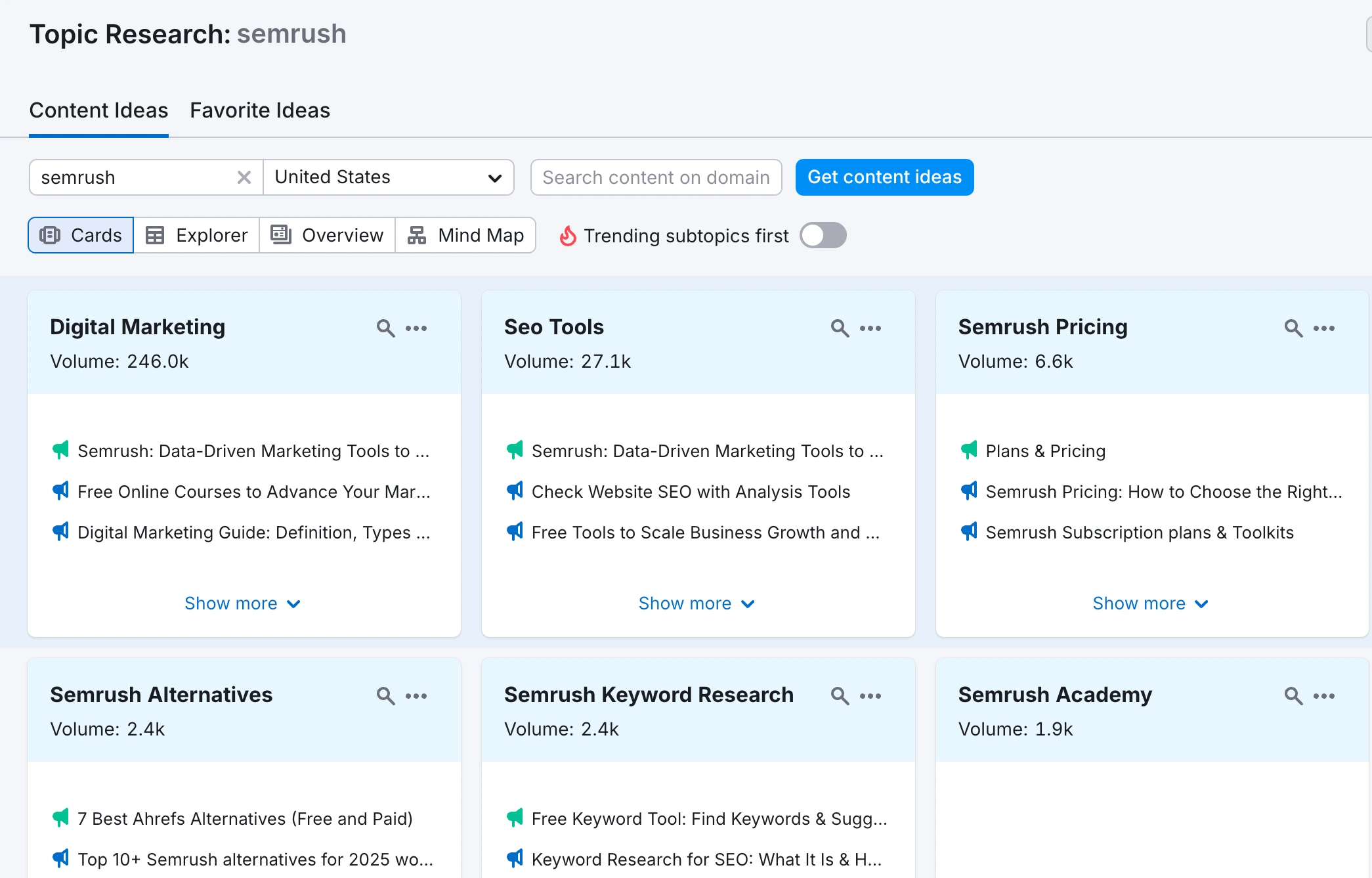
Semrush also supports content maintenance, not just new publishing. Content Audit uses connected site data to flag underperforming pages, and Post Tracking helps you monitor how specific URLs perform after updates.
For on-page execution, Semrush’s On-Page SEO Checker is the clearest differentiator. It compares your page to top competitors and turns gaps into a prioritized list of changes, which is useful when you need repeatable optimization work across many URLs.
Semrush content features
- Topic Research for ideation and subtopic mapping
- SEO Content Template for brief-style recommendations from top results
- SEO Writing Assistant for draft scoring and optimization guidance
- Content Audit to find pages to update, consolidate, or improve
- Post Tracking to monitor performance after publishing or refreshes
- On-Page SEO Checker for competitor-based page recommendations
Semrush wins when you want content planning, drafting support, and on-page optimization steps in one workflow.
Ahrefs content tools
Ahrefs is strongest for content discovery and link-focused research. Content Explorer lets you search large sets of pages and filter by estimated traffic and backlinks, which helps you find formats and topics that repeatedly earn links.

This supports gap work. You can use competitor top pages and keyword overlap to find content gaps, then use the linking domains and link patterns to shape a page that is more likely to attract citations and links.
Ahrefs’ on-page tooling is lighter inside the platform. It has an AI content helper as an add-on for content analysis and drafting support, but the core product is still centered on research and discovery rather than guided on-page execution.
Ahrefs content features
- Content Explorer with traffic and backlink filters for pattern finding
- Competitor top pages to identify what earns traffic and links
- Content gap discovery to find missed topics and queries
- Link opportunity identification via linking domains and intersect-style views
- AI content helper add-on for draft analysis and content suggestions
Ahrefs wins when you want to find linkable content opportunities and validate topics with real traffic and backlink patterns.
Which Is Better For Competitive Research and Market Analysis?
Semrush covers more of competitor intelligence across organic, paid, and traffic analytics. It answers questions like where competitors get traffic, what ads they run, and how audience overlap changes over time, not just what they rank for. Ahrefs is strong for competitor research centered on organic search. It’s fast for breaking down a competitor’s top pages, keywords, and links, and it keeps the workflow simple when you want answers quickly.
Semrush competitor research
Semrush competitor research includes more than organic rankings. You can review organic keyword movement, then add paid search research and ad coverage, including shopping and display where available, to see where competitors put budget and which offers and pages they promote.
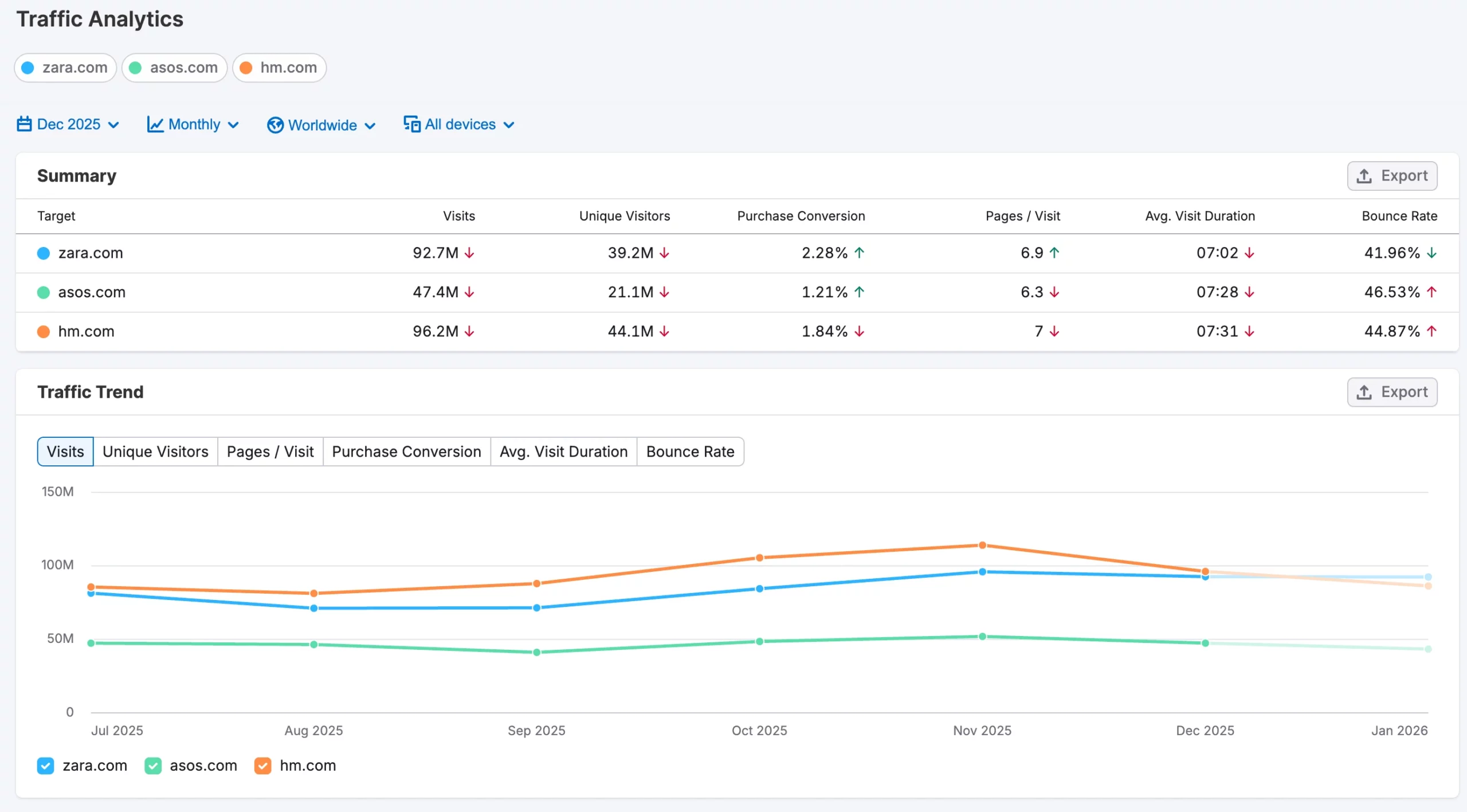
Traffic analytics and audience views are a key part of the Semrush scope. They help you estimate traffic sources, review channel mix, see overlap between competitor audiences, and compare changes over time without using rankings as the only input.
This is important for planning and reporting because you can explain competitor movement in business terms. You can show changes linked to paid coverage, new content, and channel mix changes, not only keyword counts.
Semrush competitive research features
- Organic research plus paid search intelligence for competitor spend and ad coverage
- Traffic analytics and channel mix estimates for benchmarking
- Audience overlap and market views for competitor set definition
- Keyword and backlink gap workflows to identify where you are behind
- Reporting-ready exports for recurring competitor updates
Semrush wins when competitive research needs to include paid data and traffic benchmarks, not just organic SEO.
Ahrefs competitor research
Ahrefs competitive research is built around fast domain and page research. Site Explorer shows a competitor’s top pages, top keywords, and SEO traffic trends so you can map what drives their organic visibility and where they are strongest.
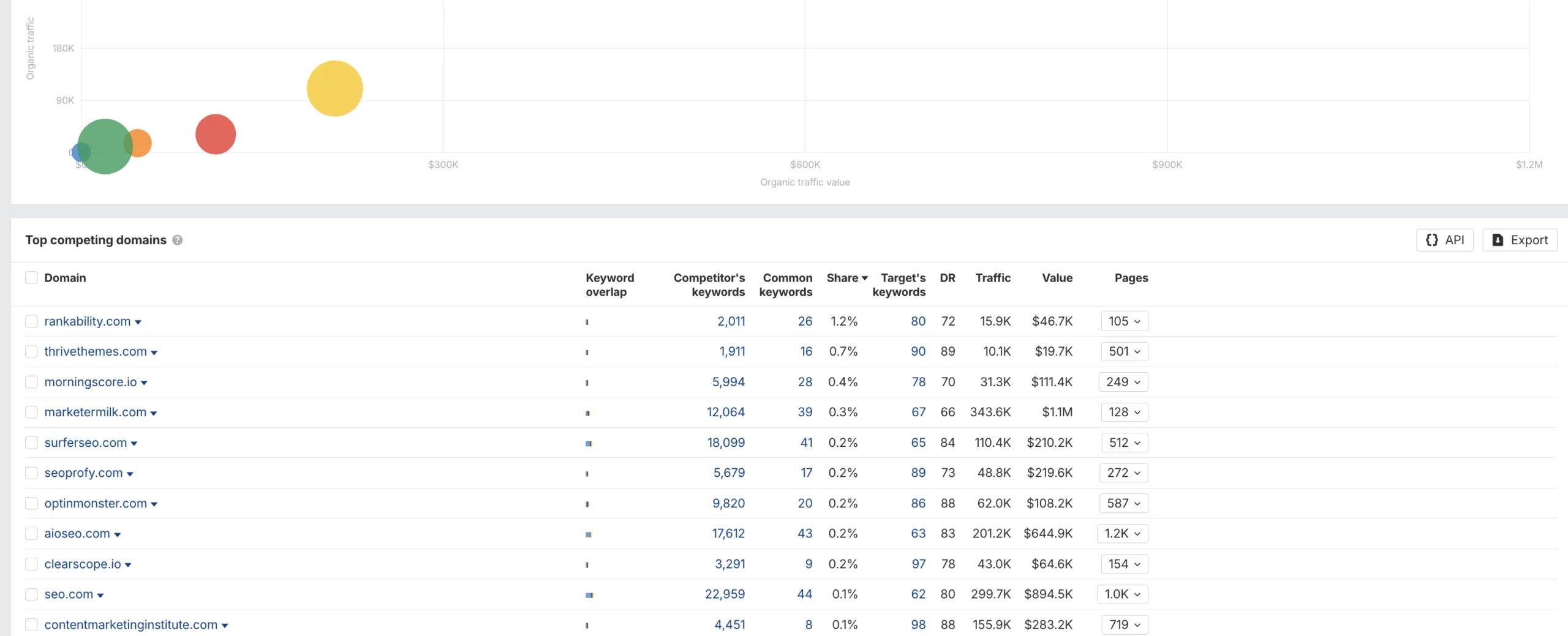
Keyword-level SERP analysis is a core workflow. You can review the pages that rank, their link profiles, and the SERP layout, which helps you judge what it takes to compete before you commit to a page.
Ahrefs has less coverage for market style analysis across channels inside the platform. It includes some broader views, but more in-depth paid, audience, and channel benchmarking still sits more on the Semrush side, so full channel competitor work often uses other tools.
Ahrefs competitive research features
Site Explorer for top pages, top keywords, and competing domains
SEO competitor discovery via keyword overlap reports
SERP analysis per keyword to assess ranking pages and link requirements
Fast navigation and exports for SEO competitor audits
Less depth for paid and audience benchmarking than Semrush
Ahrefs wins when competitive research is targeted on organic search and you need fast, clear insight into which pages, keywords, and links drive a competitor’s performance.
Which Covers Local SEO Better?
Semrush has dedicated local SEO features via add-ons for map rankings, listings management, and review workflows. Ahrefs can support local SEO research through localized keyword work and location-based rank tracking, but it doesn’t manage local presence or Google Business Profile operations.
Semrush local SEO
Semrush’s local SEO toolkit is built around operational tasks. It can track local pack and map visibility, sync business listings across directories, and support citation cleanup so NAP data stays consistent.

It also includes review monitoring and response workflows, which is good when reviews are part of the ranking and conversion problem. This makes Semrush more useful when local SEO includes both rankings and reputation management, not just keyword targeting.
Semrush is the better fit for multi-location brands, agencies handling local clients, and businesses that need visibility reporting across cities, map packs, and listings status in one place.
Semrush local SEO features
- Local rank tracking including map pack visibility
- Listings sync and NAP consistency management
- Citation support and cleanup workflows
- Review monitoring and response management
- Local reporting for multi-location performance
Semrush fits teams that treat local SEO as an operational workflow, where rankings, listings, reviews, and reporting need to be managed together across one or many locations.
Ahrefs local features
Ahrefs can still support local SEO planning. You can research local intent keywords, evaluate local competitors’ pages and link profiles, and track rankings by location settings where available in the tracker.
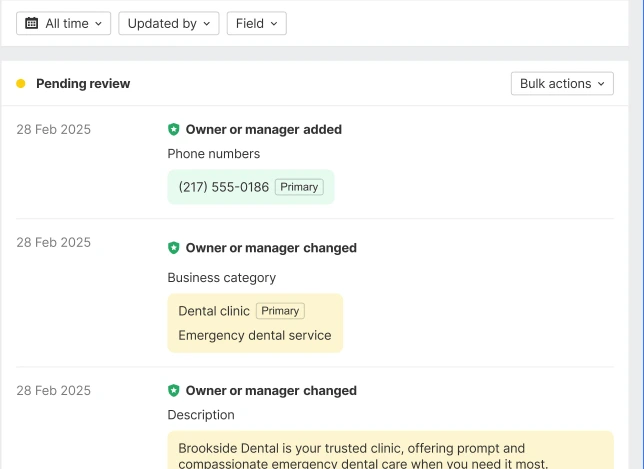
Ahrefs now also includes GBP Monitor, which lets you monitor and manage Google Business Profiles from one dashboard. It supports change alerts, update history, and bulk edits across profiles, which covers a key part of local presence maintenance.
Ahrefs works best for local SEO teams that want local research plus GBP monitoring in the same tool, while keeping broader listings distribution and review operations in a dedicated local platform if needed.
Ahrefs local SEO capabilities
- Localized keyword research and SERP analysis
- Location based rank tracking settings for monitoring positions
- Competitor page and backlink analysis for local SERPs
- GBP Monitor for tracking and managing Google Business Profile changes and updates
Ahrefs fits teams that focus on local keyword research, competitor analysis, and Google Business Profile monitoring, while handling listings distribution and reviews in other tools.
Which Has Better Reporting, Integrations, and Collaboration?
Semrush is stronger for packaged reporting, integrations, and agency-style deliverables. It’s built to turn SEO data into stakeholder-ready outputs without custom dashboards. Ahrefs is improving, but it’s still lighter unless you add paid reporting features or rely on exports, API, or Looker Studio at higher tiers.
Semrush reporting and integrations
Semrush reporting is built around My Reports. You can assemble recurring PDFs, schedule delivery, and standardize report layouts across projects so weekly and monthly updates are consistent.
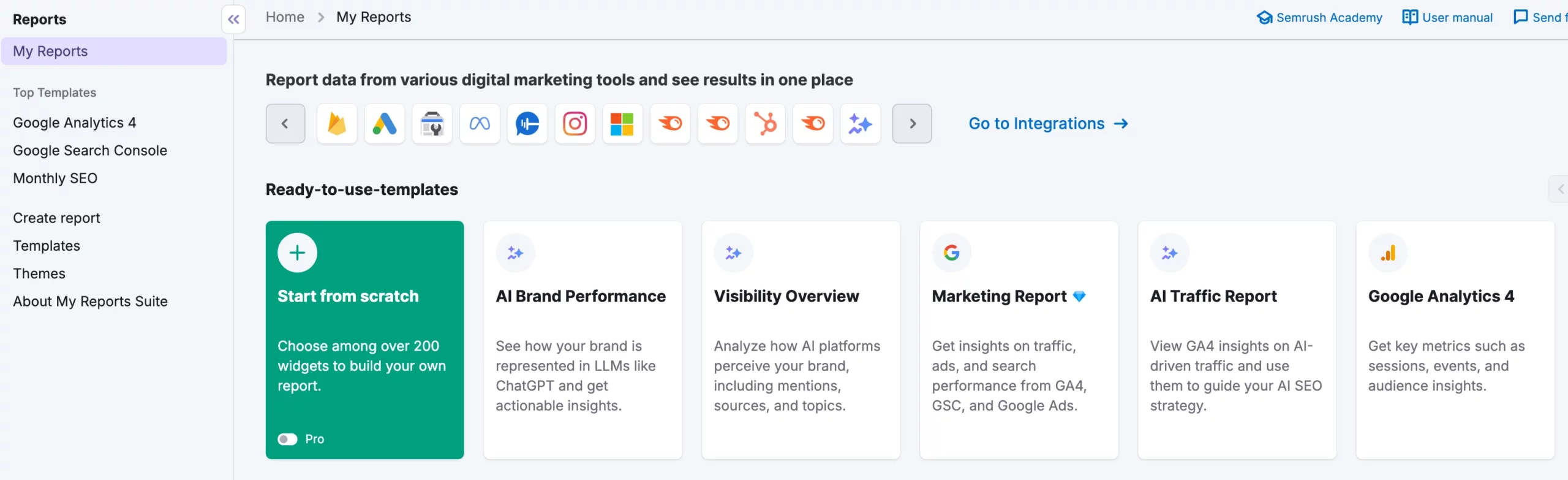
Integrations are also more built out. Semrush connects with Google Analytics and Google Search Console to enrich audits and content work, and it supports Looker Studio connectors for dashboarding without custom engineering.
Collaboration is designed around shared projects and repeatable client reporting. This works well when multiple people need access to the same dashboards and you want a consistent reporting format across accounts.
Semrush reporting and integration features
- My Reports for custom, scheduled PDF reporting
- White-label and branding options (plan/add-on dependent)
- Connectors for GA, GSC, and Looker Studio
- Project-based workflows for shared visibility and reporting consistency
- Exports designed for client and stakeholder updates
Semrush fits teams that need repeatable reporting, shared dashboards, and client or stakeholder outputs without building custom reporting systems.
Ahrefs reporting and integrations
Ahrefs reporting is more export-first for many teams. You can pull clean tables quickly, but turning them into client-ready reporting often happens outside the platform unless you add reporting features.
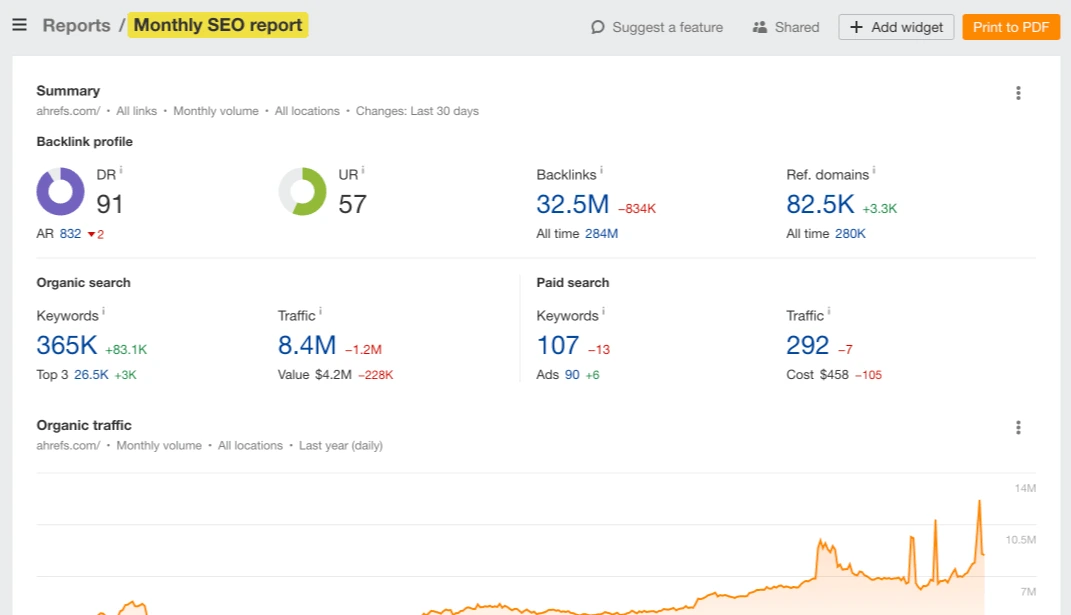
Ahrefs has introduced a report builder as an add-on and supports Looker Studio and other connectors more at the enterprise end. Many teams use Ahrefs as the research engine and push the data into their own reporting stack.
The API is the main integration path for teams building dashboards. It works well when you want Ahrefs data in internal BI, a warehouse, or custom reports, and you have the resources to maintain that pipeline.
Ahrefs reporting and integration features
- Fast exports for links, keywords, and competitor reports
- Report Builder available as an add-on for packaged reporting
- Looker Studio connectors typically tied to higher tiers/enterprise
- API for teams building internal dashboards and automated reporting
- Collaboration is simpler, with fewer built-in client-report workflows
Ahrefs fits teams that treat reporting as a downstream task and prefer exports, APIs, or external dashboards for presenting results.
Which Is Better For AI Search Tracking?
Semrush and Ahrefs both offer AI search tracking as add-ons that measure how often your brand shows up in AI answers and how that compares to competitors. Semrush’s approach is closer to ‘AI visibility inside an SEO workflow’ (especially if you use Semrush One). Ahrefs’ approach is Brand Radar, which is more focused on brand presence in AI answers and benchmarking.
Semrush One AI search tracking
Semrush One includes Semrush’s AI visibility tooling alongside the core SEO toolkit. The AI views are designed to answer practical questions like where your brand appears in AI answers, which prompts/topics trigger mentions, and which competitors are cited instead.
Read my full Semrush One review.

Semrush also connects AI tracking to SEO operations. You can pair AI visibility reporting with ongoing rank tracking and technical checks, which helps when you need to turn ‘we aren’t showing up in AI answers’ into specific content and technical work.
Semrush One AI search tracking features
- AI visibility tracking for major AI answer surfaces (including Google AI features and leading answer engines)
- Brand visibility and competitor comparison reporting for AI answers
- Prompt and topic research views to find where you should be appearing
- Prompt tracking capabilities tied into the wider Semrush workflow
- AI-related technical diagnostics surfaced alongside normal SEO auditing (where available in your setup)
Semrush One is stronger when you want AI visibility to live next to rankings, audits, and content workflows, so the same team can act on it without a separate tool.
Ahrefs AI search tracking
Ahrefs offers Brand Radar as its AI search visibility product. It’s built to track brand presence in AI-generated answers and summaries across major AI engines, then compare that visibility against competitors.
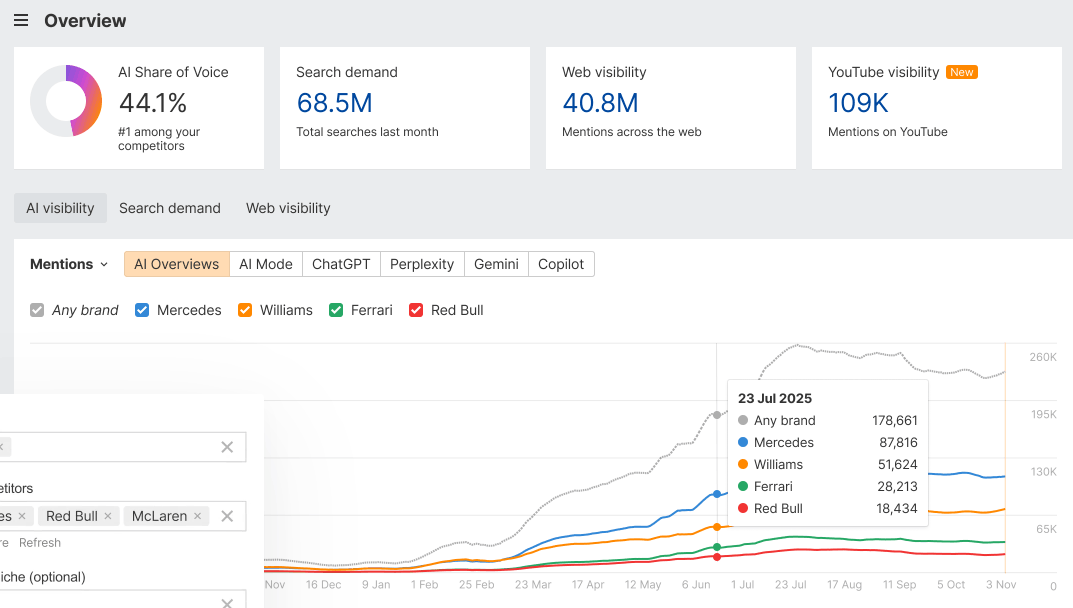
Brand Radar is best when you want benchmarking and monitoring, not a broader marketing suite. It sits on top of Ahrefs’ core strengths (backlinks, competitor research, keyword prioritization) but it’s still a distinct add-on rather than a replacement for the core platform.
Ahrefs AI search tracking features
- Brand Radar add-on for AI answer visibility tracking across major engines
- Brand and competitor benchmarking for AI visibility over time
- Monitoring for how often your brand is mentioned and surfaced in AI answers
- Designed to plug into an Ahrefs-first research workflow (links, content, keywords)
Ahrefs is stronger when you want AI visibility benchmarking as an add-on to a research-first SEO workflow, without expanding into broader marketing tooling.
Which Pricing Model Delivers Better Value?
Semrush bundles full SEO functionality into tiered plans designed to support ongoing execution. Daily rank tracking, site audits, keyword research, content tooling, reporting, and optional local and PPC modules are all priced inside the same subscription, starting at roughly $130–$140/month on annual billing for core plans. You pay once to run most day-to-day SEO workflows in one platform.
Ahrefs prices SEO as a usage-based research platform. Plans start lower on paper, but rank tracking updates, exports, and heavy feature usage are limited by plan caps and refresh frequency. This works well for research focused teams, but costs and friction increase when daily tracking, large exports, or sustained usage are required.
If you want one subscription to cover SEO execution end to end, Semrush is usually better value. Ahrefs makes more sense when SEO is primarily a research function and usage stays within predictable limits.
Semrush plans and what you get
Semrush is structured around tiered plans that expand limits and modules as needs grow. All plans include core SEO tooling, so you are not paying separately for basics like rank tracking, audits, or keyword research.
Daily rank tracking and site audits are included from entry plans. Higher tiers mainly increase limits, unlock additional content, reporting, and local features, and support larger teams or more sites.

Semrush pricing and value:
- Pro (from $117/month): Core SEO toolkit including keywords, backlinks, site audits, daily rank tracking, and basic reporting.
- Guru (from $208/month): Adds content marketing tools, historical data, stronger reporting, and expanded limits.
- Business (from $416/month): Adds higher limits, API access, extended reporting, and advanced competitive insights.
Value points:
- One subscription covers daily tracking, audits, research, content, and reporting
- Reduces the need for separate rank tracking, audit, and PPC research tools
- Costs scale with tiers and add-ons, but usage is predictable once limits are set
Semrush delivers the most value when multiple SEO workflows are active at the same time rather than relying on it for a single task.
Ahrefs plans and what you get
Ahrefs is structured around plans that emphasize research access and usage allowances. Core tools are available across tiers, but limits on rank tracking refreshes, exports, and feature usage shape how the platform is used day to day.
Rank tracking updates weekly by default, and more frequent refreshes consume additional resources. Plans scale primarily by usage rather than more features.
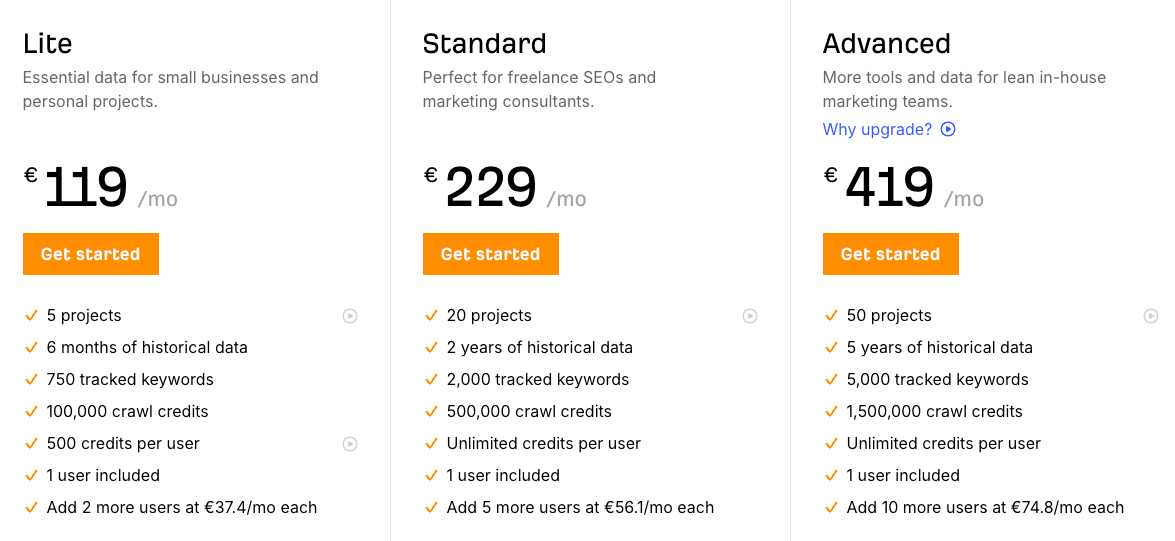
Ahrefs pricing and value:
- Lite (from $119/month): Core keyword research, backlink analysis, site audit, and limited rank tracking.
- Standard (from $229/month): Higher limits, more tracked keywords, and expanded access to reports and exports.
- Advanced (from $419/month): Higher usage caps, more projects, API access, and support for large research teams.
Value points
- Strong value for backlink analysis and fast competitor research
- Efficient for teams focused on SERPs, links, and content discovery
- Costs and friction increase with daily rank tracking, large exports, or heavy multi-feature usage
Ahrefs delivers the most value when SEO work stays centered on research and link analysis rather than continuous tracking and execution across many sites.
Which Is Better for Different Team Sizes and Workflows?
Semrush fits teams that need cross-functional workflows and stakeholder reporting across SEO, paid, content, and local. Ahrefs fits SEO specialists who need speed, link depth, and cleaner day-to-day research workflows. The right choice depends on whether your bottleneck is reporting and coverage, or link and research throughput.
Semrush fit by team type
Semrush is a strong fit when SEO work needs to connect to broader marketing decisions and recurring reporting. It works well when multiple stakeholders need consistent outputs, not just raw data exports.
Semrush fit examples
- In-house marketing teams that need SEO plus PPC signals and reporting-ready outputs
- Agencies that need repeatable templates, exports, and consistent client deliverables
- Teams that want daily tracking without managing credit-based refresh limits
- Local or multi-channel programs that need rankings plus local presence workflows
Ahrefs fit by team type
Ahrefs is a strong fit when the team’s daily work is research, link analysis, and content discovery tied to organic search. It works well when reporting is handled elsewhere and the tool’s job is to produce fast, trustworthy SEO inputs.
Ahrefs fit examples
- Link builders and SEO specialists doing competitor link analysis every day
- Teams doing international SEO and topic-led research across many markets
- Teams with separate tools for reporting, PPC, and local presence management
- Large portfolios where verified project policies and fast research loops matter
Additional Features
Both tools have extra features that sit outside the core SEO workflows of keywords, links, audits, and rank tracking. These don’t decide the purchase on their own, but they change how easily you can turn SEO data into research, execution, and reporting without adding more tools.
Semrush’s additional features
Semrush includes several adjacent marketing modules that expand what you can do beyond organic SEO. These features matter most when you need paid competitive context, operational tooling, and workflow support in the same platform.

Semrush extras:
- PPC research modules: competitor keywords, ad copy history, and paid coverage context to inform SEO priorities and content angles.
- Social toolkit and publishing: scheduling, monitoring, and basic reporting tied to marketing workflows.
- App Center ecosystem: add-ons and integrations that extend Semrush into adjacent marketing tasks.
- Log File Analyzer: bot crawl diagnostics for large sites where crawl behavior affects indexation and refresh speed.
- Outreach workflow: prospecting and CRM-style tracking for link building campaigns inside the product.
These features help when your work includes PPC-adjacent competitor research, technical crawl diagnostics, and outreach coordination, not just SEO analysis.
Ahrefs’ additional features
Ahrefs has fewer ‘suite’ features, but it has a few specialist tools that are unusually strong for SEO research. These matter most when you want to find linkable content patterns quickly and turn competitor analysis into outreach targets.
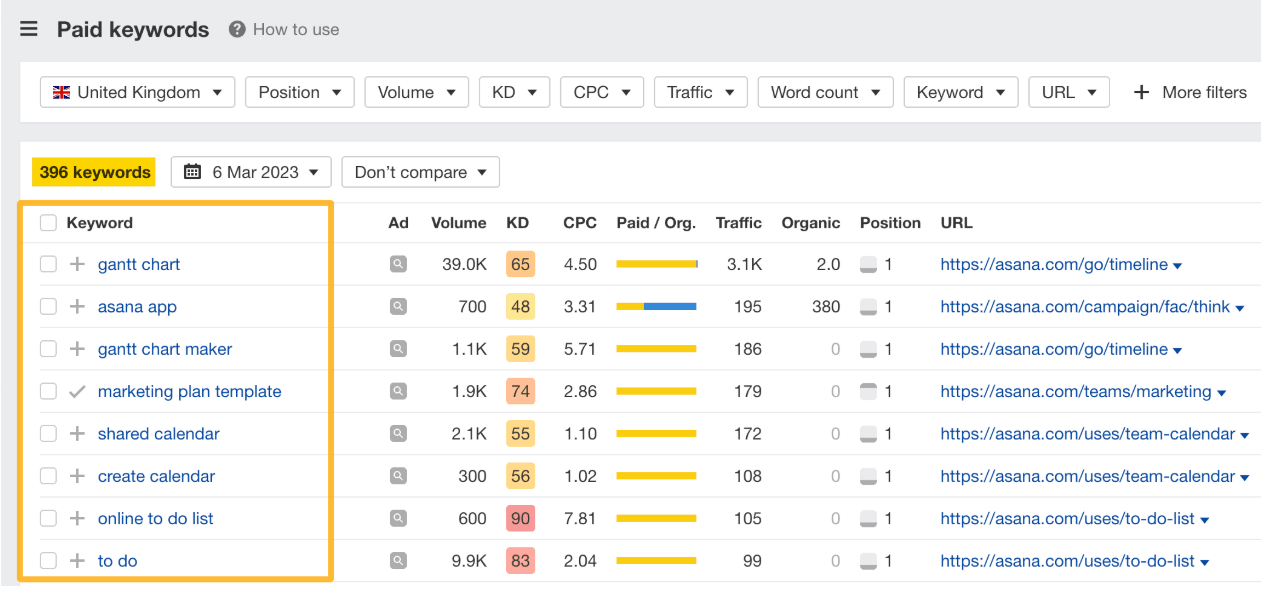
Ahrefs extras:
- Content Explorer depth: large index with strong filters for traffic, backlinks, and publishing trends to find repeatable content patterns.
- Reclamation reports: broken backlinks and related views that make it easier to spot recovery opportunities fast.
- Prospecting shortcuts: intersect-style comparisons to generate outreach targets from competitor link profiles.
- Free/entry tooling options: lightweight access for verified sites via Ahrefs Webmaster Tools for audits and basic link checks.
These features help when your workflow is research-heavy and link-focused, and you want faster discovery and cleaner lists more than packaged marketing modules.
Final Verdict: Semrush vs Ahrefs. Which Should You Choose?
If you need daily rank tracking, stronger technical audits, broader competitor intel (including paid), and packaged reporting, choose Semrush. If link analysis is your heaviest workflow and you want faster backlink research plus cleaner day-to-day SEO investigation, choose Ahrefs.
| Use Case | Best Choice | Why It Fits |
|---|---|---|
| Single brand with one main site | Semrush | Daily tracking plus strong audits, content tooling, and reporting in one workflow. |
| Small SEO team | Ahrefs | Faster research loops and strong link depth with less interface overhead. |
| Content-led SEO program | Semrush | Topic and on-page tools support briefs, optimization, and ongoing content maintenance. |
| Link-building heavy program | Ahrefs | Link workflows for new and lost links, broken links, and intersect are faster to act on. |
| SEO + PPC competitive research | Semrush | Paid and traffic analytics add context that SEO-only tools do not provide. |
| International SEO across many markets | Ahrefs | Broader country coverage paired with click-based prioritization signals. |
| Local SEO and listings management | Semrush | Local add-ons support listings, reviews, and map visibility tracking. |
| Agency reporting and recurring deliverables | Semrush | Packaged reports, integrations, and repeatable client exports. |
| Portfolio with many verified sites | Ahrefs | Verified project policy scales more predictably for large site sets. |
| AI answer visibility monitoring | Tie | Both offer paid add-ons for AI search visibility, but it is not the core product for either. |
Semrush fits teams that need operational SEO and stakeholder reporting. It stands out on daily rank tracking without credit refresh friction, audit depth and speed (including advanced technical tooling), and broader competitive context across organic, paid, and traffic analytics.
- Daily rank tracking by default within your limits
- Strong Site Audit workflows plus advanced technical tooling
- PPC-aware competitor research and traffic analytics context
- Reporting and integrations built for recurring updates
Choose Semrush when:
- You need daily rank tracking and scheduled reporting without managing credits.
- Technical SEO operations are a major workload and you want deeper audit tooling.
- Competitor research needs paid and traffic context, not just organic rankings.
- You need content planning and on-page workflows that produce repeatable action lists.
Ahrefs fits SEO specialists who prioritize link intelligence and fast research loops. It stands out on backlink workflows and speed, plus keyword prioritization signals that help avoid targets with low click yield.
- Best-in-class backlink analysis workflows and fast discovery
- Click-based keyword signals (Clicks, Parent Topic, Traffic Potential)
- Strong competitor SEO research through Site Explorer and SERP analysis
- Scales well when you manage many sites and need quick investigation
Choose Ahrefs when:
- Link analysis and link building drive most of your SEO work.
- You want faster, cleaner workflows for competitor research and link investigation.
- Keyword targeting depends on click yield and topic clustering, not just volume.
- Weekly rank tracking is enough, or you can plan around credits for refreshes.
Take action
- Start with Semrush if daily monitoring, technical operations, and reporting are the main needs.
- Start with Ahrefs if backlinks and fast SEO research are the main needs, and you can treat rank tracking as weekly by default.
How I compared these tools:
I compared Semrush and Ahrefs across keyword research, backlink analysis, site audits, rank tracking, content workflows, competitive research, local SEO, reporting, and AI search tracking add-ons using current feature sets and patterns in verified user feedback.
FAQ: Semrush vs Ahrefs
Semrush is usually better when you need daily rank tracking, stronger technical audit workflows, broader competitor intelligence (including paid), and reporting you can reuse. Ahrefs is usually better when backlink analysis and link prospecting are the main workload and you want faster, cleaner research workflows.
Semrush is better for large-scale keyword expansion and for adding planning signals like intent, CPC, competitive density, and trends. Ahrefs is better for prioritization using Clicks, Parent Topic, and Traffic Potential, which helps avoid high-volume keywords that do not produce clicks.
Ahrefs is still the preferred option for many practitioners because of link discovery speed and link-specific workflows (new/lost, broken backlinks, intersect). Semrush is competitive on coverage and adds features like Toxic Score, backlink auditing, and outreach tracking that help teams execute inside the platform.
Semrush is typically stronger for audit depth, crawl speed, and operational features like crawl comparisons and Log File Analyzer. Ahrefs is solid for core issues and clear site structure views, but it can be slower and many teams still pair it with a specialist crawler for advanced technical work.
Semrush is better when you need daily updates by default and reporting without credit management. Ahrefs works well for weekly cadence and simpler tracking views, but daily refresh uses credits, so frequent monitoring at scale can become restrictive.
Semrush is better for content planning and on-page execution inside the tool (topic research, templates, writing assistant, on-page checker, content audit). Ahrefs is better for content research at scale using Content Explorer to find traffic-and-link patterns and identify linkable topics and outreach angles.
Semrush is broader because it includes organic, paid, and traffic analytics views that help explain competitor movement beyond rankings. Ahrefs is excellent for SEO-only competitor analysis through Site Explorer and SERP analysis, but it stops earlier on PPC, local operations, and packaged reporting.
Semrush is better if you need listings management, reviews, and map pack tracking through local add-ons. Ahrefs can help with localized keyword research and location-based tracking, but it doesn’t manage local presence (no GBP audits, listings sync, or review tooling).
Yes, but as paid add-ons. Semrush offers an AI Search Toolkit, and Ahrefs offers Brand Radar, both focused on tracking brand visibility in AI answers and comparing against competitors. These tools are useful for monitoring, but they do not replace the core SEO features in either platform.
Yes, when your work is split between link-heavy SEO and operational reporting. A common split is Ahrefs for backlink analysis and content discovery, and Semrush for daily rank tracking, technical audits, PPC-aware competitive research, and stakeholder reporting.
Semrush tends to be better value when you actually use audits, daily tracking, content tooling, reporting, and PPC or local modules in one place. Ahrefs can be better value when backlinks and core SEO research are the primary needs, but the credit model can increase cost or friction if you require daily rank refreshes and heavy usage.