

Content performance has never been harder to assess, especially due to AI. A spike in views doesn’t mean the message was effective. A post that goes viral might drive zero clicks. A top-ranking article could still be bouncing users in seconds.
Content spans too many channels and formats to rely on surface-level signals. Content marketing teams need sharper indicators of what’s working and what’s not, especially when channels overlap and attribution gets messy.
This list covers the content marketing metrics that are important – not to fill dashboards, but to support better decisions.
Measurable, actionable, and focused on outcomes.
Why Are Content Marketing Metrics Important?
Content marketing metrics are important because they prove performance, guide decision-making, and show which content is responsible for business impact. They help marketers identify what attracts the right audience, where engagement drops, and which formats drive conversions or revenue.
Content only works if you can prove that it does. Metrics are how you see whether your work is producing results or wasting time.
AI, algorithm updates, changing user behavior, and shorter attention spans have made performance harder to measure. You need numbers that show what’s actually happening. Who’s finding your content, how they interact with it, and what they do next.
Good metrics show patterns. They tell you which channels bring qualified visitors, which pieces drive action, and which formats deserve more investment. Every channel now competes for the same seconds of attention. Without clear measurement, you can’t defend budget, test ideas, or improve what you publish.
The goal isn’t to collect data to fill a presentation or to show off. It’s to use that information to improve your strategy, focus on what performs, and prove your impact when results are questioned.
Tracking metrics is how content marketing stays accountable and stays funded.
What Are the Most Important Content Marketing Metrics?
1. Traffic Source
Traffic Sources show which channels your visitors come from. This could include organic search, direct visits, social media, referral links, or email. This metric gives insight into how audiences discover your brand and which sources bring consistent, qualified traffic.
It’s one of the most useful indicators of content distribution performance. If most of your visits come from a single channel, your visibility depends on that platform’s stability.
A balanced mix spreads risk and keeps growth steady, even when algorithms or the market change. It also helps allocate budget toward what delivers results.
For example, if 90% of visits come from social and only 10% from search, strengthen SEO to reduce platform dependency. If referral traffic jumps after a guest article, partnerships are working. If direct traffic drops, your returning audience or brand recall may be weakening.
Track this in Google Analytics > Reports > Acquisition > Traffic acquisition. Compare organic, referral, social, email, and direct channels.

Add UTM parameters to campaigns for precise tracking, and review changes monthly to see whether your audience mix is diversifying or relying too heavily on one source.
2. Engagement Rate
Engagement rate in GA4 measures the percentage of sessions where users interact with your site by scrolling, clicking, or spending at least 10 seconds on a page. It replaces the older bounce rate metric, refocusing from exits to engagement quality for a more accurate view of user behavior.
Engagement rate for your website is not the same as engagement rate on social media. On platforms like LinkedIn or Instagram, engagement is based on likes, comments, or shares. For your site, it shows how visitors interact with your website content during a session.
A low engagement rate often indicates a relevance or user experience issue. The content might not match search intent, load times could be slow, or the page layout may deter users from reading.
A strong engagement rate shows visitors find value and interact by exploring pages, clicking links, or staying longer on your site.
If one article has a noticeably lower engagement rate than similar content, your headline may not align with the topic or your introduction might fail to hold attention.
If engagement is higher from email traffic than from social media, it might suggest your email audience is more aligned with the content’s depth or purpose.
Track this in Google Analytics > Reports > Engagement > Pages and screens. Review engagement rate, average engagement time, and triggered events to see how users interact with each page.
Use these insights to improve layout, internal links, and make information easier to find.
The goal isn’t perfection, it’s understanding behavior patterns that help you keep users engaged longer.
3. Average Time on Page
Average engagement time is how long your website stays active in a user’s browser or app window. It tracks when the page is actually in focus, giving a clearer view of real attention rather than idle time or open tabs.
This metric shows how much time users actively spend engaging with your content. Longer engagement means people are reading, scrolling, or interacting. Shorter times can point to weak relevance, poor layout, or surface-level content.
For example, if a detailed guide averages 90 seconds while similar pages hold users for three minutes, it may need a stronger structure or visuals to sustain attention.
Track it in Google Analytics > Reports > Engagement > Pages and screens. Compare engagement time by page, device, and source to see where users spend the most time. Use those insights to focus on the content and layouts that hold attention longest.
4. Scroll Depth
Scroll depth is how far down a page visitors go, shown as a percentage or milestone (25%, 50%, 75%, 100%). It tells you how much of your content users actually see and whether they reach key sections or drop off early.
This metric connects structure with engagement. If readers stop midway, the opening sections may be too long or poorly formatted. If most reach the end, the pacing and layout are working.
Over time, scroll data highlights weak spots in long-form pages, articles, or landing pages so you can adjust structure and keep readers moving.
For example, if most visitors leave before the 40% mark, tighten your introduction or front-load value. If mobile readers stop sooner than desktop users, break up dense text and improve spacing. If CTAs near the bottom get little interaction, move them higher where more users will see them.
Track scroll depth in Google Tag Manager by setting triggers at 25%, 50%, 75%, and 100%, then send these events to Google Analytics 4.
Combine with heatmap tools like Hotjar or Crazy Egg to visualize where attention fades. Reviewing this data by device and content type shows exactly where to adjust layout and flow for stronger engagement.
5. Click-Through Rate (CTR)
Click-through rate (CTR) is how many people click a link or call-to-action out of everyone who sees it. It shows how effectively your content earns attention and encourages action, whether that’s to read a post, sign up, purchase a product, or visit a landing page.
A high CTR means your titles and CTAs match user intent; a low one could be weak alignment or unclear value.
CTR is a metric that’s tracked in different platforms: Google Search Console for search results, email platform for newsletters, and social analytics for posts or ads.

Compare impressions and clicks. If impressions rise but clicks drop, your visibility is improving, but your message isn’t connecting. Use A/B testing to refine headlines, metadata, and CTAs until click patterns strengthen.
It’s important to test and validate before implementing changes to fix a low CTR.
AI’s impact on CTR
Since AI started citing courses and Google AI Overview came in, CTR has been impacted. Research found that AI answers often satisfy user intent directly on the results page, leading to fewer outbound clicks. In some cases, CTRs dropped between 20-60%, depending on query type and how prominently sources were cited.
This decline is due to answers being presented to the user and cited sources not standing out immediately. Also, some scenarios have made click attribution difficult with AI.
To identify AI referrals, check for referrers such as source=chatgpt, ref=perplexity, or browser identifiers like arc:// and brave:// in analytics. Some platforms now categorize these under ‘AI referrals.’ Tracking them helps quantify exposure through AI results and summaries.
You can’t prevent AI summaries, but you can compete for the next click. Write metadata and titles that promise deeper insight, use schema markup for proper attribution, and design snippets that give value.
CTR is still a primary signal of engagement and, increasingly, a measure of how well your content earns attention, with even more weight in an AI search environment.
6. Keyword Rankings (Average Position)
Keyword rankings show where your content appears in search results for specific queries. Average position is essentially the mean rank of your page across all tracked keywords, offering a clear view of organic performance.
Strong rankings are a sign of authority and relevance, weak rankings the opposite, while declining performance suggests competition, content becoming outdated, or loss of backlinks.
This metric helps track SEO progress and spot performance issues early, often before they impact traffic. Monitoring keyword positions shows which topics, structures, or backlinks are responsible for improvement and which need attention.
For example, if a page moves from position 15 to 5 for a key term, your SEO efforts are working. If rankings hold steady despite new backlinks, check content depth or targeting. If you rank well but clicks stay low, test different titles and meta descriptions to better match intent.
Track rankings in Google Search Console or a platform like Semrush (image below). Focus on keywords that align with business goals, and review distributions (top 3, top 10, top 20) rather than single averages to see trends.
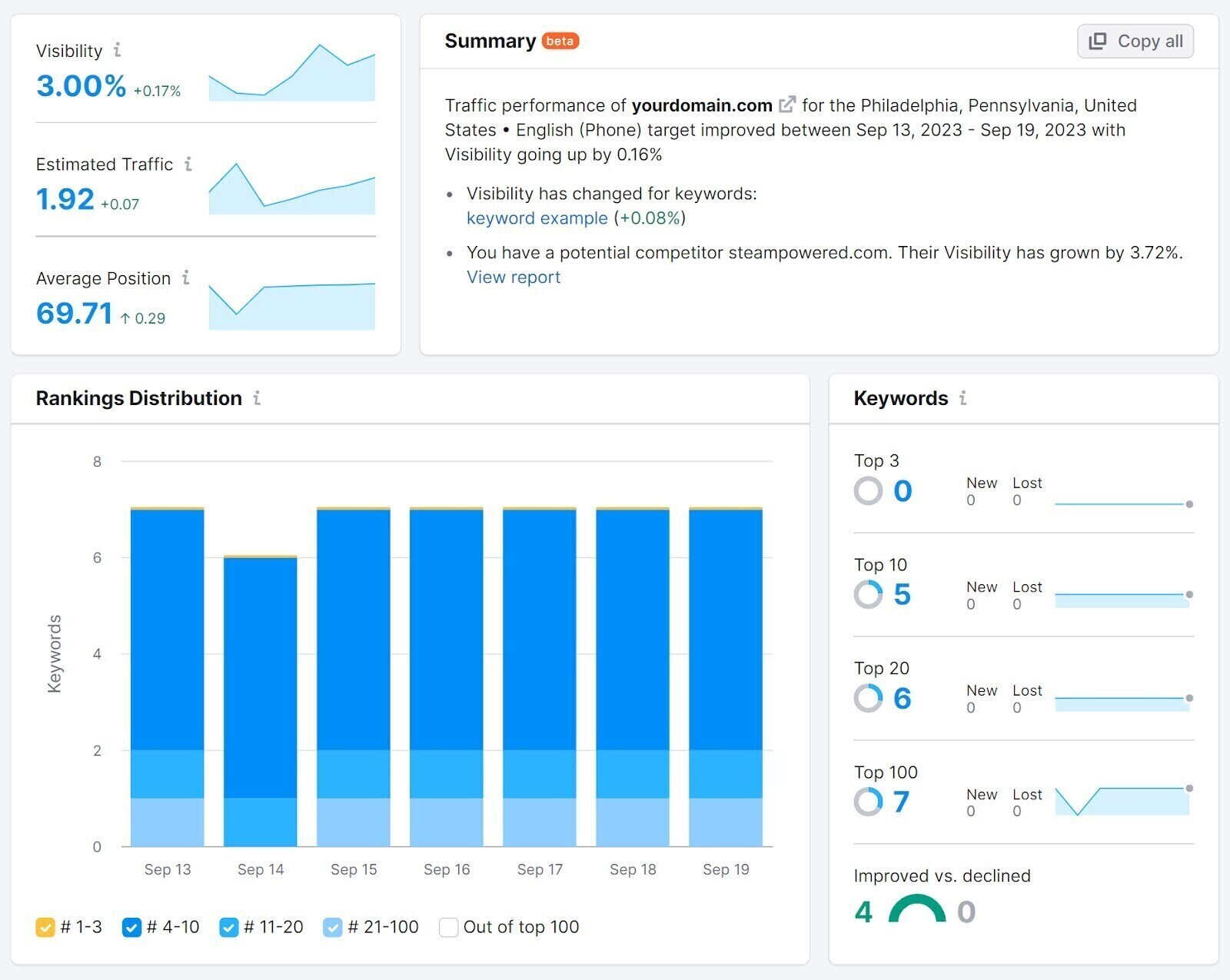
Rankings are still the clearest indicator of organic reach and how well your content competes in search.
7. Backlinks (Inbound Links)
Backlinks are how many external websites link to your content. Each high-quality link is a sign of credibility and authority, showing Google, and people, that your material is valuable enough to reference.
Quality matters more than quantity here. A single link from a respected industry source carries more weight than a hundred low-quality domains.
This metric is still one of the strongest indicators of authority in search. Backlinks improve how search engines analyze trust and relevance, which directly affects rankings and organic reach.
If your content earns links, it’s being cited, discussed, or used by others. Tracking backlinks helps you understand how far your content travels beyond your own channels and which topics or assets attract attention – sometimes it could be an image or video asset that pulls in the backlinks, not just the content page.
An example: If a whitepaper earns backlinks from high-authority domains like trade publications, university research pages, and trusted news sites, it positions your content as a credible reference, which gives a boost to both rankings and long-term authority.
Track backlinks using Ahrefs, SEMrush, Moz, or Google Search Console under Links.
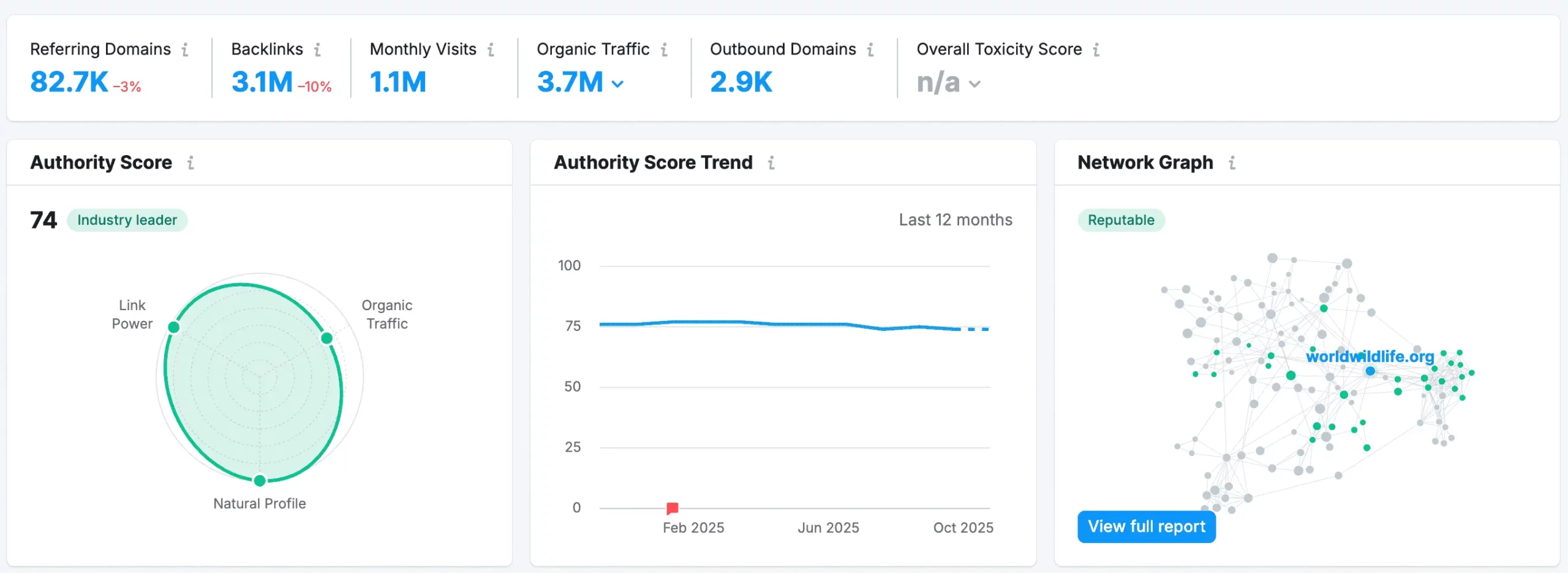
Review both the total number of backlinks and referring domains to understand the coverage. Check link authority and anchor text to ensure they align with your brand and target keywords.
8. Social Shares & Engagement
Social shares and engagement track how audiences interact with your content, including likes, comments, shares, reactions, and saves. These show how much attention your content earns and how strongly it connects with your audience. High engagement means relevance and satisfaction; low engagement could be weak messaging, wrong formats, or inconsistent posting.
Engagement is important because most social algorithms reward early interaction. Content that gets quick engagement often reaches more users. Tracking engagement over time helps you see which topics, tones, and formats perform best and where to focus future effort.
For example, if an infographic generates high share volume, comments, and spikes in referral traffic within 24 hours, it shows your audience values quick, visual content. Also, the format performs more effectively than standard text posts.
Engagement can be found in each platform’s analytics or whichever social planning tool you use, like Social Bee or Hootsuite.
Track engagement rate (interactions ÷ impressions) rather than raw totals to compare performance across accounts. Consistent analysis reveals what content truly earns attention and builds lasting audience connection.
9. Email Open Rate
Email open rate mainly shows how effectively your subject line and preheader are at convincing people to open the email. Other factors like sender name, timing, and personalization could also play a part here.
Open rate can be a sign of strong brand recall and audience relevance. When subscribers expect value, they open fast; when they don’t, they scroll past. Comparing open rates across campaigns helps spot fatigue, poor segmentation, or deliverability issues.
For example, if newsletters average 45% opens but product updates only 18%, it’s a sign subscribers might prefer insights over promotions. If open rates fall while clicks stay steady, the content works, but subject lines or timing need improvement.
Open rate is a standard email marketing metric used across the board and will be in any email platform you use.
Review by audience segment, campaign type, and time zone. Look at patterns across multiple sends to understand what consistently earns attention. A/B test to find patterns in what works with your audience.
10. Email Click-Through Rate (CTR)
Email CTR tracks how many recipients clicked a link out of all emails delivered. It shows how effectively your content drives action, like visiting a page, downloading a resource, or heading to a product purchase. It also shows how effective your CTA is.
A strong CTR means your message, layout, and CTA align with what the audience values. A weak one could be a sign of unclear offers, poor structure, or irrelevant content. Comparing CTR across campaigns helps identify what consistently converts attention into action.
For example, if a campaign announcing a new product feature drives triple the clicks of a general newsletter, it shows your audience responds to specific, action-oriented content. That tells you to lead future sends with clear value propositions rather than broad updates.
Track CTR in any email marketing platform you use. Review both total CTR and click-to-open rate to assess message quality.
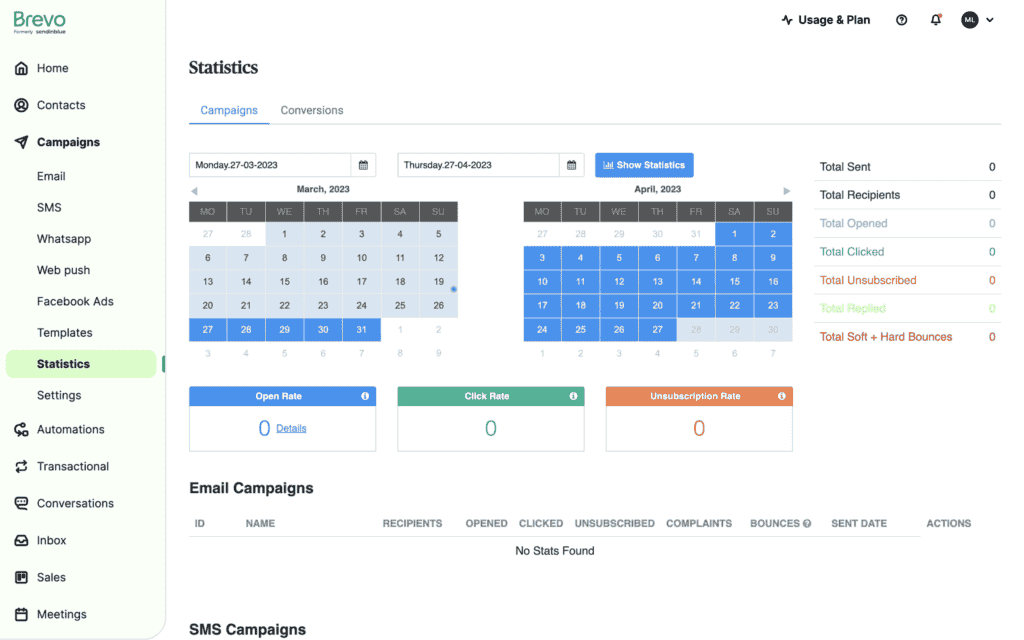
Segment by audience, device, and email type to see what performs best. CTR is one of the clearest indicators of whether your emails move audiences from interest to engagement.
11. Content Conversion Rate
Content conversion rate covers the percentage of visitors who complete a defined goal after engaging with your content, like a form fill, demo request, download, or purchase. It connects performance directly to outcomes, making it a key indicator of ROI.
Traffic alone doesn’t prove success. A page with fewer visitors but higher conversions delivers more value than one with heavy traffic and no action. Tracking conversion rate shows which content, topics, or channels drive the results and where friction may block progress.
For example, if a case study drives more demo requests than a general product page with similar traffic, it shows that proof-based content builds trust and moves prospects closer to conversion. A clear direction to produce more first-hand assets.
Track conversions in Google Analytics, HubSpot, or other platforms you use. Establish clear success actions for each content type, and compare conversion rates across channels to see what’s performing effectively.
12. Return Visitor Rate
Return visitor looks at how many users come back after their first visit. It shows loyalty, consistency, brand recall, and the value of your content. A balanced mix of new and returning visitors is a sign of both growth and retention.
Attracting visitors once is easy. Getting them to return requires trust and value. An increasing return rate means your content is valuable, whereas a decline can be a sign of weak follow-up, irregular posting, or low perceived value.
For example, if readers who first discover your blog through search start returning directly within a few weeks, it shows they found value and now look for your content purposely, a clear sign of growing loyalty and brand trust.
Track return visitor rate in Google Analytics > Reports > Retention or your CRM. Review trends monthly to confirm you’re not just gaining traffic but keeping your audience engaged over time.
13. Impressions / Content Reach
Impressions and reach show how often your content is displayed or viewed. Impressions count total appearances, while reach is unique viewers. Together, they show how visible your brand is across search, social, and other platforms.
These metrics are important as visibility drives awareness before engagement. Tracking impressions with clicks reveals whether your message is seen but not acted on. In zero-click spaces, like AI summaries or social feeds, impressions help measure impact even when clicks don’t follow.
For example, if your content earns thousands of impressions on LinkedIn but reach remains low, it means the same users are seeing it repeatedly, a sign to expand targeting. If reach grows faster than engagement, the content itself may need more relevance or stronger hooks.
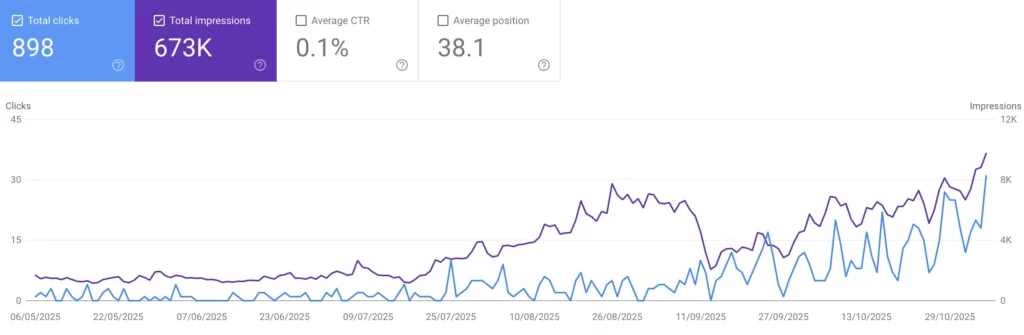
Track impressions in Google Search Console or built-in platform analytics. For content sites, monitor search impressions over time to track visibility and combine with CTR to get a more complete picture.
14. Video View Duration & Completion Rate
View duration shows how long people watch your video; completion rate shows the percentage who finish it. Together, they indicate how well your content holds attention beyond the first click.
Starting a video is easy, but finishing it shows real interest, especially with viewer attention these days. High completion and steady watch time show strong pacing and relevance, while drop-offs highlight weak openings or poor structure. These metrics also influence how platforms recommend your content.
For example, if most viewers leave within 20 seconds, tighten the intro to reach the point faster or have a more engaging hook. Equally, if viewers always drop at the 5 minute marker, it might be a sign boredom has set in or pacing has dropped.
Track performance in YouTube Studio, LinkedIn Video Analytics, or native video dashboards. Review retention graphs to spot where interest dips and refine length, structure, or delivery to keep audiences watching longer.
15. Brand Mentions & Sentiment
Brand mentions and sentiment track how often your brand appears across external sources like social media, news sites, forums, and publications. It also tracks whether those mentions are positive, neutral, or negative. Together, they show how visible your brand is outside of owned channels and how people perceive it.
An increase in mentions shows good reach; sentiment shows reputation. Positive mentions build authority and trust, while negative ones point out areas to address. Tracking both shows how content impacts perception, not just traffic.
For example, if mentions increase after a campaign but sentiment turns negative, review tone and messaging before responding or promoting further.
Monitor mentions and sentiment with Brandwatch or Sprout Social. Review volume, sentiment ratio, and source type regularly to see where your content drives conversation and how it impacts brand perception.
FAQ: Content Marketing Metrics
The key metrics include website traffic by source, bounce rate, average time on page, scroll depth, click-through rate, keyword rankings, backlinks, social engagement, email performance (open and click rates), content conversion rate, return visitor rate, impressions, video completion rate, and brand mentions. These provide a full picture of visibility, engagement, and ROI.
They prove the value of your content. Metrics show what attracts visitors, what keeps them engaged, and what drives real outcomes like leads or sales. Without data, you can’t measure progress, defend budget, or refine strategy.
It depends on your goal. For awareness, impressions and reach matter most. For engagement, time on page, CTR, and video completion rate are key. For ROI, focus on content conversion rate and assisted conversions.
Use Google Analytics 4 > Reports > Acquisition > Traffic acquisition. It breaks down visits by source—search, social, email, referral, or direct—so you can see which channels drive the most qualified traffic.
Look at average time on page, scroll depth, and engagement rate. High numbers mean visitors find your content useful and stay longer. Pair this with social engagement metrics for a fuller view of audience interest.
It varies by type. For blog posts, 50–70% is normal. Landing pages often have higher bounce rates but should compensate with strong conversion rates. The goal isn’t perfection but improvement over time.
Set up conversion events in Google Analytics 4, HubSpot, or your CRM. Define what a conversion means—form fills, downloads, sign-ups—and monitor which pages or channels contribute most.
Yes. High-quality backlinks remain a primary ranking and trust signal. They help search engines assess authority and can bring direct referral traffic. Focus on earning links from reputable, relevant domains.
Track average view duration, completion rate, and engagement actions (likes, comments, or clicks). Platforms like YouTube, LinkedIn, or Vimeo provide retention graphs showing where viewers drop off.
Average open rates vary by industry but generally fall between 25–35%. Instead of fixating on averages, benchmark against your own campaigns and focus on consistent improvement.
Use clear, benefit-driven titles and CTAs. Test variations in subject lines, metadata, and button placement. In search results, optimize meta descriptions to promise value beyond AI previews.
Impressions count total views, including repeats. Reach counts unique users. Both help measure visibility and brand exposure, even when users don’t click through.
Review core metrics monthly to spot trends, and do deeper quarterly analyses to adjust strategy. For campaign-specific metrics, check weekly while they run.
A combination works best: Google Analytics 4 for traffic and engagement, Search Console for rankings, Ahrefs or SEMrush for backlinks, HubSpot for conversions, and Sprout Social for social metrics.