
Younger audiences aren’t just scrolling TikTok. They’re using it for social search, typing queries like ‘how to…,’ ‘best…,’ and ‘near me’ into the search bar and choosing what to watch from those results. TikTok SEO is how you optimize your videos so they show up in that social search, rather than leaving it up to the fate of the algorithm.
It’s not optimizing web pages. It’s optimizing hooks, on-screen text, spoken phrases, captions, and hashtags so TikTok shows your video when someone searches your topic.
If you ignore TikTok SEO, your videos rely on chance. If you get it right, you keep collecting views, saves, and profile visits from search weeks after posting, and you keep capturing demand.
This article is about how TikTok’s search and discovery features interpret your content, which signals matter for ranking, and how to build a repeatable TikTok SEO workflow so your best content consistently shows up where people are actively looking for it.
What Is TikTok SEO?
TikTok SEO is the process of optimizing your videos and profile so they show up when people search inside TikTok and browse related topic feeds. You are not optimizing web pages. You are optimizing short videos, text, and sounds so TikTok can match your content to real queries and interests.
It involves structuring content for TikTok’s own ranking signals. That includes the words you say on camera, on-screen text, captions, hashtags, sounds, and profile fields. The goal is simple: make it easy for TikTok to understand what your video answers and who should see it.
Unlike traditional SEO, the ‘page’ here is a vertical video. TikTok’s system weighs three main buckets of data: user interactions (watch time, replays, likes, shares, comments), video information (captions, hashtags, sounds, effects), and user information (language, country, device). TikTok SEO is about feeding that system clear topical signals and formats that keep people watching.
Why Is TikTok SEO Important?
TikTok SEO is important because a big share of younger users now start research inside social apps. Google and various TikTok statistics show that close to 40% of young people in the US go to TikTok or Instagram, not Google Search or Maps, when they look for a place for lunch.
Other recent studies show that roughly 60–70% of Gen Z use TikTok and Instagram to find businesses and products (source). That means product discovery, local research, and ‘how to’ queries are often resolved by social video before anyone touches your site.
TikTok SEO is about capturing that in-app intent. When someone types ‘best brunch in Austin,’ ‘how to clean white sneakers,’ or ‘crm for freelancers’ into TikTok, the app pulls a set of videos and suggested searches based on all those signals.

If your videos do not carry clear topical markers in the spoken audio, text, and metadata, TikTok gives that demand to other creators and brands that have optimized.
TikTok SEO covers 4 areas you can control:
- How you do keyword and topic research based on TikTok search behavior.
- How you script and edit videos to align with those queries.
- How you write captions, choose hashtags, and label sounds.
- How you structure your profile (name, bio, playlists) around your main topics.
As TikTok grows toward billions of users globally, TikTok SEO decides whether your account rides short viral spikes or builds ongoing reach from social search on the topics that are important.
How Does TikTok Search Work?
TikTok search uses the same recommendation system as the For You feed, but constrained by a query. It reads text, audio, and visual cues from your videos, combines them with engagement and context signals, then ranks videos, accounts, sounds, hashtags, and LIVE streams that best match what the user typed.
Factors to focus on are clear topical signals (keywords and visuals), strong retention, and alignment with the viewer’s language, device, and location.
Search types TikTok uses
When someone types a query, TikTok shows a vertical feed of top videos plus tabs for accounts, sounds, LIVE, and hashtags. Above the results, users see suggested searches that work like ‘people also ask’ prompts in a social context.
During active viewing, TikTok can also show a ‘find related content’ bar over videos so users pivot to similar clips or refine the search.
From a TikTok SEO perspective, that means your content can appear in several places for the same query: the main video feed, the ‘related’ search prompts, and the hashtag or sound hubs. You are optimizing for multiple discovery points around a topic cluster.
How TikTok ranks videos against a query
TikTok’s own documentation and recent platform guides are consistent on the core signals. The system weighs:
- User interactions such as watch time, rewatches, likes, shares, comments, and follows
- Video information such as captions, hashtags, sounds, and effects
- Context settings such as language, country, and device type
For search, TikTok first filters down to videos that look topically relevant based on text, audio, and visual cues, then re-ranks them using interaction data.
That is why keywords in captions and on-screen text get you into the mix, but retention and engagement decide if you stay near the top.
Relevance: text, audio, and visual signals
TikTok categorizes videos using any interpretable signal it can read. That includes:
- Keywords in captions and hashtags.
- Text burned into the video itself.
- Spoken phrases it can transcribe.
- Attached sounds and any trend metadata.
For TikTok SEO, the goal is to align all those elements around a clear query or topic. You say the phrase on camera, put it in on-screen text, repeat it in the caption, and support it with a small set of specific hashtags. That stack tells TikTok ‘this video is about [query]’.
Engagement and satisfaction signals
Once a video is considered relevant, user behavior becomes the main tie-breaker. This is measured across:
- Average watch time and completion rate
- Rewatches
- Likes, shares, comments, and saves
- Profile taps and follows after viewing
High retention and actions tell TikTok that this video actually answers the query or entertains the user in that context. For your TikTok SEO workflow, that means search content must hook fast, stay tightly on-topic, and match the intent, or you will lose position even if your metadata is perfect.
Language, device, and location
TikTok also adjusts what it shows based on user context. Language settings, device type, and declared or inferred country influence which content even enters the ranking set. It uses regional data and local interaction patterns to push content from nearby creators and locations when it is relevant to the query.
For local or multi-market brands, this means you need geographic cues in the video and caption (city names, neighborhoods, local terms) and, ideally, locally relevant accounts posting from those regions. You cannot rely on one global video to rank well for ‘best coffee shop’ everywhere.
Freshness and seasonality
TikTok gives newer content a chance to prove itself and tends to favor fresh videos for time-sensitive or trend-based queries. It’s recommended to align with current trends and update content for seasonal queries like holidays or events. Evergreen ‘how to’ or product queries can keep ranking if interaction signals stay strong, but trend and news queries turn over quickly.
For TikTok SEO, the action is to focus on fresh updates regularly. You plan a baseline of evergreen search content, then add seasonal and trend-aligned videos on top for queries where recency is part of what users expect to see.
How To Do Keyword Research For TikTok SEO
Keyword research for TikTok happens within the app. You use the search bar, autocomplete, ‘Others searched for,’ and top-performing videos to see queries and language. Then you cross-check that demand with external tools and Google data, and finally prioritize topics by competition, business value, and content format fit.
Demand mapping inside TikTok
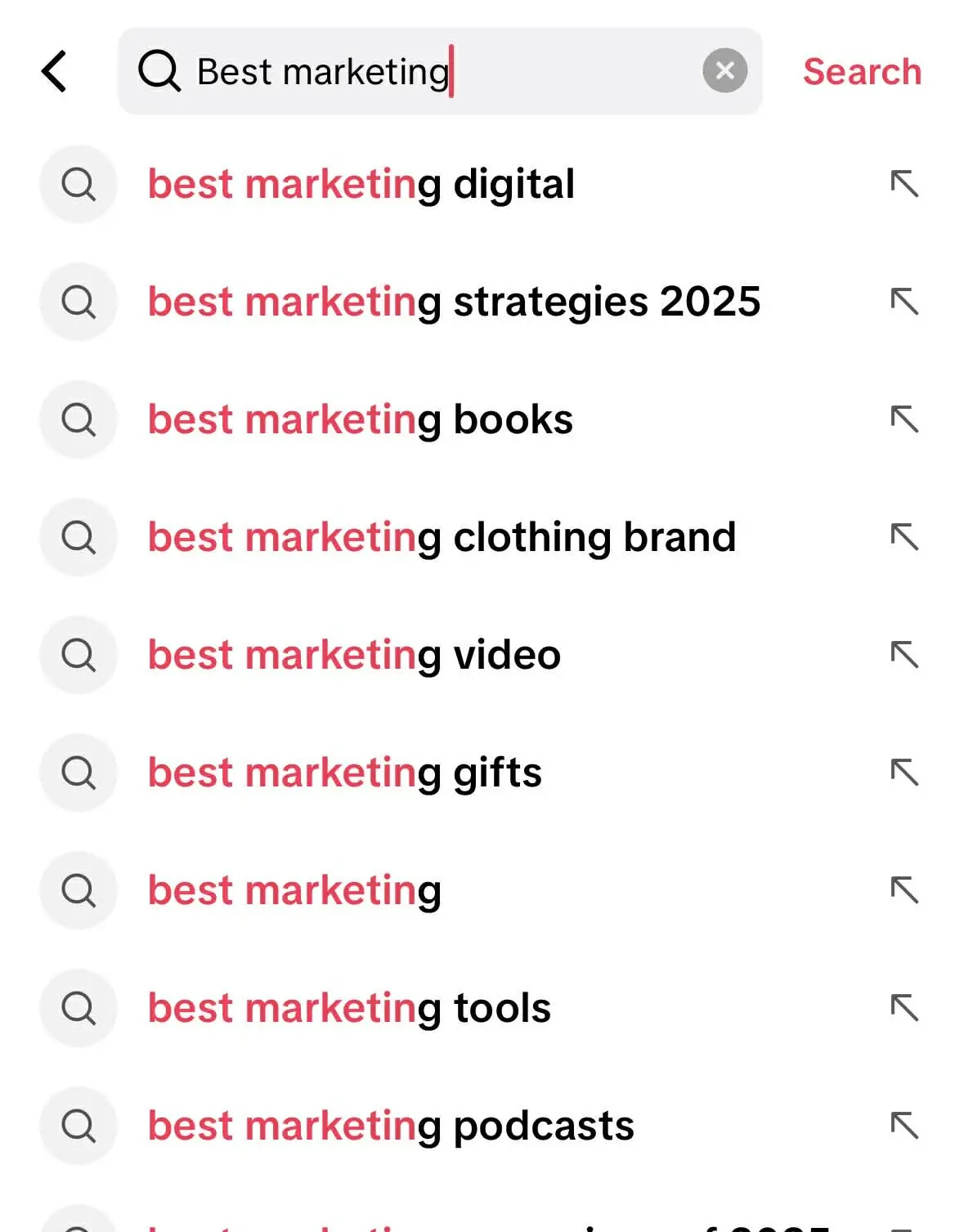
Your primary keyword tool is TikTok itself. Type a root topic into the search bar and capture the autocomplete suggestions. These are live queries that users are typing and are the most direct signal of search demand on TikTok. Repeat this with variations and modifiers (‘near me,’ ‘for beginners,’ ‘ideas,’ ‘review’) to build an initial list.
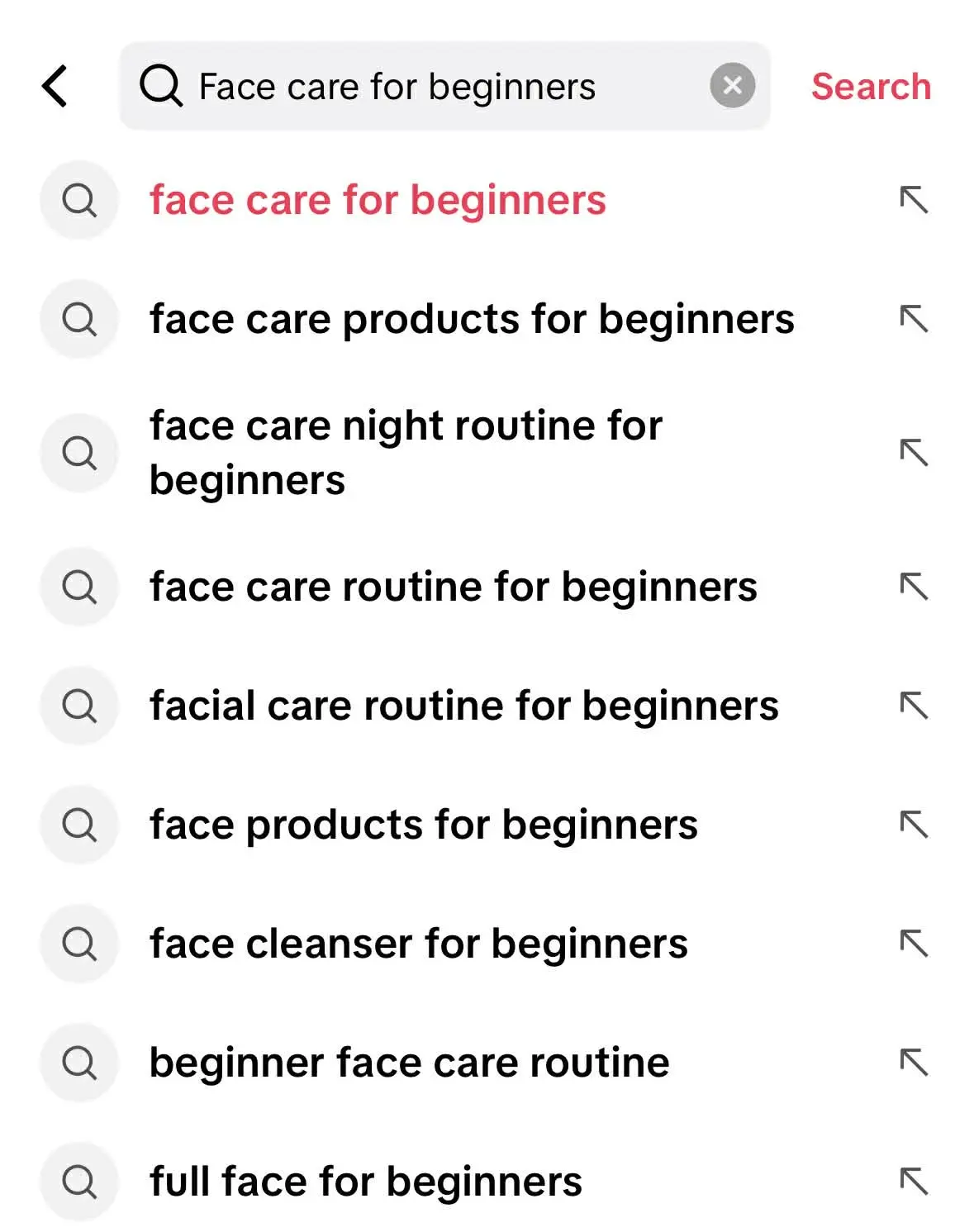
After you run a search, scroll the results and look for the ‘Others searched for’ section. This shows adjacent queries and follow-up questions around the same intent. This is a hidden source of related and often lower-competition keywords that tools do not show. Save these terms, then click into a few to see how competitive each one is.
Next, analyze the top videos for each query. Note the repeated phrases in:
- On-screen text
- The first spoken line
- Captions and pinned comments
These phrases show you the language TikTok is already ranking for that topic. They also hint at user intent variants: for example, the same root term might split into ‘tutorial,’ ‘mistakes,’ ‘ideas,’ or ‘before and after.’ This is your base topic map for TikTok SEO.
Finally, map hashtag ecosystems. Run your target terms, then switch to the Hashtags tab. You will usually see a mix of broad tags and very specific ones. I recommend a mix of both:
- Broad category tags to join the main topic.
- Niche tags that mirror how people actually search.
Record view counts and tag combinations that show up across multiple high-performing videos.
TikTok’s own tools can also help. The TikTok Creative Center includes Keyword Insights, which lists related keywords, and Creator Search Insights shows topics that are searched often but have relatively few videos (content gaps).
Use these to confirm themes you already see in manual research and to spot new angles worth testing.
Demand mapping outside TikTok
Check how your topics show up outside TikTok. Use Google Search Console, general keyword tools, or a rank-tracking platform to pull queries that already drive traffic or impressions for your brand.
Filter for queries that imply social or TikTok behavior, such as ‘on TikTok,’ ‘TikTok recipe,’ ‘TikTok made me buy it,’ or ‘how to do X aesthetic.’ These often represent people who either discovered you on TikTok or expect to see TikTok-style content.
It’s also worth running your seed terms in Google or other search engines to gather modifiers and related entities, then testing those phrases in TikTok’s search bar to see if they produce relevant result sets. This helps you avoid building a TikTok content plan around language nobody actually uses in-app.
External tools built for TikTok keyword research, like Metricool, can fill in more detail. Some scrape TikTok autocomplete at scale, while others provide search suggestions, hashtag ideas, and filters by country and language. Use them to expand your list, but always validate final choices back inside TikTok search.
Prioritization: difficulty, value, and format fit
Once you have a long list, you need to decide what to film first. Start with difficulty and saturation. For each query:
- Check how many strong videos already dominate the Top results.
- Scan how repetitive the formats are.
- Look for content gaps that Creator Search Insights or ‘Others searched for’ highlight.
Easy wins are queries with clear search intent but limited or weak existing content.
Then rank keywords by business value and stage in the buying process. High-value terms usually map to product selection, ‘best for [segment]’ comparisons, problem-aware ‘how to fix…’ topics, or local discovery for your category.
Early-stage ‘ideas’ or ‘aesthetic’ queries build reach and audience, while mid- and late-stage queries should push viewers to clear next actions.
Finally, match topics to content formats that work natively on TikTok.
- Tutorials and walkthroughs for ‘how to’ searches.
- Demos, comparisons, and ‘X vs Y’ for evaluation queries.
- Lists, tips, and ‘mistakes’ for broader education.
- Local tours or ‘best of’ roundups for location keywords.
If a topic doesn’t match to a tight, visual short video with a clear hook and resolution, it is a lower priority for TikTok SEO, even if it is important on your site.
How To Plan And Script Videos For TikTok Search
You plan and script TikTok search content by attaching each video to a clear query and a repeatable format. The script must have the keyword in audio and on-screen text, then deliver on that topic to maximize watch time and completion.
Start with your keyword clusters and assign 2–3 native formats to each. For example: tutorials for ‘how to’ queries, before/after or case breakdowns for transformation queries, quick lists or frameworks for ‘tips/ideas,’ and local ‘best of’ or ‘near me’ content for location terms. This turns your keyword list into a production schedule instead of one-off ideas.
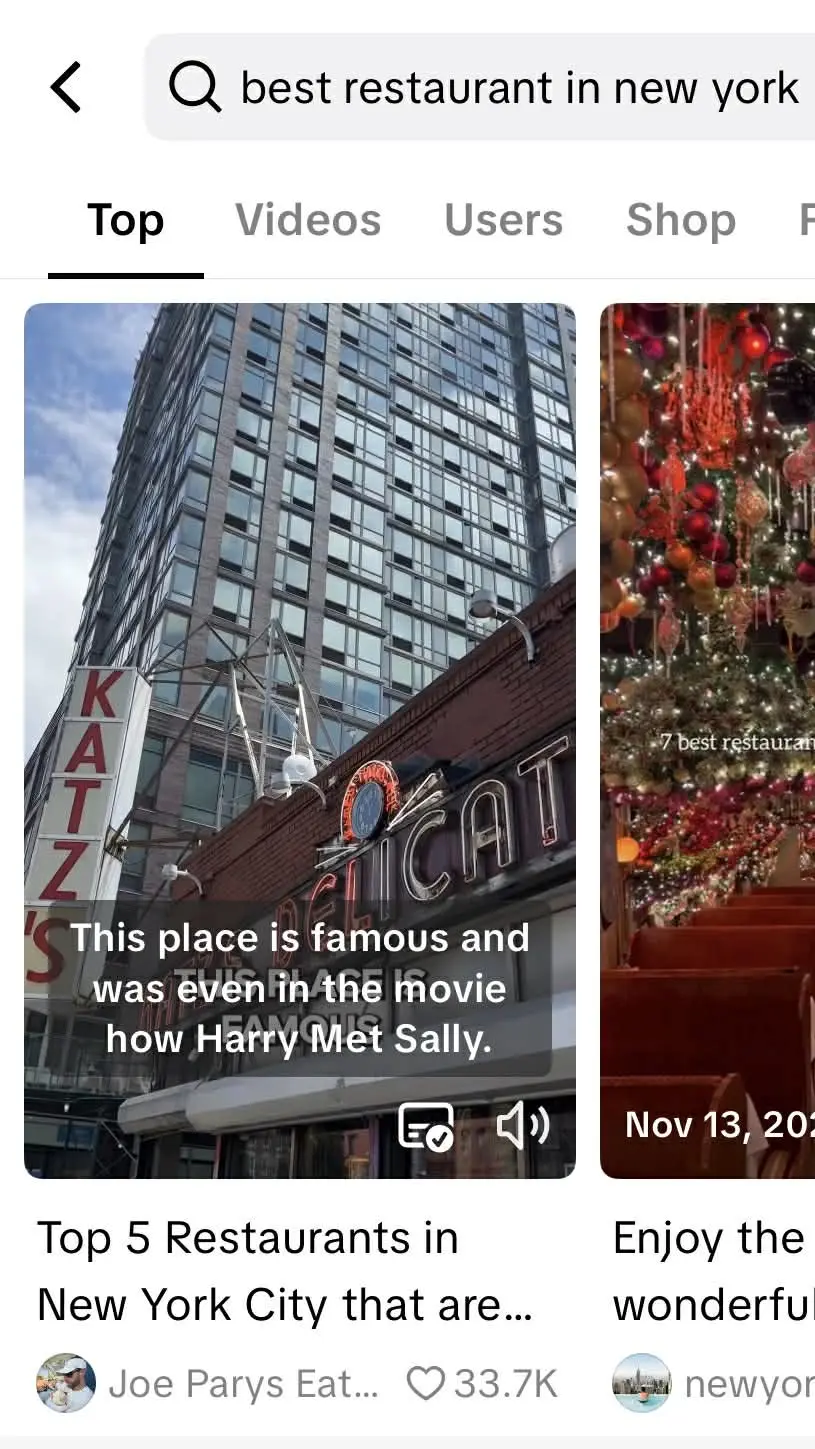
Script for search, not just for the For You feed. The primary keyword should be in the first spoken line and in the main on-screen text so TikTok’s systems can read it. Use the rest of the video to answer the query directly. Keep the caption for secondary variants, extra context, and the CTA, not for restating what is already visible.
Aim for the shortest length that cleanly covers the query. Use a first frame that visually matches the search (‘before’ state, product, location, or clear title card). Avoid clickbait intros, long story build-ups, or unrelated B-roll that hurts completion rate, even if they help win a few extra impressions.
How To Optimize TikTok Metadata For Search
You optimize TikTok metadata for search by treating captions, hashtags, and tags as reinforcement of what is already clear in the video. Metadata should confirm the topic, add variations and entities, and signal intent, not carry the whole SEO job.
Write captions in natural language with the main keyword near the start. Add one or two secondary variations and related entities that match how people phrase the same problem. Close with a CTA that fits the query intent, for example, ‘follow for more [topic] tips’ on educational content or ‘save this for later’ on tutorials people will revisit.
Use a simple hashtag system. Combine 1–2 branded tags, 2–3 specific topic tags, and 1–2 niche long-tail tags that match real queries. Skip random viral or generic tags that add noise and pull you into irrelevant feeds. The goal is to anchor your video in a clear topical bucket, not to chase every trend.
For eligible accounts, use other fields to improve context. Add location tags when the query has local intent or when the content features a specific place. Use product tags and links on videos that show items people might want to buy so search-driven views can convert without extra steps.
How To Optimize Your TikTok Profile For Search
To optimize a TikTok profile for search, start by making it clear what topics you cover and which problems you solve. Profile fields should carry the main keywords and help TikTok connect new videos to a consistent theme.
Use a username and display name that match your brand and main category ,where possible. Write a bio that states who you are, what you help with, and which audience you make content for, using the same language found in your keyword research. Add a link that matches your main offer or hub page for that audience.

Structure your profile to group topics. Use playlists organized by query cluster or use case, not internal campaign names. Pin 2–3 videos that target your highest-value topics or lead offers so anyone arriving from search can see the core content first. This also gives TikTok strong signals about what you want to be known for.
Keep naming and topics consistent with your site, YouTube channel, and other social profiles. When the same brand and topic signals repeat across platforms, it helps both TikTok route the right viewers to you and Google recognize and show your TikTok presence for relevant branded and category searches.
How Does TikTok SEO Connect To Google And YouTube Search?
TikTok SEO, YouTube, and Google all work from the same underlying demand: the questions and problems people type into a box. Use one query map across TikTok, YouTube Shorts, long-form YouTube, and your site, then decide which intent belongs where based on depth and production cost.
Quick visual ‘how to’ or trend-led topics stay native to TikTok and Shorts. Bigger ‘compare,’ ‘review,’ or ‘strategy’ topics get long-form YouTube and a supporting web page.
TikTok content already shows up in Google, mainly for branded searches and for trend or format-based queries like ‘TikTok pasta,’ ‘TikTok hacks,’ or ‘brand name TikTok.’ That means high-performing TikToks can become extra search assets, especially when the title, on-screen text, and caption line up with how people search on Google as well as in-app.
You do not control if or when Google picks those videos up, but you can avoid flat titles and non-descriptive captions that make them invisible outside TikTok.
Reuse winning TikTok topics on YouTube Shorts and expand the best ones into full YouTube videos. Keep the core promise and query language consistent so you can compare performance by intent, not by creative guess.
Over time you will see which questions TikTok is best at converting from search and which perform better as longer YouTube or web content.
To track brand impact, monitor ‘brand + tiktok’ and ‘brand + on tiktok’ queries in Google Search Console, and pull search term or search source reports from TikTok where available. You want to see: more brand-plus-TikTok searches, more brand impressions on TikTok search, and stronger performance for the same query families across platforms.
How To Measure And Improve TikTok SEO Performance
You measure TikTok SEO by isolating performance from search as a source and checking whether your search-optimized videos behave differently from feed-first posts. At a minimum, track views, watch time, completion rate, saves, and engagement for videos where Search is an effective traffic source, plus follower growth and profile visits they drive.
Run basic audits by comparing two sets of posts: content built around clear queries and keyword signals, and content built just for For You distribution.
Search-optimized videos should show a higher share of views from Search, steadier view curves over time, and stronger saves and profile taps. When TikTok exposes search term insight, compare the actual queries to the language you targeted and adjust where there is a mismatch.
Design small experiments inside each topic cluster. Hold the keyword constant and vary hooks, opening frames, length bands, and caption patterns.
For example, test a 20-second vs 40-second answer to the same query, or a straight ‘how to’ hook vs a ‘mistakes’ hook. Use completion rate and views from Search as your main success metrics, not just total views.
Decide when to iterate and when to move on by looking at trend lines, not single videos. If multiple formats against a query fail to earn or sustain search views, put that topic on hold.
If one video performs, treat it as a template: repeat the structure, update the examples, and create variants for adjacent keywords.
What TikTok SEO Workflows Should Brands Use?
Start with a simple, repeatable workflow, so TikTok SEO does not depend on one person’s memory. Start with mapping search demand and priority topics from your research. Cluster related queries, label them by intent and value, and pick a few ‘must-win’ clusters for the next quarter. This list is your source of truth for what you script.
Next, design 2–3 content formats per cluster and turn them into basic templates. Build lightweight scripts or beat sheets that non-specialists can follow: hook line, main points, CTA, and required keyword placement in audio, on-screen text, and captions. Pair this with a metadata checklist so every upload hits the same standards.
Publish on a consistent cadence and tag videos back to their keyword clusters in whatever tracking you use. That lets you report at the topic level, not just by post.
Once a week, review performance for search-driven videos: which queries delivered views, which formats held attention, and which topics need another attempt or a different angle.
Make ownership explicit. Assign research and topic mapping to someone close to SEO or insights, scripting and filming to creators or social, publishing and QA to a channel owner, and reporting to whoever already owns organic performance.
Align this workflow with existing SEO and paid social planning so TikTok topics, landing pages, and campaigns support each other instead of competing for different queries.
FAQ – TikTok SEO
TikTok SEO gives your videos a chance to rank for specific searches, even with low follower counts. The system cares more about relevance and watch behavior than audience size.
TikTok SEO optimizes short videos, audio, and in-app metadata so your content ranks in TikTok search and topic feeds. Regular SEO optimizes web pages and site structure to rank in Google and other search engines.
You can see some search traffic within hours or days if the video matches a clear query and holds attention. Strong search performers often build views gradually over weeks as TikTok tests them against more searches.
Use a small, focused set: usually 4–7 total. Combine 1–2 branded tags, 2–3 specific topic tags, and 1–2 long-tail or niche tags that mirror real TikTok searches.
It helps. Saying the keyword in the first line, showing it on-screen, and repeating it in the caption gives TikTok multiple aligned signals about what the video covers.
Keywords get your video into the pool for a query. Watch time, completion rate, and meaningful engagement decide if you stay near the top for that query.
Check analytics for views from Search as a source, plus saves, profile visits, and follows on search-optimized videos. Look for videos that keep adding search views steadily instead of spiking and dying.
Yes, if the content still matches active queries. You can update captions, hashtags, and cover text to clarify the topic, then watch if Search starts to contribute more views.
Indirectly. The same query map you build for TikTok SEO can guide YouTube Shorts, long-form YouTube, and web content. High-performing TikTok topics are strong candidates for deeper videos and landing pages.
Both matter. Evergreen TikTok SEO covers stable “how to” and product queries, while trends and seasonal topics give you short-term search and discovery spikes around timely terms.