

Being cited by AI is becoming a major advantage for brands. When people use ChatGPT, Gemini, or Perplexity to research, those tools pull answers from a small set of sources only. Although click-throughs might be low, the brands that get mentioned earn trust by association. Everyone else gets ignored.
AI search now informs buyer behavior, how they discover and evaluate options. Earning a brand citation in LLM responses builds credibility before anyone reaches a website. The real competition is now who gets included in those answers when decisions are being made.
But most brands still miss out. Their content gets read but not cited because it lacks structure, proof, or consistency across pages. Those who publish factual, well-organized, and verifiable content are far more likely to be cited inside AI responses and seen as reliable sources.
Also, getting cited once isn’t enough. You also need to know whether that citation repeats across prompts, platforms, and weeks
So let’s get into what you can do to improve the chances of citation in AI responses.
Why AI Citations Matter for Brands
LMMs decide which brands people see first. When they generate answers, only a few sources are credited, and those names carry weight. That mention acts like a referral, it shows that your information is verified, accurate, and worth repeating.
This matters because most brands never make it into those citations. Research shows that the majority of quoted sources come from a small group of domains with consistent structure, clear entities, and factual accuracy. LLMs choose them because they reduce the risk of error.
Being cited isn’t about clicks or rankings (hence why it doesn’t replace SEO). It’s about influence at the moment of decision and building brand awareness/recall.
In B2B and product searches, being named by an LLM gives your brand the same credibility as an expert endorsement. It tells potential buyers your content is trusted by the very tools they now use to research and compare.
How to Get AI Citations
To get AI citations, publish content that LLMs can quote, verify, and trust. That means clear answer-first sentences, evidence-backed claims with sources, clean structure with headings, tables, and FAQ schema, current timestamps, and consistent entity signals for your author and organization across the web.
Cover the topic as a cluster so your pages match more query variants, and keep them updated. Track which pages get credited in LLM outputs and refine format and sourcing until your content is the safest option to cite.
Here’s the steps to follow:
Step 1: Understand How LLMs Select Sources
LLMs don’t index the web the way Google does. They retrieve information from multiple data points, check for consistency, and decide which sources are reliable enough to include. Every citation is the model is showing what it believes to be true and safe to reference.
Citations are influenced by four main factors:
Relevance
The model checks how closely your content answers the user’s intent. Direct, focused sections written around clear questions perform best. A page that answers ‘What is query fan-out?’ in its opening lines is easier to retrieve than one that buries the definition in long text.
Authority
LLMs rely on domains and entities they’ve already learned to trust. Consistent author profiles, verified organizations, and topic focus help build that trust. A site known for detailed marketing analysis will outrank a general blog, even if the content is newer.
Factual Agreement
Models cross-check information against other reliable sources. If your statement aligns with verified data or appears across multiple domains, confidence increases. Unsupported or unique claims are often ignored, even if correct.
Extractability
AI looks for sentences it can quote directly. Short, factual statements formatted as definitions, statistics, or key takeaways make this easy. Including phrasing like ‘According to [study or source]‘ shows the model that your content is ready for attribution.
Being cited isn’t about being active everywhere, but more about writing content that is clear, accurate, and easy to reuse when an LLM builds its answer.
Step 2: Create Content That’s AI-Ready
LLMs choose content they can reuse safely. That means sentences that are factual, self-contained, and written in a way that doesn’t need rewriting. When your content fits that pattern, it becomes easier for models to extract, cite, and present as part of an answer.
To make your pages quote-ready:
Start with the answer
Open each section with a single, complete statement that answers the main question.
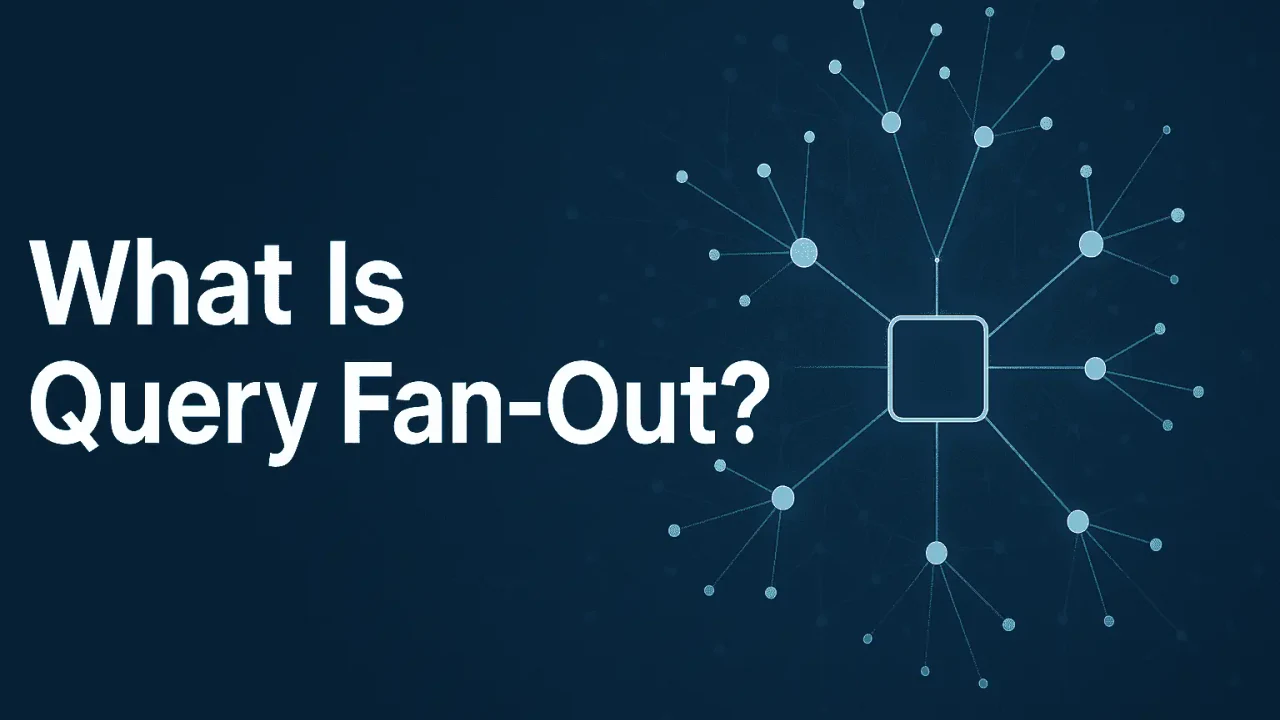
Example: Query fan-out is the process where a language model expands one question into many smaller ones to confirm accuracy.
That first line becomes the model’s reference point.
Use short, factual sentences
Keep definitions, statistics, and claims clear and measurable. Avoid vague language or layered phrasing. Each sentence should stand alone if quoted without context.
Structure your data for extraction
Models read layout cues. Use tables, lists, and bullet points for data or comparisons so information is easy to take accurately. This all happens in a split second; the easier your data is to read by AI, the easier it is to be retrieved.
Apply schema markup
Use structured data for Article, FAQPage, HowTo, Organization, and Author.
It clarifies what each element represents and improves how the model identifies facts, sources, and entities.
Attribute evidence
Use phrasing like According to [source, year] when referencing data or studies. It shows the model where a fact comes from, making your content more reliable to be cited.
LLMs prefer text that’s reliable and self-explanatory. Every clear sentence reduces the model’s risk of distortion and increases your chance of being cited inside its response.
Step 3: Strengthen Entity and Author Signals
LLMs verify information by checking who published it. They connect brands, authors, and organizations across different sources to assess reliability. If your identity isn’t clear or consistent, your content is treated as an isolated page instead of part of a trusted entity.
Elements of E-E-A-T in SEO will overlap heavily here.
Keep author details identical everywhere
Use the same name, bio, and profile photo on your website, LinkedIn, Substack, and other platforms. Variations make it harder for models to confirm that all your work belongs to the same person or brand.
Link verified profiles through schema
Add sameAs links in your Person and Organization markup that points to official profiles, such as LinkedIn, company pages, or bylines on industry sites. This helps LLMs associate your brand with verified identities.
Mention your entity within the content
Reference the organization or author name naturally in the article and metadata. This improves the connection between your content and your broader entity.
Earn credible external mentions
Mentions, interviews, or guest articles on reputable sites in your niche help AI to confirm your relevance. Every appearance builds a network of validation that strengthens your entity profile.
When a model’s retriever consistently finds your name attached to accurate, current information, your authority score for that topic rises, making your content far more likely to be cited.
Step 4: Build Topic Depth and Semantic Coverage
LLMs look for sources that show consistent knowledge across a subject, not one-off coverage. When your content connects multiple pages, queries, and formats around a single theme, the model reads it as topic-level expertise, the kind of domain it can safely cite.
Create a clear content hierarchy
Start with a main pillar page that targets the core topic. Build smaller supporting pages that explore subtopics, examples, and related questions. Each page should link back to the main one with descriptive anchor text, not generic terms like read more.
Use internal linking as context
Interlink related content naturally, so the model sees a structured network, not isolated articles. Internal links show how one concept supports another, helping the retriever understand your topical range.
Add FAQs and glossaries
Include sections that cover common definitions or related phrasing. This matches the question variants that appear during fan-out, helping your site appear in multiple sub-queries.
Cover additional keywords
Use alternative wording, synonyms, and connected terms throughout your content. For example, a page on SEO tools should also mention platforms, software, and analysis tools to capture a wider intent.
When your site shows full coverage of a topic, not just one keyword, LLMs treat it as an authoritative reference point. That depth increases retrieval frequency and improves your chances of being cited across a wider range of generated answers.
Step 5: Maintain Recency and Reliability
LMMs apply weight to recency heavily when deciding which sources to reference. Outdated or undated content is a risk, while pages that show clear updates are treated as current and reliable.
Show visible update dates
Add a ‘Last updated’ timestamp at the top or bottom of each article. Include short revision notes when changes are made, such as new data or feature updates. Visible timestamps help LLMs confirm that your information reflects the latest context.
Keep data current
Review and update statistics, screenshots, and product details at least once per quarter. Replace old references or studies with newer ones, and remove time-limited claims that no longer apply.
Link to original sources
Whenever possible, reference and link to primary data or official reports rather than secondary summaries. Models detect credible source chains and favor content that supports its claims with verifiable evidence.
Use clear time markers
If your article discusses upcoming trends or projections, include the year in headings and text, for example, ‘AI marketing trends in 2026.‘ Dates help models match your content to current or future queries.
Consistent updates show that your brand maintains its information. That reliability gives your pages an advantage in retrieval and increases the likelihood of being cited.
Step 6: Audit, Measure, and Iterate
Optimization for AI citations isn’t a one-time process. LLMs change constantly, retraining on new data and changing which formats they trust most. Regular monitoring shows where your content stands and what adjustments keep it competitive.
Check your appearance across tools
Search for your target topics in Perplexity, Gemini, or ChatGPT. Browse and note whether your brand appears in the citations. This gives a direct view of how LLMs interpret your authority.
Use dedicated tracking tools
Platforms like Nozzle.ai, SEOClarity’s AI Overview Tracker, and TryProfound’s AI Citation Tracker monitor which domains are cited across AI engines. Reviewing those reports shows citation frequency, brand reach, and visibility gaps.
Study who gets cited and why
Look at the structure and style of competitor pages that appear most often. Identify common points, like short definitions, tables, statistics, or FAQ sections, and compare them against your own content.
Refine based on evidence
Update page layout, schema, and phrasing to match the formats consistently chosen by LLMs. Prioritize factual clarity and section structure over design or length.
Repeating this process creates a feedback loop. Each update improves how LLMs classify, score, and reuse your content, strengthening your overall readiness to be cited in future AI answers.
Start Showing Up In AI Search Today
AI citations are now a key part of brand awareness. When LLMs mention a company by name, that brand becomes part of the conversation buyers see first. Each citation builds recognition and recall that keeps your name visible in the answers users depend on to make decisions.
To earn AI impressions, publish content that’s structured, verifiable, and connected across related topics. Use clear definitions, factual data, and consistent author and organization details so LLMs can identify and reference your pages confidently.
The brands that act now will build a lasting presence inside AI search. Those that don’t will watch competitors own the attention that used to come from rankings.
FAQ
A citation appears when a large language model references or attributes part of its answer to a source. This can take the form of a clickable link, a brand mention, or a quoted statement. Some tools, like Perplexity or Gemini, display the source openly. Others, such as ChatGPT, may reference it within the text or in a “Sources” section. In all cases, it signals that the model trusts your content enough to reuse it as evidence.
Yes, but indirectly. LLMs don’t rank pages by backlink volume, but they use external links and co-mentions as credibility signals. When reputable sites link to your content, it reinforces your authority and factual reliability, both of which influence retrieval and citation likelihood.
There’s no fixed timeline. Some citations occur within weeks of publication if the content fills a gap or matches new user queries. Others take months as LLMs retrain and integrate newer data. Frequent updates, structured schema, and consistent entity signals can shorten that cycle.
Schema markup has become essential for citation readiness. It helps models understand your structure — who wrote the content, what type of page it is, and which facts are key. Adding schema for articles, authors, and organizations gives LLMs clear metadata to verify and attribute correctly.
Smaller brands can compete by focusing on specificity, clarity, and factual accuracy. LLMs don’t prioritize size; they prioritize reliability. Publishing focused, well-sourced content on defined topics can outperform larger brands that publish broadly. Maintaining consistency across your site and external profiles strengthens your entity footprint and makes you a safer choice for citation.
Use citation-tracking platforms such as TryProfound, Nozzle.ai, or SEOClarity’s AI Overview Tracker. Combine these with manual checks inside ChatGPT, Gemini, or Perplexity for your key topics. Record which pages appear most frequently and update weaker ones based on patterns from cited competitors.
Yes. LLMs favor current information and timestamped content. Regularly updating existing articles with recent data, new sources, and revised structure helps maintain retrieval priority and citation strength over time.