
Brand visibility is now influenced by what LLMs choose to say. When buyers ask AI for recommendations or comparisons, it decides which sources to trust, summarizes their insights, and uses them as the answer. That decision generates awareness long before anyone reaches a website.
This is where competition and opportunity have moved to. Which brand gets cited inside the AI response seen by the user on top of search engine rankings. Brands that do not understand how those models find, verify, and credit information lose presence at the exact point of research.
Whether you call it GEO (generative engine optimization) AEO (answer engine optimization), or something else entirely, to stay visible, content must be built for retrieval and citation inside AI systems.
This guide explains how AI search works and how marketers can adapt their strategy so their brand is included when LLMs generate answers.
Stage One: How AI Understands A Query
Every interaction with AI search starts with interpretation.

LLMs don’t look for keywords, they identify intent. They analyze phrasing, context, and related terms to understand what the user is trying to achieve. This is how an AI system separates a request for a definition from a search for tools, tutorials, or comparisons.
When someone asks for ‘best SEO tools’, the model recognizes a comparison intent. It knows the user wants a curated list of products instead of an explanation of what SEO tools are.
It then creates several related sub-queries like ‘top SEO platforms’, ‘SEO software for small businesses’, or ‘SEO tools used by agencies.‘ This confirms the intent before any retrieval begins.
That step decides which pages are eligible to appear. If a piece of content mixes intents: explaining what SEO is, reviewing one tool, and listing alternatives, it sends weak signals. The model cannot classify the purpose quickly, so the page is skipped during retrieval.
For marketers, clear intent is now a visibility factor for AI retrieval. Each article should satisfy one specific goal: define, compare, teach, or review. Content built around a single user task helps AI systems recognize relevance instantly.
To match how AI identifies intent:
- Structure every page for one outcome or question type.
- Use question-based headings that reflect how real users search.
- Open each section with a concise, factual answer before going into detail.
Intent clarity lets both readers and LLMs understand the purpose of your page, improving retrieval accuracy and increasing the chance of being cited in AI answers.
Stage Two: Query Fan-Out – How AI Expands Every Search
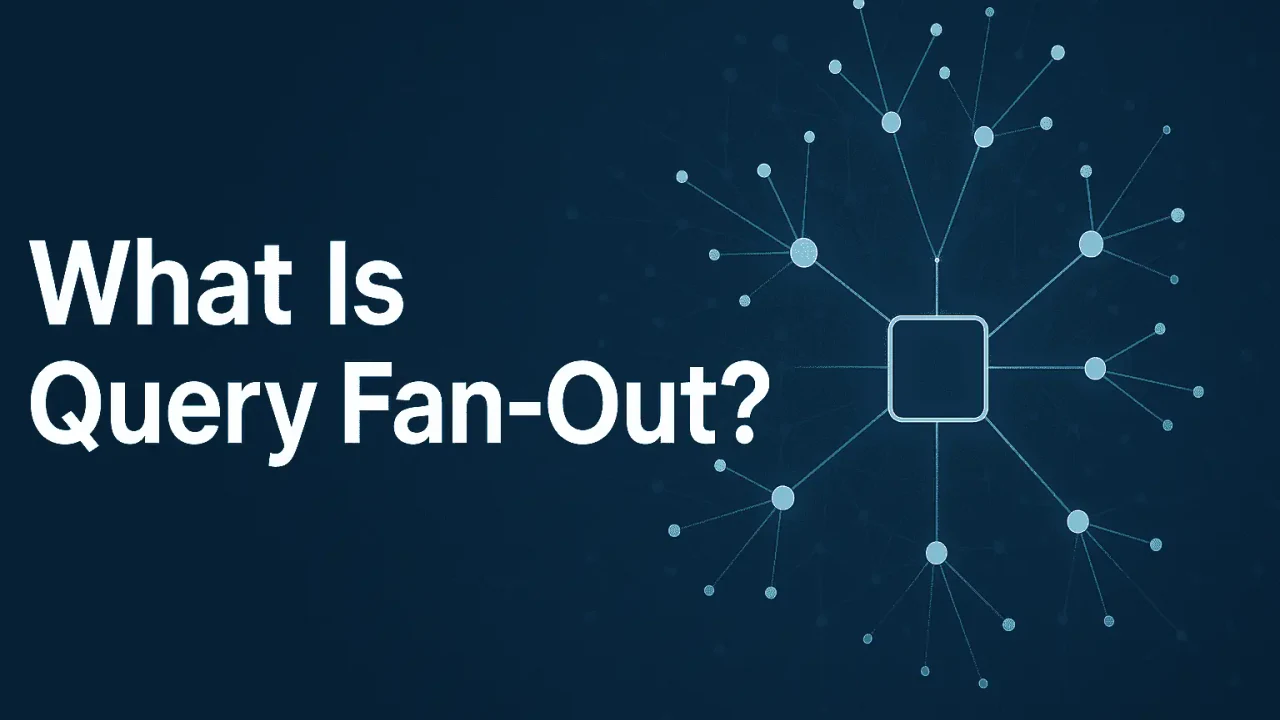
When an LLM receives a question, it doesn’t rely on a single search. It breaks that question into dozens or hundreds of smaller variations to find the most complete and reliable information. This process is called query fan-out.

Think of it as assigning a team of assistants to research one topic from every angle at once. Each assistant brings back slightly different phrasing, context, or data points. The model then compares all those results to identify agreement, remove noise, and confirm which facts are consistent across multiple sources. Query fan-out explains why thin content is not included in AI search.
Back to the ‘best SEO tools,’ example: An LLM will instantly create hundreds of variations of this to test the intent and context. Some focus on phrasing changes like ‘top SEO software‘ or ‘SEO tools for content marketing.‘ Others look at related sub-topics such as ‘keyword research platforms‘, ‘AI SEO assistants‘, or ‘free SEO audit tools.’
Each version returns slightly different results. The model compares them to find facts and names that appear repeatedly across multiple sources. Those recurring elements are treated as verified information and used in the final answer.
Pages that only match one phrasing appear in fewer of these mini-searches, so they are rarely included. Pages that cover the subject and naturally use several variations appear across more branches of the fan-out and are more favorable in results.
LLMs also use these micro-queries to check factual accuracy. If several of them return the same claim from different domains, confidence increases. If only one page says it, the statement is downgraded or ignored.
To optimize for query fan-out:
- Include natural variations of key phrases within your content.
- Build topic clusters around each main idea so supporting articles reinforce the core page.
- Use FAQ sections to capture alternative questions and sub-topics.
Covering the wider semantic field helps LLMs connect your content to multiple query paths, increasing both retrievability and the likelihood of citation inside AI-generated answers.
Stage Three: Retrieval – How AI Finds Content
Once an LLM has expanded a query, it begins gathering information from across the web. This stage is known as retrieval. It’s the point where the system decides which pages deserve to be read, tested, and used to form the final answer.
Retrieval works by combining two methods. One searches for direct keyword matches, the other looks for meaning and context. Together, they allow the model to find pages that don’t just repeat the words in the query but actually answer its intent.
When a user asks for ‘best SEO tools‘, for example, the model scans thousands of pages that mention the phrase. It also looks for content that answers the same request in different languages, pages titled ‘Top platforms for SEO‘ or ‘Tools agencies use for site optimization.‘ Each of these variations helps confirm which sources hold the most useful information.
Three main factors influence whether a page is selected during retrieval:
- Relevance
The content must directly respond to the question. Headings, opening paragraphs, and subtopics should make the purpose clear in the first few lines. - Recency
AI systems weigh timestamps heavily. Freshly updated pages are treated as more reliable because they reflect current data and product information. - Structure
Machine-readable pages are easier for AI systems to interpret. Clean headings, logical order, clear tables, and schema markup make extraction faster and more accurate.
Pages that meet all three of these are added to the retrieval pool. Those that are outdated, unstructured, or unclear about their purpose are filtered out before scoring even begins.
To optimize for retrieval:
- Keep H2s short, descriptive, and written as complete thoughts or questions.
- Include updated dates, changelogs, or last reviewed notes.
- Use tables and bullet points to highlight data or comparisons.
- Add schema for articles, FAQs, and products to signal structure.
Retrieval is the gatekeeper of AI visibility. If a page cannot be found, read, or understood in this stage, it never reaches the scoring or citation process that determines who gets credited in the final answer.
Stage Four: Scoring and Ranking – How AI Decides Who To Trust
Once an LLM retrieves potential sources, it moves into scoring and ranking. This is the evaluation phase where every snippet of content is tested for accuracy, reliability, and usefulness. Only the highest-scoring pieces are included in the final answer.
Example: AI Model Scoring & Weighting Matrix
| Signal | Weight (%) | Example Content A |
Example Content B |
Example Content C |
|---|---|---|---|---|
| Relevance | 30% | 92 | 78 | 88 |
| Authority | 25% | 88 | 93 | 60 |
| Factual Agreement | 20% | 90 | 92 | 70 |
| Freshness | 15% | 80 | 65 | 92 |
| Extractability | 10% | 95 | 72 | 88 |
| Final Confidence Score | 100% | 89.1 | 82.0 | 77.4 |
Illustrative example only. Each column shows how AI systems might weight factors to form an overall confidence score when deciding which sources to cite.
The process is similar to quality control. The model measures each passage against multiple signals, then combines those scores into an overall confidence level. The exact numbers and formulas are proprietary to each platform, but the principles are consistent across all large language models.
- Relevance
Each passage is scored on how closely it answers the expanded query. Keyword overlap helps, but the main signal comes from semantic match (if the meaning of your sentences aligns with what the user asked). Irrelevant context lowers the score. - Authority
The model applies trust to the domain or entity behind the content. This is learned over time from cross-references, factual accuracy, and user behavior. Sites with consistent topical depth, verified author profiles, and structured metadata build up higher authority scores. - Factual Agreement
LLMs check consistency across all retrieved sources. If several pages make the same claim independently, confidence rises. If one source introduces unique data without support, that claim receives a lower weight or is excluded. - Freshness
Recency acts as a time-based modifier. Updated or newly published pages often receive a short-term boost because they’re more likely to contain current information. The effect decays as pages age or if newer data appears elsewhere. - Extractability
AI systems prefer text that can be quoted cleanly. Short sentences, lists, and tables help the model lift statements without rewriting them. Dense or unstructured writing reduces extractability, lowering the overall confidence score.
Each of these factors adds to an internal reliability index. High-confidence passages move forward to the generation layer; low-confidence ones are dropped. The model may use dozens of sub-signals under each category, but their relative weights change constantly as systems retrain on new data and feedback.
To optimize for this stage:
- Reference verifiable statistics and primary data.
- Use clear dates for studies, surveys, and examples.
- Write short, self-contained definition sentences that can stand alone.
- Use schema and author metadata to strengthen authority.
Scoring and ranking determine which brands become the sources inside AI answers. By aligning content with the signals, brands can position their pages to reach users even when no traditional ranking page exists.
Stage Five: Authority – How AI Decides Which Brands to Believe
After scoring and ranking individual pages, LLMs need to decide which brands and authors can be trusted across topics and over time. This is where authority becomes an entity-level signal rather than a page-level score.
They build what is known as an entity graph: a connected web of brands, people, and subjects. Each node represents an identifiable source, such as a company, publication, or author.
The model learns how these entities relate to each other through mentions, links, co-citations, and consistent subject coverage. Over time, it forms a picture of who reliably publishes accurate information within a specific field.
Authority at this stage depends on three main factors:
- Topical consistency
AI favors entities that stay within their area of expertise. A brand that regularly publishes about SEO, content strategy, and analytics develops stronger topical authority than one that posts on unrelated subjects. Consistent focus helps the model understand what your brand should be known for. - External validation
Mentions and citations from other recognized sources show credibility. When multiple trusted domains reference or quote a brand, LLMs treat that entity as a confirmed part of the expert network within that topic. - Recency
Ongoing activity matters. Entities that continue to publish, update, or get referenced stay active in the model’s current memory. Long periods of inactivity weaken recognition.
These signals decide which brands appear most often as cited or referenced sources. Established authority means the system doesn’t need to verify every new article in depth, the brand’s history provides assurance of reliability.
To strengthen brand authority:
- Add Organization and Person schema that link each author and company through
sameAsreferences to official profiles, such as LinkedIn, Substack, and other verified channels. - Keep author bios, photos, and descriptions identical across all platforms to support entity consistency.
- Get mentions, features, or quotes on other credible marketing and industry websites. These external signals help AI connect your brand to the trusted network in your field.
Authority is built through repetition, reliability, and recognition. The more consistently a brand appears across channels, the more likely it becomes one of the default names LLMs rely on when generating marketing-related answers.
Stage Six: Citation – How AI Chooses Who to Credit
Once an LLM has gathered, scored, and ranked information, it moves into the final step: citation. This is where the system decides which sources to display or name within its generated answer. Only a small number of high-confidence pages make it through.
Citations have a dual purpose. They help the model show transparency, and they help users trace information back to credible origins. For a brand, being cited here is the highest level of visibility available in AI search; it places your name directly inside the content that users read.
The model selects citations based on three core conditions:
- Clarity of attribution
AI needs clean reference cues. Pages that use clear phrasing, such as ‘According to [source]’ or include explicit bylines, dates, and organizations, are easier to quote. Ambiguous or overly promotional text is skipped because it cannot be cited without rewriting. - Readable, extractable content
Concise definitions, short summaries, and structured sections allow the model to use statements without losing meaning. Tables, bullet lists, and clear formatting improve extraction and reduce the risk of distortion during generation. - Recognized brand authority
Brands already identified as reliable entities carry a trust advantage. If a model has seen consistent, factual output from a domain over time, it is more likely to select that source for attribution when multiple pages contain the same information.
To optimize for citation:
- Add short, quotable definitions beneath key headings.
- Use factual, objective language that avoids promotional tone or opinion.
- Include structured metadata for author, publication date, and organization.
- Keep facts verifiable through cited studies or primary data.
LLMs give credit to content that helps them build trustworthy answers. Structuring information for clarity, neutrality, and easy attribution makes it far more likely that your brand will appear as the named source inside AI-generated responses.
Stage Seven: Feedback and Reinforcement
After an answer is generated, LLMs continue learning from how users interact with it. Every click, copy, and engagement signal helps these systems understand which sources deliver value and which ones fail to hold attention. This ongoing feedback process determines how future answers are built and whose content they include.
If users click a cited link, spend time on the page, or share the information, that behavior confirms the content was useful. Over time, these signals raise the brand’s reliability and strengthen its authority in the model’s internal graph. If users ignore a citation or exit quickly, the system interprets that as low engagement, and the brand’s weight within that topic can decline.
This feedback loop means authority builds over time. Brands that consistently provide helpful, current, and well-structured content get selected more often. Each new citation increases visibility, which generates more engagement, which further improves trust.
To grow authority through feedback:
- Deliver genuine value once users arrive. Keep pages fast, readable, and easy to navigate.
- Use internal links and related content sections to extend engagement.
- Update cited articles regularly with new data, examples, and dates to keep freshness and accuracy.
Authority in AI search is reinforced through performance. The brands that continue earning attention and delivering quality information build momentum that secures their presence in future AI-generated answers.
How To Optimize for AI Search
Visibility inside AI answers depends on how content is structured, maintained, and connected to verified entities. Optimization for LLMs requires adapting classic SEO techniques to how generative and answer engines find and cite information.
This process can be broken down into four focus areas that determine how LLMs find, understand, and trust your brand.
GEO (Generative Engine Optimization)
GEO focuses on making content usable inside AI-generated summaries. It aims to help language models read, extract, and reuse information with confidence.
Key actions:
- Build topic clusters around core subjects so related pages support one another.
- Add schema formatting for articles, FAQs, and products to make page structure machine-readable.
- Use concise, factual sentences that can be pulled into AI responses without editing.
- Refresh cornerstone content quarterly to keep recency and alignment with current data.
GEO supports content remaining visible during the retrieval and synthesis stages, where LLMs decide which passages to summarise.
AEO (Answer Engine Optimization)
AEO can improve visibility inside AI answers and featured snippets. It focuses on question-based structure and direct, quotable information.
Key actions:
- Use question-style H2s that match real search behavior and intent.
- Start each section with a short, verifiable answer followed by supportive context.
- Add FAQ schema to capture related sub-queries and assist AI indexing.
- Prioritize extractable data such as tables, definitions, statistics, and short summaries.
AEO improves extraction, which determines whether your sentences are quoted when AI builds its final response.
Authority & Entity Optimization
LLMs rely on brand recognition to measure trust. Strengthening authority means creating a consistent and verifiable identity across all digital channels.
Key actions:
- Keep one author identity across your website, LinkedIn, Substack, Medium, and any bylined content.
- Use
sameAslinks within schema to connect every verified profile. - Earn co-mentions and citations from credible industry sources to appear alongside other known entities.
- Keep author bios, headshots, and descriptions identical across platforms.
This reinforces the brand’s position inside AI knowledge graphs, increasing the chance of selection during the authority and citation stages.
Freshness & Maintenance
LLMs favor content that shows recent validation. Stale or outdated pages lose weight in scoring, ranking, and retrieval.
Key actions:
- Review cornerstone content every 90 days to ensure all data, screenshots, and links remain accurate.
- Add new examples, trends, or statistics to demonstrate active expertise.
- Display last updated dates both visibly on-page and within schema markup.
- Log every revision in an internal update tracker to maintain historical transparency.
Fresh, actively managed content signals reliability and keeps authority strong within the LLMs evolving knowledge base.
Optimizing for AI search is about precision, structure, and consistency. Together, these practices form the framework for sustained visibility inside AI results.
Putting It All Together
AI search is a continuous cycle of interpretation, verification, and reinforcement. Each stage: intent, fan-out, retrieval, scoring, authority, citation, and feedback, decides whether content is visible or ignored.
Ranking in AI means being retrieved, selected, and trusted. Traditional SEO is about appearing in results; GEO and AEO are about being included in the answer.
Marketers who want visibility must assess content using three filters:
- Structure: Is each page easy for both humans and machines to understand?
- Freshness: Does it show current data, updated dates, and recent activity?
- Entity clarity: Can AI systems recognize who created it and link that identity across the web?
FAQ: AI Search and Content Visibility
SEO improves how content ranks in search engines. GEO (Generative Engine Optimization) improves how content is retrieved and reused inside AI-generated answers. AEO (Answer Engine Optimization) focuses on structure—making information easy to extract, quote, and display within those answers. Together, they ensure visibility across both search results and AI responses.
Monitor tools such as Perplexity, Google AI Overviews, or Bing Copilot for direct references. Many AI engines list sources or link to cited domains. Use branded alerts or search operators like site:yourdomain.com “source” inside these tools to find mentions.
Review cornerstone or high-traffic content every 90 days. Update data, examples, and schema timestamps. Frequent, documented changes help maintain recency signals that influence retrieval and ranking in AI systems.
Yes. Large brands benefit from existing authority, but smaller sites can compete through precision, depth, and consistency. Well-structured pages, original data, and strong entity linking often outperform generic, high-volume content.
Platforms that monitor AI-generated content and citations are emerging. Tools such as Glimpse, AlsoAsked, MarketMuse, and Perplexity’s citation view help identify whether your content appears in generated answers. Combine them with manual checks and analytics to measure engagement from AI-driven referrals.