
Columbia, the outdoor sportswear brand, has been using AI-generated content on Instagram.
Big deal.
Actually, it is a big deal.
It’s a clear example of where brands using AI can actually get it wrong and start damaging the trust of their audiences.
There’s a lot to unpack here, so let’s start breaking it down:
Columbia’s AI Instagram Ad
First of all, you’re probably wondering about the content Columbia posted.
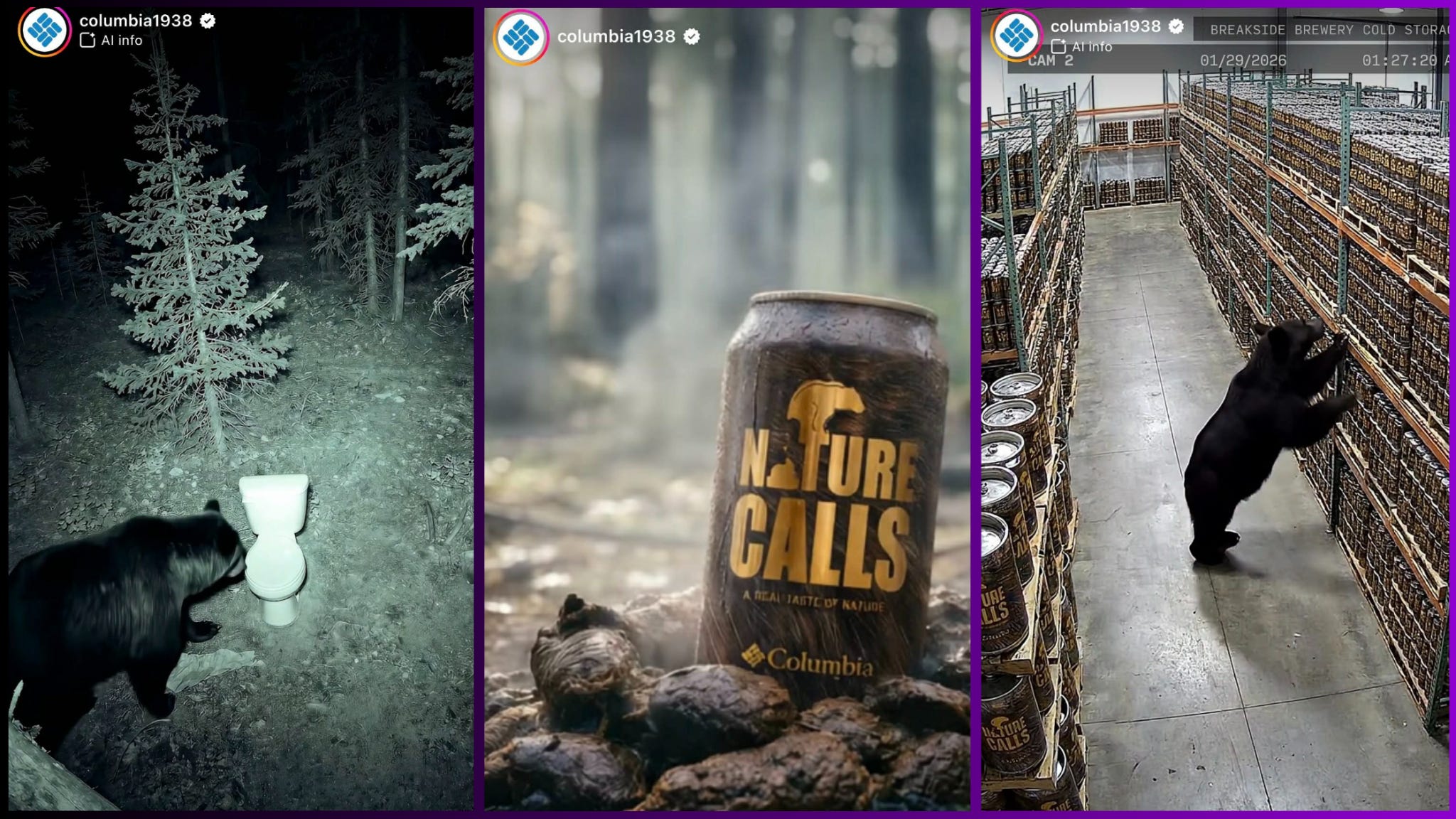
Well, there are a few posts, all centered around bears, to promote a new product partnership. Technically an ad.
Doesn’t seem too bad, right?
People like animals. The posts still look outdoorsy at a glance (apart from the factory one). The quality isn’t terrible.
But when you dig deeper, problems start to emerge.
People Reacted to the AI, Not the Ad
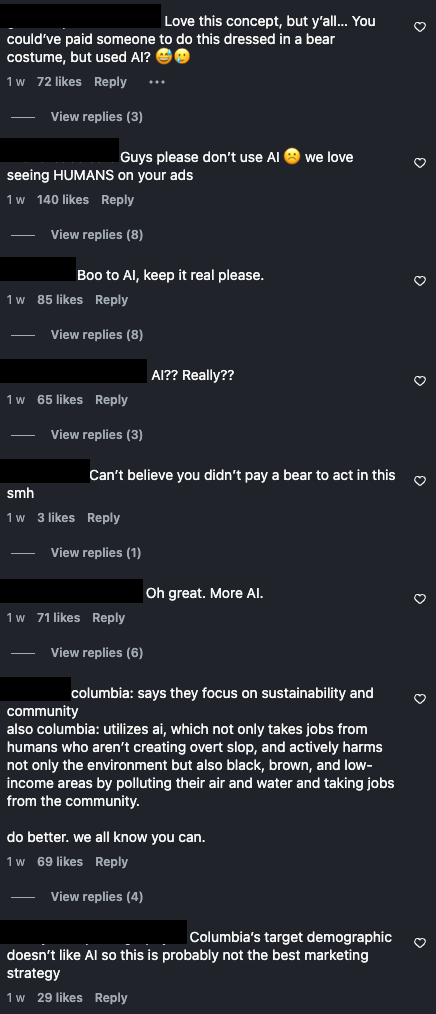
The first problem isn’t the ad itself – it’s actually the use of AI. Which Columbia’s audience made quite clear:
“Keep it real.”
“We want humans.”
“Hire creators instead.”
This isn’t just anecdotal. A 2025 study found negative reactions to AI-generated ads increased by 47%, and 62% of people reported lower purchase intent when they believed an ad was made by AI.
Brand trust dropped 28%, and sharing intent dropped 41%.
Once audiences notice AI, everything else in the creative becomes secondary. The conversation changes from what you made to why you made it that way.
The first comment sums that up – “Love this concept, but y’all… You could’ve paid someone to do this dressed in a bear costume, but used AI?”
What’s more concerning for Columbia is that some of these comments are from ‘outdoor influencers’ with a large enough following behind them to make their statement heard.
The Format Doesn’t Fit the Brand
Outdoor brands sell real experiences.
Nature, people, adventure, credibility.
AI content is the exact opposite. Synthetic, staged, disconnected.
Even the audience understands the target demographic better than Columbia does:
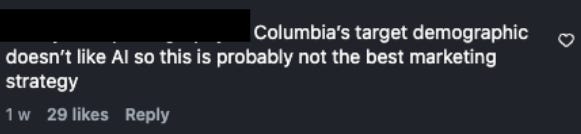
When the medium conflicts with the brand promise, the audience notices immediately.
For a brand that says it’s built on ‘Honesty, Respect & Trust’ and ‘Doing the Right Thing for our communities,’ swapping real people for AI in public-facing creative is an easy way to make the brand feel less human and less trustworthy.
This is a positioning issue as much as a creative one. In industries where performance, safety, and durability are important, credibility is part of the product.
If the marketing feels artificial, it can bleed into how people feel about the product.
Research also shows that 84% of Gen Z trust brands more when real customers appear in ads, and 62% say they prefer brands that produce authentic, relatable content.
Saving Time and Money Over Brand Image
AI reduces production costs and speeds up content creation. That part is obvious.
The problem is what you give up to get it. Quality, authenticity, and what your audience loves.
For an outdoor brand like Columbia, the creative is part of the product. It creates the image people buy into.
When you think of brands like Columbia, The North Face, or Patagonia, you picture real places and real moments. Mountains. Trails. Weather. People outside doing the thing. The content should show that.
Columbia already does this. Most of their Instagram feed is high-quality, great content. So why resort to lazy AI-generated content?

That’s why the AI posts were received poorly. They felt out of place. Like the brand suddenly swapped lived experience for something generated.
If the goal is to adopt AI, fine.
But don’t use it in the part of your marketing that is the brand. Use it behind the scenes, or in areas where it improves execution without changing what people came to you for.
Sustainability Makes the Criticism Easier
Once a brand positions itself around sustainability and community, expectations change.
AI becomes an easy contradiction.
Energy use, data centers, skipping local creators. Whether every criticism is perfectly fair doesn’t matter. It only needs to sound believable.
Columbia sustainability focuses on ‘protecting the outdoors and actively measuring and reducing energy, water, waste, and chemical impacts.’
So using compute-heavy AI imagery as the visible face of the brand hands the audience an easy ‘this isn’t aligned with your values’ argument.
For an outdoor brand audience that cares about the environment more than the average person, this is even more damaging.
Of course, Columbia isn’t to blame for AI and sustainability; every brand is doing it, but the point is how misaligned those AI posts are from their audience and brand.
Choosing AI Over Creative Professionals
Many of the comments were concerned about the use of AI over photographers and local creators.

Outdoor brands rely on photographers, athletes, filmmakers, and local creators to bring the brand to life and have done for years.
When AI is used as the final creative, it looks like the brand is stepping away from the very people who helped build their image.
That’s why the reaction turns negative. It stops being a creative issue and starts looking like a values issue.
Damage to Brand Reputation
Although this is only a few Instagram posts, it can turn into a story about the brand.
Instead of people talking about jackets, hiking, or gear, the conversation becomes about Columbia using AI.
That can impact the brand in a number of ways:
- Creators might stop working with the brand over misaligned values.
- Consumers might avoid purchasing from the brand.
- Other brands can muscle in and steal the unhappy audience.
Outdoor brands are built on credibility and culture. Years of authentic storytelling can be ruined by a few posts that feel out of place.
Once people start seeing a brand through that lens, they look for it everywhere. Every future post gets judged against it.
That’s the risk. The content stops building the brand and starts distracting from it.
What to Take From This
AI in marketing is not the problem.
The problem is using it in ways that undermine trust, alienate the audience, and steer away from the brand image.
This situation brings to light some points brands need to accept:
- Real people should remain the face of the brand
- AI should work behind the scenes to support the creative process, not replace the parts that audiences emotionally connect with.
- If your marketing is the brand experience (travel, fitness, outdoors, food, culture), replacing authentic content with generated content is high risk.
- Your audience doesn’t care about the brand saving time or money. They care about quality, authenticity, and whether the brand sticks to its values.
- Consistency matters. If your brand promises trust, community, and real-world experience, your content needs to reflect that everywhere.
- Audience reaction is part of the performance. If the comment section turns into a debate about your choices instead of your product, the content has missed the mark.
The closer AI gets to the face of the brand, the more careful you need to be.
If AI is going to become part of brand marketing, the strategy needs to mature quickly. Right now, many brands are still learning that the hard way.