
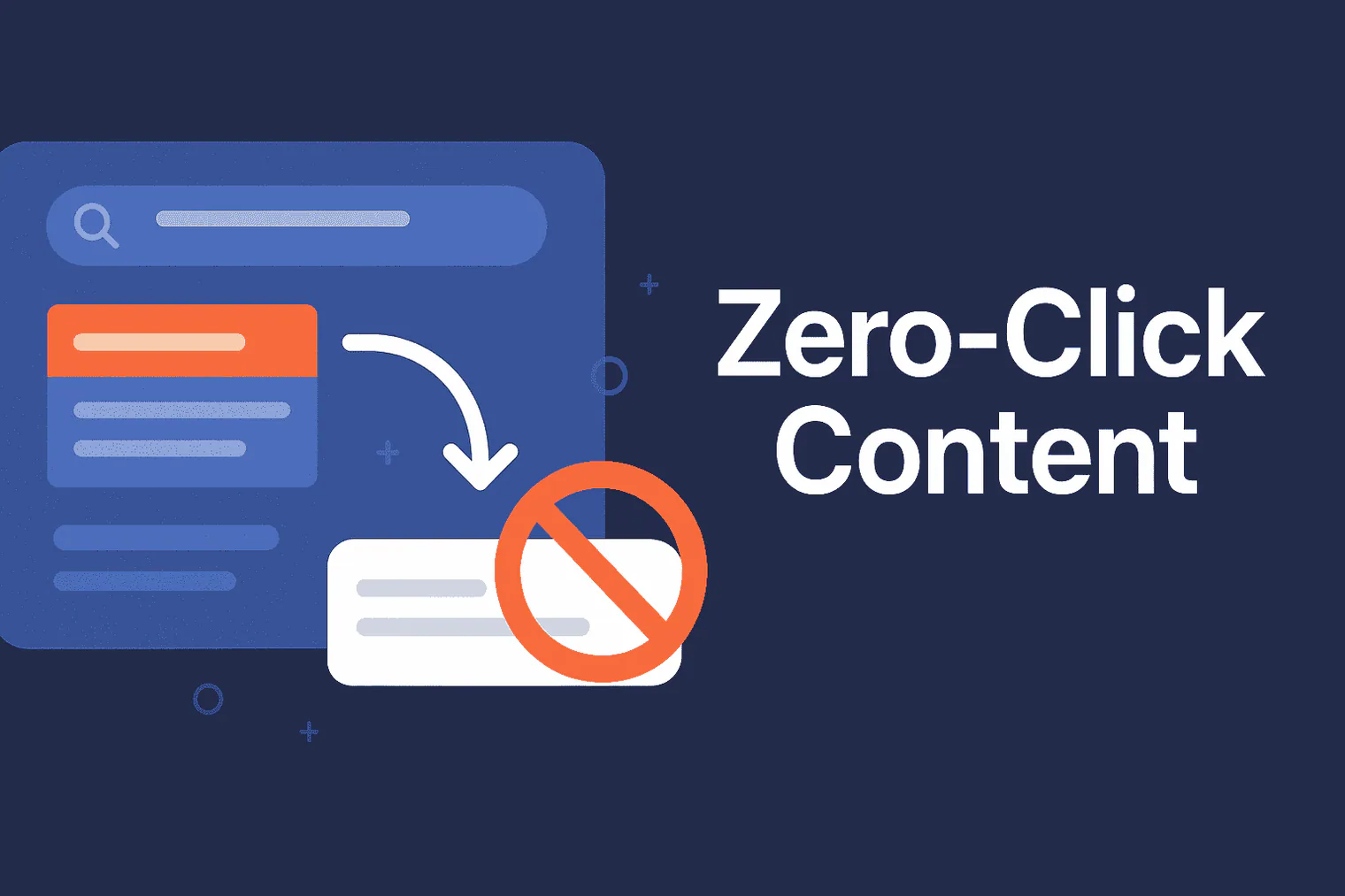
Platforms don’t want to send your audience away. Google, LinkedIn, Facebook, TikTok, every major channel is optimized to keep users on‑platform for as long as possible. That’s killing traditional click‑through rates. Leading to platforms full of zero-click content.
Content that delivers value directly inside the platform where it’s published, no extra clicks, no ‘read more’ walls, no forced funnel steps. The answer, the insight, or the story is right there in‑feed or in‑search.
- In 2024, 58.5% of Google searches ended without a single click to another website (source).
- On Facebook, 97.3% of the most‑viewed posts contained no external link (source).
- LinkedIn posts without links get up to 8× more reach than posts with them.
For marketers, this is a hard truth: the old model of baiting clicks is breaking down. Platforms control distribution. Audiences prefer immediate answers. Zero‑click isn’t a tactic you can ignore, it’s now part of the competitive baseline.
In this guide, I’ll cover exactly how to adapt.
What Is Zero‑Click Content?
Zero‑click content is content that delivers the full value where it’s published, without requiring the audience to go anywhere else. The answer, the tip, the tutorial, the story, all of it lives natively in‑platform.
The term was popularized by Amanda Natividad (VP of Marketing, SparkToro) to describe a growing change in marketing strategy: give away the value right there in the feed or on the search results page, instead of dangling it behind a link.
Zero‑Click vs. Traditional Link‑Driven Strategies
In the old model, a Facebook post or Google listing was a teaser; the only way to get the real content was to click through to your site. The click was the KPI.
In the zero‑click model, the content itself is the KPI. Your goal is visibility, engagement, and brand recall in‑platform. The ‘click’ might still happen later, but it’s no longer the only success metric.
Examples of Zero‑Click Content
| Platform / Channel | Zero‑Click Format | Why It Works for Platforms & Users |
|---|---|---|
| Google Search | Featured snippets, Knowledge Panels, ‘People Also Ask’ answers, AI‑generated summaries | Instant answers keep users on Google; brands gain visibility even without clicks |
| Carousels (multi‑slide PDFs), long‑form posts, native newsletters | Algorithm boosts native content; no link friction; high dwell time | |
| Twitter / X | Full threads delivering tips, insights, or stories | Users consume everything in‑thread; easy sharing without leaving platform |
| TikTok / Instagram Reels / YouTube Shorts | Short video tutorials, explainers, mini‑stories | Fast, engaging, mobile‑friendly; algorithm rewards watch‑through |
| Instagram & Facebook | Infographics, multi‑slide guides | Complete insights in a swipeable format; shareable without external load time |
| On‑Platform Articles | LinkedIn or Medium native posts | Full content hosted in‑platform; users can read without leaving their feed |

Core Criteria for True Zero‑Click Content
If it’s going to work, it has to hit all three:
- Native: Created specifically for the platform’s preferred format (carousel, thread, short video, snippet).
- Standalone: Delivers the complete main message in‑platform. No external context required.
- Instinctively Valuable: The value is clear at a glance; the audience doesn’t have to wonder if it’s worth their time.
Zero‑click content is built to win where attention lives. It meets the user’s intent immediately, aligns with platform algorithms, and positions your brand as the source, whether they click or not.
Why Zero‑Click Content Is on the Rise
The internet is moving from a ‘click‑to‑learn’ model to an ‘answer‑on‑the‑spot’ model. Platforms want users to stay put. Users want instant answers. The result? Click‑through rates are collapsing, and zero‑click formats are taking their place.
Search Engines Have Become ‘Answer Engines‘
Google’s SERP is no longer a list of websites, it’s a full‑blown destination, packed with AI overviews, snippets, media, and whatever else Google can throw in.
- 58.5% of Google searches end without a click to any website.
- Only 36% of searches in the US result in a click to a non‑Google site, the rest stay on Google or click into a Google‑owned property like YouTube, Maps, or Flights.
- Featured snippets, People Also Ask boxes, local packs, shopping carousels, and now AI‑generated overviews all answer the question before you even think about clicking.
Example: Search ‘best wireless earbuds’ today, and you’ll likely get:
- An AI‑curated answer summarising pros and cons.
- A shopping carousel with prices from Google Shopping.
- A PAA box with three related questions.
All of this sits above the organic results. By the time a user scrolls to your site, they’ve already consumed the gist.
For marketers: if your content isn’t optimized to be the snippet or cited in AI answers, you’re invisible to a growing share of searchers.
Social Algorithms Penalize Links and Reward Natives
Platforms want to keep users scrolling, not sending them off‑site. Native content is rewarded; external links are quietly buried.
- Facebook openly admits it downranks posts with external links. In a 2024 transparency report, 97.3% of the most‑viewed posts had no external link.
- LinkedIn hasn’t said it officially, but the effect is clear: marketers report up to 8× more reach for posts without links compared to link‑drops.
- Twitter/X has flagged outbound links as a spam indicator, throttling their reach.
Example: Dreamdata’s employee advocacy program had sales and marketing staff post zero‑click insights directly on LinkedIn.
Result: measurable lift in demo booking, all without a single outbound link in the posts.
User Behavior Has Changed
The modern scroller doesn’t want extra steps.
- Friction kills clicks, loading a site, accepting cookies, and finding the answer is too slow compared to just reading the post in‑feed.
- Attention spans are shrinking: short‑form video is the fastest‑growing format across all platforms, and TikTok users spend 95 minutes per day inside the app.
- People are trained to expect the answer where they already are, whether it’s a carousel, snippet, or short video.
Example: A TikTok recipe video that shows all steps in 45 seconds will almost always outperform a ‘link in bio’ that sends people to a 1,500‑word blog post.
Platform Loyalty and Trust
Users increasingly trust the platform more than an unfamiliar site.
- On LinkedIn, a tip shared by a familiar voice in‑feed will get more engagement than the same tip buried in a blog link.
- TikTok and Instagram make outbound linking awkward or impossible in many contexts, forcing brands to work natively.
- In the ‘zero‑trust internet,’ people are wary of unknown URLs. They’d rather interact inside the ecosystem they already know.
The Mobile‑First Reality
The majority of traffic is now mobile. That means thumb‑scrolling in apps is the default, not desktop browsing.
- Navigating away from a feed to an external site is disruptive on mobile.
- Native formats like carousels, short videos, and infographics are designed for quick, in‑place consumption.
Zero‑click content fits this reality perfectly: no new tab, no slow load, no jarring UX shift.
Search engines want to be the destination.
Social platforms want to keep you in the feed.
Users want answers without leaving.
Zero‑click content is the natural outcome of these three coming together, and it’s only accelerating.
Formats (and Examples) of Zero‑Click Content
Zero-click formats keep evolving, from early featured snippets to today’s AI-driven answers. The biggest change is that generative AI platforms now surface and cite publisher content directly inside results, further reducing clicks but extending reach. Understanding these formats is key for tracking visibility, defending traffic, and aligning with Generative Engine Optimization (GEO).
AI Citations as a Zero‑Click Format
Whenever ChatGPT, Gemini, or Perplexity cite your content without sending users to your URL, that’s zero‑click visibility in action.
- AI models roll your content into their answer without link or redirect, satisfying the user’s query instantly.
- Being quoted or summarized by name boosts credibility, even with zero visits.
- Optimizing your content to be AI‑citable is generative engine optimization (GEO).
This is the fastest‑growing zero‑click format. AI assistants are becoming the first stop for research, bypassing both Google and social feeds entirely.
If your content is in their dataset and phrased in ways that models can parse cleanly, you can own a slice of those answers. That influence can shape perception and drive future brand searches, even if the initial interaction never touches your website.
Why AI Citations Matter as a Zero‑Click Content Format
AI citations in tools like ChatGPT and Perplexity are the new discoverability edge, even more than SEO rankings:
- Users receive direct answers synthesized from your content, but may never click.
- LLMs may cite you or paraphrase your text without providing a hyperlink, or sometimes offer no attribution at all (e.g. 92% of Gemini answers lack citation) (Source).
- Brand visibility now depends on appearing in AI outputs. It’s less about traffic and more about being used in models users trust.
Your visibility KPI is now: AI share-of-voice, not click rate.
To win:
- Structure content for snippet-friendly answers.
- Use clear, authoritative language and schema markup.
- Build entity signals like consistent brand naming and well-cited data sources.
Social-Native Formats That Avoid Links
Social platforms reward content that keeps users inside the feed, and penalize outbound links:
- LinkedIn: Posts with links see 25–35% less reach; link-free content gets up to 6× more engagement and 18× more comments (source).
- Facebook & Instagram: The vast majority of the most-viewed content contains no outbound link (95–97%) (Source).
Zero-click formats here include:
- LinkedIn carousels and native long-form posts
- Twitter/X threads sharing full insight
- Platform-native infographics and text posts
These formats deliver full value in-platform, driving reach and engagement, while minimizing link fatigue.
Short-Form Video (Self-Contained Content)
Short video formats remove the need for clicks by design:
- TikTok tutorials, Instagram Reels, and YouTube Shorts that fully demonstrate or explain without redirecting.
- Works because mobile users (95 minutes/day average on TikTok) consume content in-stream, no friction, max engagement (Source).
They tick all zero-click boxes: short, visually compelling, and complete.
In-Platform Long-Form Content
Deeper content can still be zero-click, if it never leaves the platform:
- LinkedIn newsletters and Medium in-app articles allow readers to consume full articles within the platform.
- You get long-form authority and dwell time, with zero exit points.
This is powerful for thought leadership, especially in B2B and specialist niches where clickless engagement still builds trust.
Format Comparison Table
| Platform / Format | Zero-Click Mechanism | Core Benefit |
|---|---|---|
| Google AI Citations | AI models cite your content | Visibility inside AI answers, even with no clicks |
| LinkedIn / Facebook Native | Carousels, long-form posts, no links | Algorithm rewards in-feed engagement, avoids link penalties |
| Twitter/X Threads | Full insight shared in-tweet | Shareable, standalone value with no exit friction |
| Short Videos (TikTok/Reels/Shorts) | Mini-guides consumed in-stream | Mobile-native, high watch-through, zero clicks required |
| In-App Articles (LinkedIn, Medium) | Full article consumed in-platform | Long-form authority without exit points |
What Are the Benefits of Zero-Click Content?
Most marketers still frame zero‑click content as a traffic killer. The logic is simple: if people don’t click, you can’t convert. But that’s a narrow view. The reality is that zero‑click content can drive more visibility, improve audience trust, and set you up for better conversions over time, if you play it correctly.
Instead of thinking in terms of ‘traffic lost,’ think in terms of ‘attention gained.’ In an environment where search engines, social algorithms, and even AI assistants keep users on their own turf, attention is the currency that fuels brand growth.
Here’s why zero‑click content has surprising advantages.
Algorithm‑Friendly Reach
Platforms want to keep users in‑platform. Their algorithms reward posts that help them do that, and penalize those that try to send people elsewhere.
On LinkedIn, posts with no links can receive up to 8× more reach than link posts. Facebook’s own transparency reports show that 97%+ of the most viewed posts contain no external link. The bias is baked in.
Publishing content that delivers its value without a click means you’re working with the algorithm instead of against it. The result? More impressions, more engagement, and more brand exposure, without spending a cent more on distribution.
Immediate Trust and Goodwill
Zero‑click content removes the transaction from the interaction. Instead of ‘click here and maybe we’ll give you something useful,’ you’re saying, ‘Here’s something useful, right now.’
This is the foundation of audience trust. Called the ‘open‑book’ strategy, where you show your expertise upfront, and people will remember the brand that helped them without asking for anything in return.
Over time, that makes you the default choice when they do need more.
Higher Engagement Rates
On‑platform formats, LinkedIn carousels, Twitter/X threads, Instagram infographics, TikTok tutorials, generate more engagement signals than link posts. The content is easier to consume, share, and discuss without leaving the feed.
Comments, shares, and saves extend the life of your post in the algorithm, extending your reach. Hootsuite reports that zero‑click social content consistently earns higher comment rates and longer dwell time, both of which feed visibility.
Building Algorithm Capital
Consistent, high‑engagement, native content trains the algorithm to treat your account as high‑value. This ‘algorithmic capital’ means that when you do post something with a link or a conversion goal, you’re more likely to get strong reach before the platform suppresses it.
Zero‑click earns you the right to drop the occasional link without killing your post’s performance. It’s a strategic play, stack goodwill with the algorithm now, cash it in later.
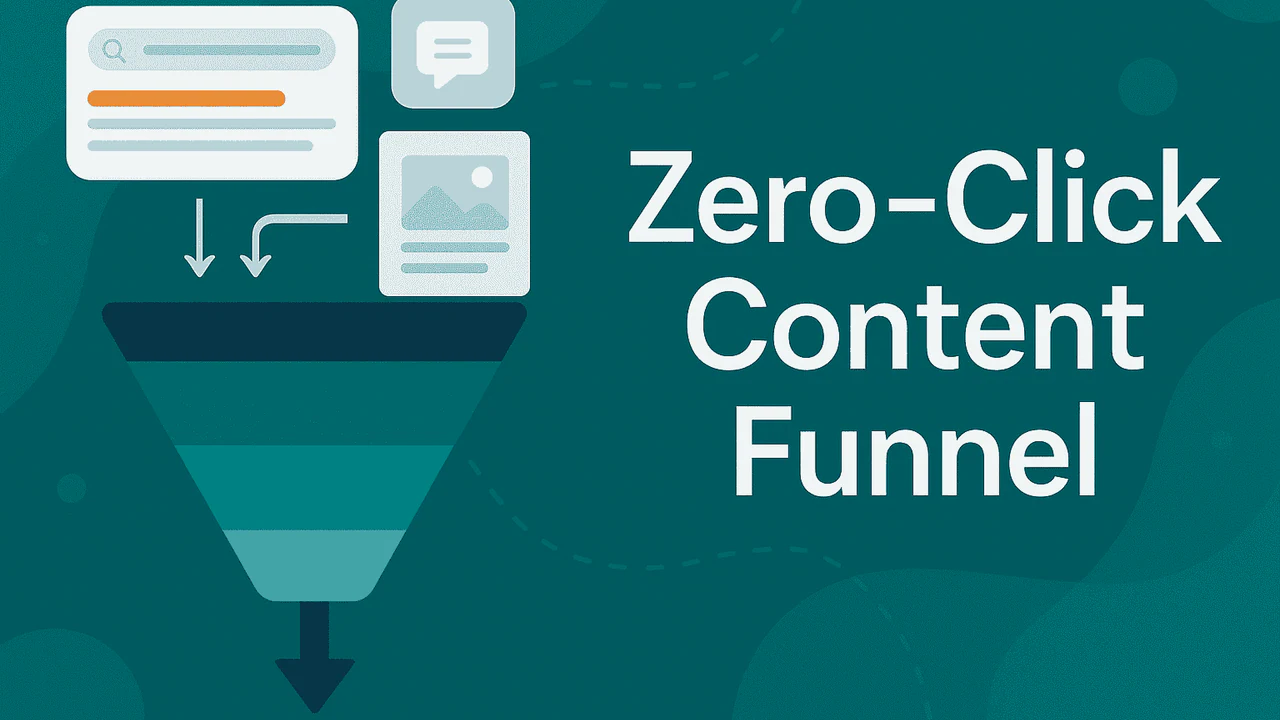
Capturing Top‑of‑Funnel Audiences with Low Friction
For awareness‑stage prospects, any extra click is friction. In mobile‑first feeds, people will simply scroll past if clicking means leaving the platform, waiting for a page to load, and adjusting to a new layout.
Zero‑click removes that friction. You’re making it effortless for someone to engage with you, even if they’ve never heard of you before. That’s why it’s so effective for audience building and brand introduction.
Better‑Qualified Traffic When Clicks Do Happen
Zero‑click doesn’t kill clicks, it filters them. The users who do click through have already consumed some of your content, understand your positioning, and want more.
While raw traffic from search and social may drop in a zero‑click environment, conversion rates on that traffic often increase. The click becomes a self‑qualification step, only the motivated arrive, and they’re further along in their decision process.
Strengthening On‑Platform Authority
By posting complete, valuable insights natively, you build authority where your audience already spends time. LinkedIn newsletters, long‑form posts, and platform‑native articles position you as a thought leader without requiring a click.
Over time, that authority can transfer across channels. If people consistently see your name attached to useful, credible content, they start to associate your brand with expertise, whether they’ve visited your website yet or not.
Works With User Preferences, Not Against Them
Modern audiences have zero patience for forced funnels. They prefer to get value in‑place, without pop‑ups, redirects, or slow‑loading landing pages.
Zero‑click content respects that. It meets users in their context, on their chosen platform, in the format they prefer. That makes it feel more like a conversation than a pitch.
Takes Advantage of Platform‑Specific Advantages
Some platforms, Instagram, TikTok, make linking out difficult or impossible in most contexts. Others, like LinkedIn, give disproportionate reach to certain native formats (carousels, documents, live video).
Zero‑click content capitalises on these rules instead of fighting them. For example:
- Instagram: multi‑slide infographics or reels give you reach without the handicap of no caption links.
- TikTok: short, self‑contained tutorials or explainers work because users don’t need to leave for the payoff.
- LinkedIn: carousels and long text posts often outperform link shares by wide margins.
Why Zero‑Click Benefits You
| Benefit | Why It Matters |
|---|---|
| Algorithm‑Friendly Reach | Native content is shown to more users because it keeps them in‑platform |
| Immediate Trust & Goodwill | Providing value upfront positions your brand as helpful and credible |
| Higher Engagement Rates | Shares, comments, and saves signal quality to the algorithm and extend post lifespan |
| Algorithmic Capital | Builds post performance history that boosts future reach, even with outbound links |
| Top‑of‑Funnel Growth | Removes friction for new audiences, making it easier to engage |
| Better‑Qualified Traffic | Clicks you do get are from more motivated, higher‑intent users |
| On‑Platform Authority | Builds visibility and credibility within the platform’s own ecosystem |
| Works With User Preferences | Matches the way people now consume content, fast, direct, in‑feed |
| Platform‑Specific Leverage | Uses each platform’s rules and preferred formats to maximize organic reach |
What Are the Challenges of Zero-Click Content?
While powerful, zero-click content comes with its problems: attribution gaps, fewer direct leads, and higher creative demands. The same mechanics that help you ride the algorithm also make it harder to measure impact, convert audiences, and maintain control over your growth. If you’re not strategic, you risk building visibility without building a pipeline.
ROI and Attribution Are Harder to Prove
When users never visit your site, the traditional playbook for measuring marketing performance breaks. Pageviews, time on site, goal completions, none of it captures the value of an Instagram carousel or a LinkedIn post consumed in‑feed.
The gap is even bigger because of dark social: someone sees your content, decides to check you out later, and arrives as direct traffic or via branded search. There’s no click trail, so your analytics can’t connect the dots.
For CMOs and performance teams tied to last‑click attribution, this is a reporting nightmare. You’re showing impressions, likes, and comments instead of form fills and pipeline value. Without a change in KPI thinking, stakeholders may conclude ‘it’s not working’ simply because the data doesn’t fit the old model.
No Immediate Traffic or Lead Capture
Zero‑click content trades short‑term lead gen for long‑term brand building. That’s a calculated bet, but it can hurt acquisition numbers in the short run.
If you’re not driving clicks, you’re not adding people to your retargeting pools, you’re not firing conversion pixels, and you’re not pushing them into your email nurture sequences.
Unless you have parallel acquisition channels running, you could see a drop in new leads and sales activity, especially if you were previously dependent on social or search click‑through for filling the funnel.
Higher Creative Burden Per Post
The bar for zero‑click content is high: it has to deliver complete, standalone value in one shot. That means each LinkedIn carousel, TikTok clip, or Google‑optimized snippet needs to carry the weight of an entire article, guide, or case study.
Condensing 1,500 words of insight into an eight‑slide carousel or a 60‑second video requires more creative skill, not less. And because the content is consumed in seconds, you need to produce it frequently to maintain relevance. For smaller teams, this creative demand can become unsustainable fast.
Limited Depth and Context in Short Formats
Not every topic can, or should, be compressed into a bite‑sized piece. Complex, high‑consideration products often require deep context to overcome objections or explain benefits.
In a zero‑click format, details are sacrificed for speed. You might capture attention, but you won’t always move the buyer meaningfully closer to a decision. There’s also a risk of training your audience to expect only quick takes, reducing their appetite for the longer, richer content that can actually convert.
Platform Dependency
Zero‑click content lives inside the platform’s ecosystem, under its rules. That means your reach, visibility, and even access to your audience are at the mercy of an algorithm you don’t control.
If LinkedIn decides to de‑prioritise carousels, if Instagram limits business post reach, or if Google rewrites its AI Overviews policy, your results can drop overnight. Years of building audience equity in‑platform can evaporate if the platform changes direction or your account gets flagged.
Internal Buy‑In Struggles
Many leadership teams still see web traffic as the ultimate proof of marketing success. Presenting a report full of ‘impressions’ and ‘engagement’ instead of MQLs can feel like walking into a gunfight without ammo.
Without education on how zero‑click works as a demand generation tactic, execs may push back hard, especially if traffic is declining. The irony: the strategy could be working to grow awareness and pipeline readiness, but without attribution clarity, it’s an uphill battle for budget and support.
Passive Audience Risk: Engagement Without Action
Not every like turns into loyalty. It’s possible to build a large audience that enjoys your posts but never takes the next step, no follow, no sign‑up, no purchase.
When the content is designed to be consumed entirely in‑feed, you risk satisfying the audience’s curiosity without sparking deeper engagement. Over time, you could be fuelling platform growth more than your own.
Not Ideal for Every Funnel Stage
Zero‑click content excels at the top of the funnel, awareness, light education, initial brand exposure. But when buyers need detail, proof, and commitment triggers, you have to pull them into formats that can deliver that depth.
If your strategy is only zero‑click, you risk stalling prospects before they reach evaluation and purchase stages. Without intentional bridges, like webinars, gated assets, or in‑person events, you may never fully capture the demand you’re generating.
Algorithm Volatility
The same algorithms that reward zero‑click content today can punish it tomorrow. LinkedIn has switched priorities before (video boosts, then text boosts, now document boosts). Google is experimenting with how much visibility AI Overviews give to sources. TikTok constantly tweaks its recommendation engine.
Basing your visibility entirely on current algorithm behavior is betting on a moving target. Without diversification, a single shift can wipe out months of consistent reach.
Downsides to Watch
| Challenge | Why It Matters |
|---|---|
| ROI & Attribution Difficulty | No click trail, rise of dark social, makes proving value to execs harder |
| No Immediate Traffic or Lead Capture | Fewer pixels fired, smaller retargeting pools, slower lead gen |
| Higher Creative Burden | Demands frequent, high‑quality, high‑value standalone content |
| Limited Depth/Context | Complex topics lose nuance in short formats |
| Platform Dependency | Algorithm or policy changes can erase reach overnight |
| Internal Buy‑In Struggles | Traffic‑focused KPIs make zero‑click a hard sell without education |
| Passive Audience Risk | Engagement doesn’t guarantee movement toward conversion |
| Not Ideal for All Funnel Stages | Strong for awareness, weaker for evaluation and conversion without intentional hand‑offs |
| Algorithm Volatility | Constant platform changes make performance unpredictable |
Strategies for Succeeding with Zero‑Click Content
Zero‑click content isn’t about surrendering your funnel to the algorithms; it’s about making the algorithms work for you while still creating paths back to your owned channels. Here’s how to win attention and convert it into long‑term value.
Prioritize Platform‑Native Creation
Stop pushing square pegs into round holes. Content designed for a blog rarely performs when dumped into a feed. Each platform has its own native language, use it.
- LinkedIn > Carousels, text posts, long‑form articles in LinkedIn’s editor.
- X/Twitter > Multi‑tweet threads with strong narrative flow.
- Instagram > Multi‑slide infographics or Reels with on‑screen text.
- TikTok > Fast‑paced tutorials with captions burned in.
Native formats get more reach because they keep people in‑app, exactly what the algorithm wants.
Lead With Value
Zero‑click means you give away the good stuff upfront. No teaser lines, no ‘click to learn more.’ The hook and the insight live together.
It’s content generosity: when you teach, explain, or solve in‑feed, you earn trust and attention without asking for anything first. Over time, that trust becomes the bridge to deeper engagement.
Use Attention‑Grabbing Hooks
If your first line or visual doesn’t stop the scroll, the rest doesn’t matter. Hooks should spark curiosity or tension.
Examples that work:
- ‘60% of Google searches never leave Google. Here’s what that means for your funnel.’
- ‘This one ad format has 3× higher CTR, and it’s free.’
Make the promise clear, make it relevant, and deliver on it fast.
Design for Skimmability
Feeds move fast. Your content has to be consumable in 5–15 seconds. Use:
- Short paragraphs and bullet points.
- Headings or slide titles that carry meaning on their own.
- Bold key phrases (LinkedIn Unicode works here).
- Visual aids, charts, screenshots, before/after images.
If someone can’t grasp the point with a quick scan, they’ll scroll past.
Align With Algorithm Preferences
Platforms push certain formats at different times. Ride those waves.
- LinkedIn is currently favoring carousels and dwell‑time content.
- TikTok pushes watch‑time, tight editing and replays win.
- Google’s AI Overviews pull from concise, well‑structured answers.
Monitor what’s getting reach in your niche each month and adapt. Algorithm changes aren’t a risk if you track them in real time.
Mix Zero‑Click With Strategic Link Posts
Zero‑click builds reach and ‘algorithmic capital,’ but you still need owned‑channel growth. The rule: earn the right to link.
For every 4–5 native posts, drop one high‑value link, like a major report, event sign‑up, or launch page. These posts will perform better because you’ve been feeding the algorithm content it likes in between.
Optimize for Zero‑Click Search
Search is now an answer engine. To get visibility in featured snippets, People Also Ask, or AI Overviews:
- Use question‑based headings.
- Give concise, factual answers in 40–60 words.
- Add schema markup (FAQ, HowTo, Product).
- Include your brand name in context so even without a click, the user sees the source.
The click might not happen, but brand recall will.
Encourage Interaction and Community
Engagement signals keep your content in circulation. Ask questions, run polls, and reply to comments. The conversation keeps the post alive, and puts your name in more feeds.
If your brand page feels cold, bring in people: employee comments, partner shares, or influencer tagging can amplify reach without a link in sight.
Repurpose Smartly
One strong idea can fuel multiple zero‑click assets.
Example: A research report > LinkedIn carousel of top stats > Twitter thread summarising findings > TikTok explainer > Instagram infographic.
Each version speaks the platform’s native language but carries the same core message, multiplying exposure without multiplying workload.
Capture Value Subtly
Zero‑click doesn’t mean zero conversion opportunity. Use soft capture points:
- Profile funnels: Your bio and banner carry the CTA (e.g., ‘Free trial → link’).
- Follow prompts: ‘Follow for more [topic] tips.’
- Occasional CTAs: Invite people to deeper resources only when relevant.
The goal: keep building audience equity in‑platform, but give the most engaged a frictionless way to take the next step.
Measuring Success in a Zero‑Click World
Zero‑click content forces a KPI reset. When the click isn’t the outcome, you need new ways to measure whether your content is actually working. These metrics focus on visibility, engagement, and brand lift, the things that drive future revenue even when you can’t tie them to a single click.
On‑Platform Engagement Metrics
Clicks aren’t the only sign of intent. Track:
- Impressions: raw reach in feeds or search.
- Engagement rate: likes, comments, shares relative to reach.
- Dwell time: how long users stay on your post, carousel, or video (LinkedIn, TikTok, and YouTube all surface this).
High engagement and dwell time signal the algorithm to keep your content circulating, building ‘algorithmic capital’ you can cash in later when you post a link.
Audience Growth
If your zero‑click content resonates, your follower or subscriber count should rise steadily.
- Track growth rates before and after implementing zero‑click strategies.
- Segment by channel to see which platforms are building the warmest audience.
These are the people you’ll be able to target directly in future campaigns without fighting for visibility from scratch.
Brand Search & Direct Traffic Lifts
People who don’t click your post may still look you up later.
- Branded search volume: Use Google Search Console to track increases in impressions and clicks for searches containing your brand name.
- Direct traffic: Spikes in direct/none traffic can indicate people typed in your URL after seeing your content in‑platform.
Data shows that brand searches often rise after sustained zero‑click content campaigns, even when referral traffic from social stays flat.
Self‑Reported Attribution
When tracking breaks, ask directly.
- Add ‘How did you hear about us?’ to lead forms and checkout flows.
- Encourage open text rather than dropdowns, you’ll see mentions like ‘Your LinkedIn posts’ or ‘Saw a TikTok.’
This qualitative data connects engagement to pipeline in a way analytics alone can’t.
Brand Lift & Sentiment Tracking
Use surveys, social listening, or paid platform tools to measure changes in:
- Unaided brand awareness.
- Ad/content recall.
- Net sentiment in brand mentions.
LinkedIn Brand Lift Studies or tools like Brandwatch can help quantify perception shifts that come from being consistently visible in‑feed.
Community Growth & Dark Social Signals
Look beyond public metrics:
- Track membership growth in owned communities (Slack, Discord, Facebook Groups).
- Monitor qualitative mentions, prospects saying ‘I keep seeing your stuff’ in calls or emails.
- Watch for content being shared in private channels (hard to measure, but anecdotal evidence from sales teams can be gold here).
This is the hidden layer of zero‑click impact that rarely shows in analytics but moves deals forward.
Content Efficiency: Repurpose ROI
Measure how far one content asset travels.
Example: A single research report turned into 6 zero‑click formats across LinkedIn, X, TikTok, Instagram, and Google can generate more impressions than months of traditional blog posts.
Track:
- Total impressions/engagement from all repurposed formats.
- Cost or time saved compared to producing each asset from scratch.
Shift From ROI to VOI
Traditional ROI (Return on Investment) focuses on direct, trackable revenue. Zero‑click content often delivers VOI, Value on Investment.
- VOI includes reach, brand lift, authority, and long‑term audience growth that eventually translate into revenue.
- Instead of ‘Did this post generate sales this week?’ ask, ‘Did this post increase the number of people who know, like, and trust us?’
The Future of Zero‑Click Content
Search, social, and AI assistants are all moving toward keeping users in‑platform for as long as possible. The future isn’t about how to reverse this, it’s about positioning your brand where the attention is happening, even if the click never comes.
AI in Search: Generative Answers Will Cut Clicks Even Further
Google’s Search Generative Experience (SGE) and Bing’s AI answers are designed to satisfy queries without leaving the SERP. Analysis found that 58.5% of Google searches already end without a click, and generative overviews are accelerating that.
The opportunity: If your content is structured and cited well enough to be surfaced in these answers, you still get brand visibility, even when there’s no visit to your site. The next phase of SEO isn’t just ‘rank in the top 10,’ it’s ‘be the name in the AI’s answer box.’
AI Citations as a Visibility Metric
Tools like ChatGPT, Perplexity, and You.com now surface direct citations in their responses. In these environments, the ‘click‑through’ is often replaced by a brand mention or a linked footnote. This is zero‑click content in pure form: you get the awareness without the visit.
Marketers will need to start tracking AI citations the same way we track press mentions today, because being cited inside an AI conversation may become as valuable as a SERP ranking.
Platform Convergence: Full‑Service Feeds
Social feeds are evolving into complete ecosystems. TikTok now has search, shopping, and payment built in. Instagram integrates DMs, Stories, video, and commerce. LinkedIn is expanding long‑form articles and newsletters.
The more services platforms integrate, the fewer reasons users have to leave, cementing zero‑click behavior as the norm. Your brand presence has to work entirely in‑feed.
Paid + Organic Interplay
Zero‑click content doesn’t just live in organic, it influences paid performance. Campaigns that warm audiences in‑platform with high‑value, link‑free content often see lower CPMs and higher CTRs when they run paid promotions later.
Think of it as priming the feed: build algorithmic capital organically, then use paid to target the now‑warmed audience.
The Brand‑as‑Publisher Model
As clicks decline, brands will operate more like media outlets inside platforms. That means regular publishing schedules, multi‑format storytelling, and deep topic coverage without expecting a site visit.
The winners will be those who can consistently own conversations inside the channels their buyers spend time on.
Expectation Shift: Brand Presence > Site Visits
For many marketers, the success marker will shift from ‘How many visitors came to our site?’ to ‘How often and how positively are we seen in the spaces our buyers trust?’
In this model, your brand’s relevance, authority, and memorability matter more than the number of referral sessions in Google Analytics.
Thriving Beyond the Click
Clicks are no longer the only metric that matters. Attention is now the primary currency, and platforms, search engines, and AI assistants are competing to hold it.
Zero‑click content isn’t about surrendering your audience to someone else’s ecosystem. It’s about meeting them where they already are and proving your value before you ever ask for a click.
The most resilient strategies combine high‑impact, platform‑native content with strong owned‑channel assets. Zero‑click builds reach, trust, and awareness. Your owned channels convert that attention into long‑term customers.
The brands that win in this environment will be the ones who consistently deliver standalone value, value that’s memorable, shareable, and worth talking about, even if the user never leaves the platform. Do that well, and the clicks you do get will be from people already primed to buy.
FAQ
Zero‑click content is content that delivers complete value inside the platform where it’s published, whether that’s Google, LinkedIn, TikTok, or ChatGPT, without requiring the user to click to another site. It includes formats like Google Featured Snippets, LinkedIn carousels, TikTok tutorials, Instagram infographics, and AI assistant citations.
Zero‑click behavior is growing because platforms want to keep users in‑app. Google’s AI overviews, ‘People Also Ask’ boxes, and knowledge panels answer queries directly on the SERP. Social platforms like Facebook, LinkedIn, and Instagram algorithmically demote posts with outbound links and reward native content. According to SparkToro, 58.5% of Google searches end without a click, a number that will likely grow as generative search becomes standard.
When AI assistants answer a user’s question by citing sources in‑line or in footnotes, they satisfy intent without requiring the user to click through. This is a new form of zero‑click search, where brand visibility comes from being named in the AI’s answer rather than receiving the referral traffic. For many marketers, AI citations are now a visibility metric in their own right.
Not necessarily. While zero‑click can reduce raw traffic, it can increase brand impressions, authority, and recall, especially if your content is the one being surfaced in featured snippets or AI answers. Optimising for zero‑click visibility (clear Q&A structures, schema markup, brand mentions) ensures you still benefit, even without the click.
You’ll need to look beyond traditional analytics. Useful metrics include:
On‑platform engagement (impressions, engagement rate, dwell time)
Follower/subscriber growth
Brand search volume and direct traffic lifts
Self‑reported attribution in lead forms (‘How did you hear about us?’)
AI citation tracking
Brand sentiment analysis and share of voice
Zero‑click content is strongest at the top and middle of the funnel, building awareness, trust, and familiarity. When clicks do happen, they’re often from better‑qualified, high‑intent visitors because the audience has already consumed value from you in‑platform.
It depends on your audience, but common high‑impact channels include:
Google Search: Featured snippets, AI overviews, knowledge panels.
LinkedIn: Carousels, long‑form posts, newsletters.
TikTok & Instagram: Short tutorials, reels, and multi‑slide guides.
YouTube Shorts: Product demos, quick explainers.
AI assistants: ChatGPT, Perplexity, Bing Chat, optimized for citations.
Use a 4:1 or 5:1 ratio—four or five high‑value zero‑click posts for every direct link post. This builds algorithmic capital and audience goodwill so that when you do post a link, it performs better. Your website remains the conversion engine, but platform‑native content becomes the awareness and trust engine.