
Search engine optimization (SEO) is the practice of optimizing your site and content so you show up in organic search results and earn traffic from people who are searching for what your products or services. It’s about helping search engines discover your pages, add them to the index, and decide which ones show up for specific queries.
SEO is essential for every brand because search is where people go when they want answers, options, or to research products and vendors. If your content doesn’t show up, it will miss out on steady traffic and revenue. Paid search can buy traffic and visibility for a while, but SEO is what keeps a stream of qualified visits coming in without paying for every click.
Every content marketer should understand SEO basics because they affect topic choices, headlines, structure, and internal links. When you know how SEO works, you can pick the right pages to create, choose the correct topics to target, and ensure your content is aligned correctly with your audience.
In this guide, I will cover what SEO is, why it matters, how it works, the main types you need to know, how AI-era GEO/AEO sits alongside it, and the practical best practices that keep your content visible.
What Is SEO?
SEO is the practice of improving your website and content so search engines can find your pages, understand what they are about, and rank them for relevant searches. The goal is to earn organic (unpaid) traffic from people who are already looking for topics, products, or services related to your business. It covers everything from your site structure and speed to how you write titles, headings, and body copy.
SEO focuses only on organic search results, not ads. Organic listings are the unpaid results that appear because a search engine’s algorithm decided they are the best match for a query. Paid search (PPC) is advertising: you bid on keywords, your ad is labeled as such, and you pay per click.
It’s an ongoing process, not a one-and-done implementation. Algorithms change, competitors publish new content, your own products and priorities change, but SEO best practices also change constantly.
Staying visible means you keep researching, updating, auditing, and fixing. It’s easier to manage with a dedicated agency or team, but the basics can be done by a marketer or two.
What is the goal of SEO?
The goal of SEO is to help your site appear for the right searches, not just more searches. That usually means focusing on queries that describe problems, use cases, and categories, as well as branded searches where people are already looking for you.
A key part of this is matching pages to search intent. Each important query should map to a page that clearly answers what the searcher wants to know or do, whether that’s learning something, comparing options, or buying something.
The end goal is qualified visitors. Organic search is often the largest driver of these visits: SEO statistics show that across business sites, more than 53% of total traffic comes from organic search (source). That’s why SEO has such a strong impact on long-term performance.
SEO in the SERPs
The most obvious part of SEO is the classic ‘blue link’ results: a title, URL, and description that lead to one of your pages. On search engines, these traditionally show up on what’s called Search Engine Results Pages (SERPS).
SEO also influences whether your content is used in richer formats. Featured snippets and ‘People Also Ask’ boxes pull short answers and explanations directly from pages. When your content is structured clearly, it’s more likely to be chosen for these spots.

For many queries, especially local and commercial ones, search engines show specialized blocks like map packs, image rows, video carousels, news, and shopping units. Your SEO efforts determine whether your business, media, or products are eligible to appear in those elements alongside (or above) the regular organic results.
Why Is SEO Important For Your Business?
SEO is important for brands as search is a key part of the user journey and how people make decisions online. When your site shows up for the searches that happen before a purchase or brand choice, you get a steady flow of visitors that comes at no cost (except your internal expenses).
Over time, that organic visibility turns into lower acquisition costs and stronger brand recognition.
How people use search today
As of 2025, Google alone processes about 16.4 billion searches every day, which averages out to roughly 2.8 searches per person worldwide (source). Search is a constant background habit. People type queries when they need a definition, a template, product information, or a ‘what do I do next’ answer, often several times a day.
Those searches are not all the same. Some are quick fact lookups, others are deep comparison sessions, and many are ‘where to buy’ or ‘near me’ queries with clear commercial intent. The same user might bounce between these modes in a single afternoon as they move from awareness to consideration to decision.
This behavior crosses devices and contexts. Someone might start a query on their phone in a meeting, hone in on it on a laptop later, then use their tablet to complete a purchase.
SEO is important here because your content needs to be discoverable across all those entry points, not just when someone sits down for a long research session.
SEO’s impact on acquisition and revenue
For most sites, organic search is one of the main ways new visitors arrive. When you rank for non-brand queries around problems, use cases, and categories, you are visible to people who haven’t heard of you yet but already care about the topic. That is where SEO expands the top and middle of your funnel.
In B2B especially, search is closely tied to buying behavior. Research shows that around 71% of B2B buyers start their product research with a search engine, not a vendor site (source). If your content isn’t present in those early research queries, you’re asking for other brands to take those buyers.
SEO also changes your acquisition. Paid campaigns scale linearly with budget, while strong evergreen pages can keep generating leads, demo requests, or sales for months with only light maintenance.
That doesn’t make SEO ‘free,’ but it does mean the marginal cost of each new organic visitor usually falls over time instead of rising.
SEO and brand perception
Where you appear in search results determines how people judge your brand, even if they don’t click the first time. Showing up consistently for key categories and problem queries shows that you are a relevant option and an industry expert. Not showing up doesn’t have any impact.
A study of roughly 5 million Google search results found that the top organic result captures about 31.7% of all clicks, and that result is around 10 times more likely to be clicked than the page in position 10 (source) If you sit near the top, far more people are exposed to your brand name and page titles, which over time builds awareness and familiarity.
Branded and non-branded queries also tell different stories about perception. Branded searches show how many people already know you exist; non-branded searches show whether you are part of the consideration when someone only knows the problem or topic.
SEO influences both, but it is usually non-brand where you win or lose new attention.
SEO compared to other channels
SEO is a key strategy like paid search, social, email, and partnerships, but its role is distinct. It captures demand that already exists in search behavior, instead of trying to generate demand from scratch. That is why it often becomes the quiet ‘workhorse’ in analytics, even if it gets less day-to-day attention than campaigns.
Traffic mix data shows that in one breakdown of website traffic sources, organic search accounted for about 27% of visits across the sample, more than any other single channel, with direct, email, paid, and social making up smaller shares. If you ignore SEO, you are likely ignoring the single biggest source of visits you can actually influence through content and site changes.
SEO doesn’t compete with other channels, but it can be supported by them. Content that ranks often performs better when you push it through email and social, and visitors you capture through organic search are more likely to come back later through direct and branded queries.
Think of SEO as the start of brand discovery that makes it easier to plan campaigns that build on top of that foundation.
How Do Search Engines Work?
Search engines crawl the web, store copies of pages in an index, then rank those pages when someone searches. When a search happens, ranking systems look at many signals (like the words on the page, date, links, and user experience) to estimate how helpful each result might be for that query and intent.
They then order and test results over time, using anonymized interaction data to refine which pages appear most often for similar searches in the future. SEO is the work you do to make your site easy to crawl, easy to index, and a strong candidate to rank for queries that your audience is searching for.
How search engines discover content
Search engines first need to know your URLs exist. This discovery step uses automated programs (crawlers) that follow links between pages and add what they find to a list of URLs to visit. That is why internal links, navigation, and links from other sites all play a role in whether new content ever gets seen.
You can also give Google a direct hint about what to crawl. XML sitemaps and manual URL submission through Search Console let you list important pages so they are easier to find, which Google explicitly recommends for larger or frequently updated sites. This does not guarantee crawling, but it removes friction compared with waiting for a link from somewhere else.
Control is just as important as discovery. A robots.txt file tells crawlers which paths they can request and which to skip, which helps you avoid wasting crawl budget on faceted URLs, test environments, or duplicate paths. For SEO, you are trying to make sure important pages are easy to reach while low-value or noisy URLs don’t dominate the crawl.
How search engines process and store pages
Once a crawler reaches a URL, it needs to load and understand the content. Google describes this as rendering the page, including running JavaScript, then extracting text, links, and other signals. If key content only appears after complex scripts or blocked resources, the indexer may miss it or delay processing.
After rendering, Google decides if and how to store the page in its index. The index is the structured database that search refers to, not just a flat list of URLs. Some pages are excluded because they are blocked, marked noindex, duplicates, or considered low quality.
When multiple URLs show the same or very similar content, Google groups them and picks a ‘canonical’ URL to represent the cluster. Your canonical tags, internal links, and sitemaps all influence this choice. Good SEO tries to make that choice obvious so the strongest version of a page is the one eligible to rank.
How ranking decisions are made
Once pages are in the index, ranking systems decide which ones to show for a specific query. Google covers this in three main stages: understanding the query, finding relevant content in the index, and ordering that content by usefulness and quality.
Relevance comes first. The systems look at the words in the query, the language, the device, and other context to see what the searcher is trying to do, then match that against page content, headings, and other textual signals. Pages that directly answer the search intent have a better chance of appearing.
From there, quality and authority decide which relevant pages rise to the top. Google notes signals such as content depth, freshness, linking patterns, and user experience when it evaluates which results provide the most helpful information.
You cannot see all of these factors directly, but you can influence them by publishing useful content, earning trusted backlinks, and avoiding technical or UX issues that make pages hard to use.
How search results are assembled
When you type a query, the system assembles a results page that mixes core organic listings with different visual elements. Google calls these ‘Search features’ which include standard results, rich results, images, videos, and news blocks.
Featured snippets and ‘People Also Ask’ boxes pull text from pages that give short answers to common questions. Local packs pull from business listings and local signals. Image and video carousels appear when the query suggests a strong visual intent. Your structured data, media optimization, and content formatting all affect eligibility for these.
Personalization and localization also determine what a user sees. Location, language, device type, and search history can all influence which results and features appear or where they rank for that person. That means two users can see slightly different SERPs for the same query, even though the underlying index and ranking systems are the same.
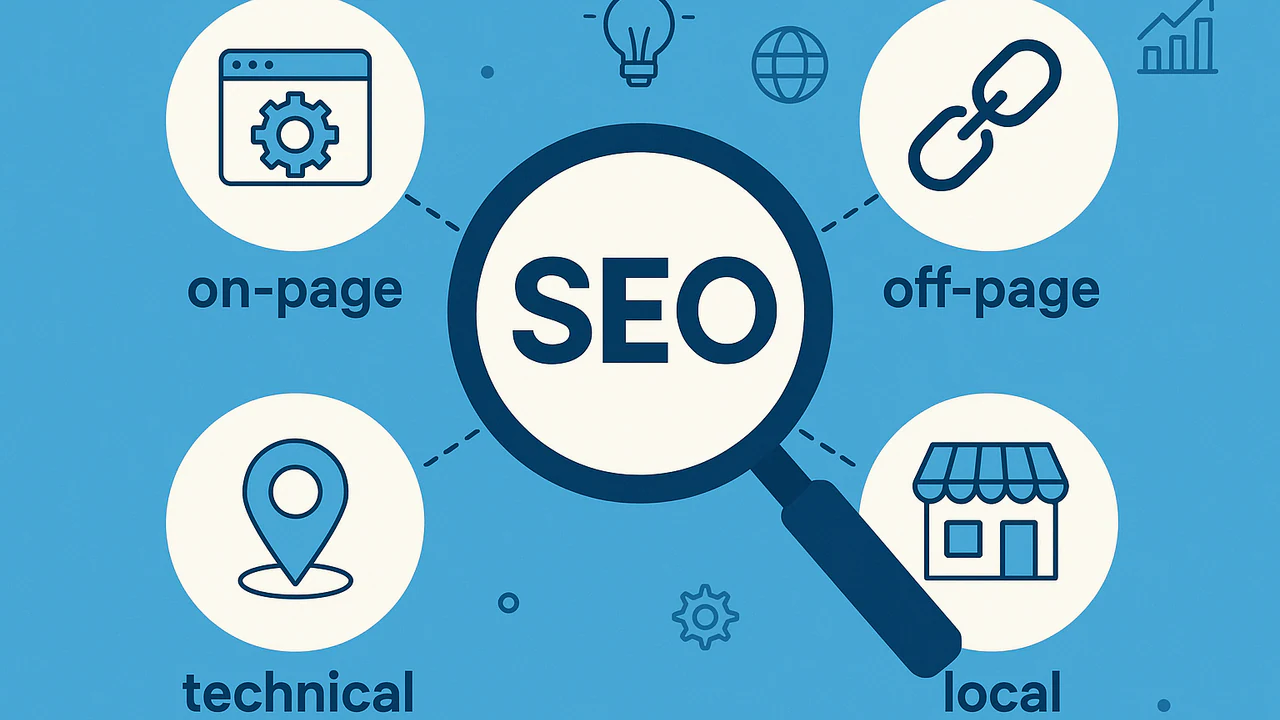
What Are The 4 Main Types Of SEO?
The four main types of SEO are technical SEO, on-page SEO, off-page SEO, and local SEO. They have different implementation processes, but they all work together to support various ranking factors. Here’s a breakdown:
Technical SEO: Can search engines access and read your site?
Technical SEO is about whether search engines can reach, load, and understand your pages at all. If crawlers cannot move through your site, or the HTML they see is thin or unstable, no amount of content polish will make those pages perform.
For most content marketers, the goal is not to become an engineer but to know when technical issues are blocking growth. Usually, devs handle the fix or implementation in this area.
Site architecture and crawlability
A clear site structure makes it easy for crawlers and humans to move from broad topics to specific pages. You want logical sections, simple URL paths, and navigation that reflects how people think about your products and content. When your structure is a maze of random folders and parameters, robots and users both get lost.
Internal links are the main way crawlers discover deeper content. Links in navigation, related content blocks, and in-body anchors all help define which pages are important and how they connect. Orphan pages, which nothing links to, are effectively invisible.
If key pages sit five or six clicks from the homepage, they are less likely to be crawled often or treated as important. Technical SEO here is about streamlining where you can, adding hubs, and making sure no important page depends on a single fragile link in a sidebar.
Indexation and canonicalization
Once search engines can reach a page, you still need to control whether it should be indexed. Some URLs exist only for filters, internal tools, tests, or duplicate variations, and letting all of them into the index is pointless. Tags like noindex, plus clean rules for which templates should be indexed, keep the index focused on important pages.
Canonical tags come in when similar or duplicate pages are unavoidable. They tell search engines which version you consider primary, which helps links and engagement rather than splitting them across variants. Good canonical use also reduces the risk that the wrong version (for example, with tracking parameters) ends up ranking.
For sites with a lot of parameters, pagination, or sorting, you also have to think about how those URLs are handled. Sometimes you want them blocked from crawling; sometimes you want them crawlable but not indexable. A part of Technical SEO is deciding which pattern each set of pages should follow and documenting that clearly.
Performance and mobile readiness
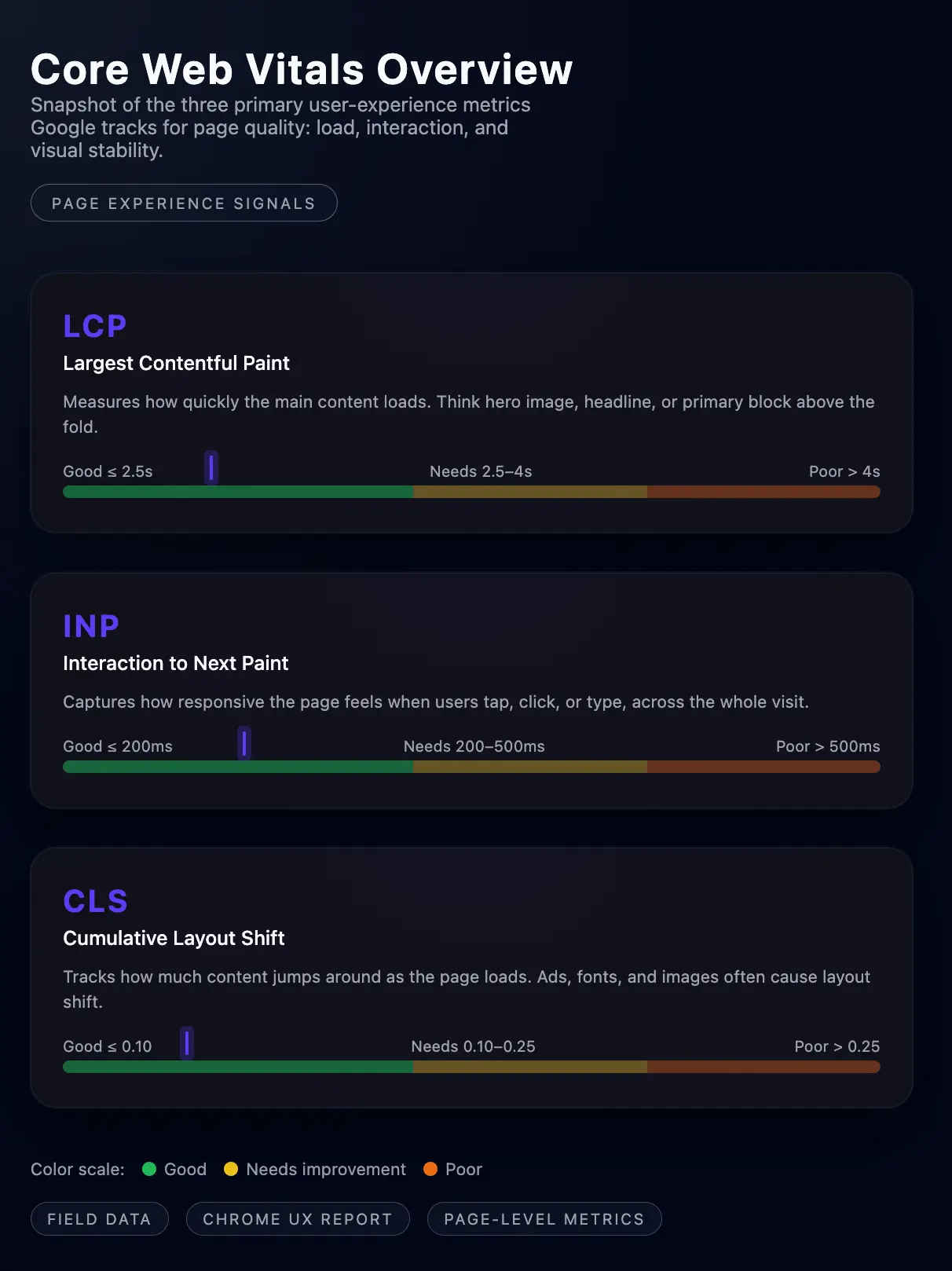
Speed and stability affect both rankings and user experience. Slow, jumpy layouts make people bounce before they read or act, which hurts conversions and sends negative signals to the algorithm. Core Web Vitals are Google’s way of tracking this, but in simpler terms: fast load, quick interaction, and minimal layout shifts.
Most search traffic now comes from mobile devices, so ‘mobile-friendly’ is a must. Responsive design, readable font sizes, and working modules are the minimum expectations. If your content looks great on a 27-inch monitor but breaks on a phone, the version most searchers see is the broken one.
Heavy scripts, auto-playing media, and oversized images are common performance killers. Technical SEO here is about working with developers or using tools to strip out what is not needed, compress what stays, and defer anything that is not essential to the first view of the content.
Security and infrastructure
Search engines expect certain basic security measures. HTTPS is a standard and mixed-content issues can still create warnings that scare visitors away. Keeping certificates up to date and redirecting old HTTP URLs cleanly are simple but important steps.
Server reliability and response behavior also feed into technical health. Frequent 5xx errors, long timeouts, or unstable hosting can cause crawlers to slow down or treat the site as unreliable. Redirects and status codes need to be predictable: use 301s for permanent moves, 302s for temporary ones, and avoid redirect chains where possible.
From an SEO point of view, you should be able to answer simple questions: what happens if a page is removed, what URL does an old link redirect to, and how does the site respond to common errors. If you cannot answer those, technical problems are likely costing you traffic.
Structured data and schema
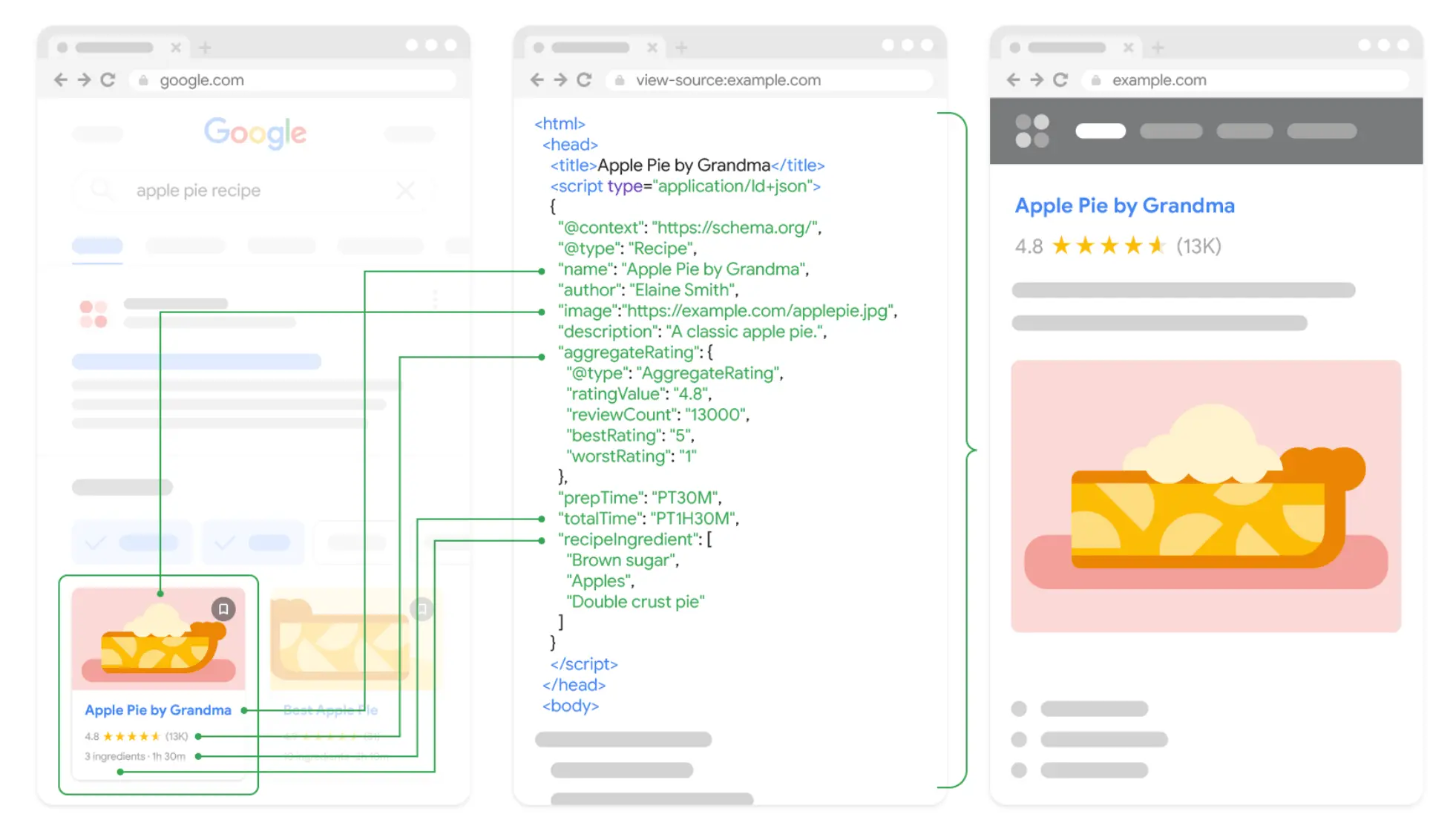
Structured data gives search engines explicit information about what is on a page: what is a product, who wrote an article, where a business is located, and so on. It doesn’t replace good content, but it’s like a label on top of the content, which makes parsing and classification easier.
Common schema types are enough for most sites: Organization to describe your company, BreadcrumbList to show the hierarchy, Article or BlogPosting for content, Product and Offer for ecommerce, LocalBusiness for local entities, and FAQPage where you genuinely have Q&A content. The key is accuracy, not stuffing every page with every type.
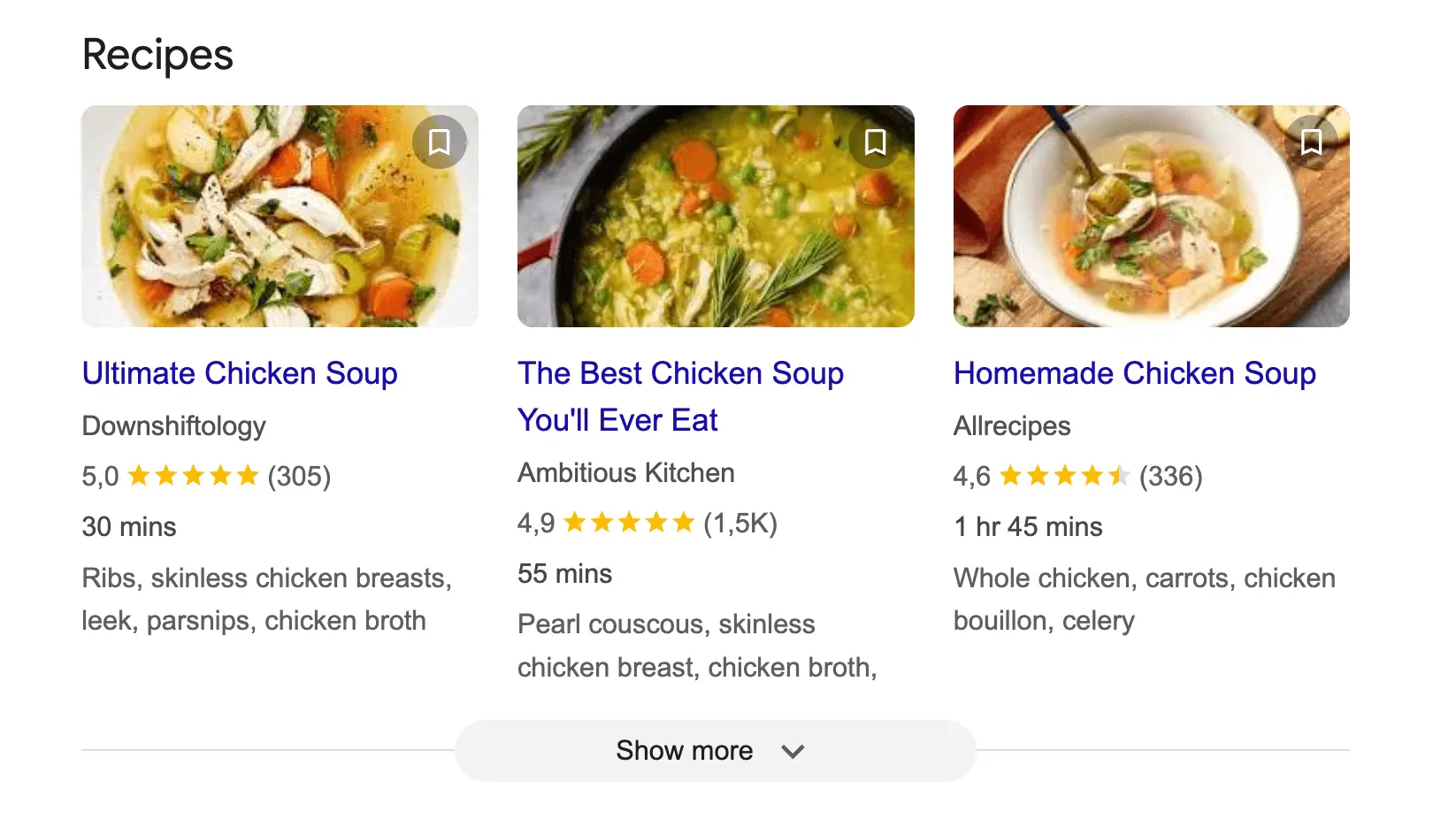
Structured data also ties into rich results, such as reviews, FAQ dropdowns, and product details in search. These enhancements are not guaranteed, but correct schema is usually a prerequisite. From a content marketer’s view, adding and maintaining schema on key templates is one of the highest-ROI technical tasks you can advocate for.
On-page SEO: Does each page clearly answer a specific intent?
On-page SEO is where content, design, and HTML meet. It’s how you choose topics, structure pages, and use elements like titles and headings so that both users and search engines can tell what a page is about and why it exists. Most of this work sits directly in a content marketer’s remit.
Keyword and topic research basics
Modern keyword research is really topic research. You are looking for clusters of related queries that share an intent, not single phrases to repeat a certain number of times. That might mean grouping ‘what is X,’ ‘X meaning,’ and ‘X explained’ into one piece, rather than three thin articles.
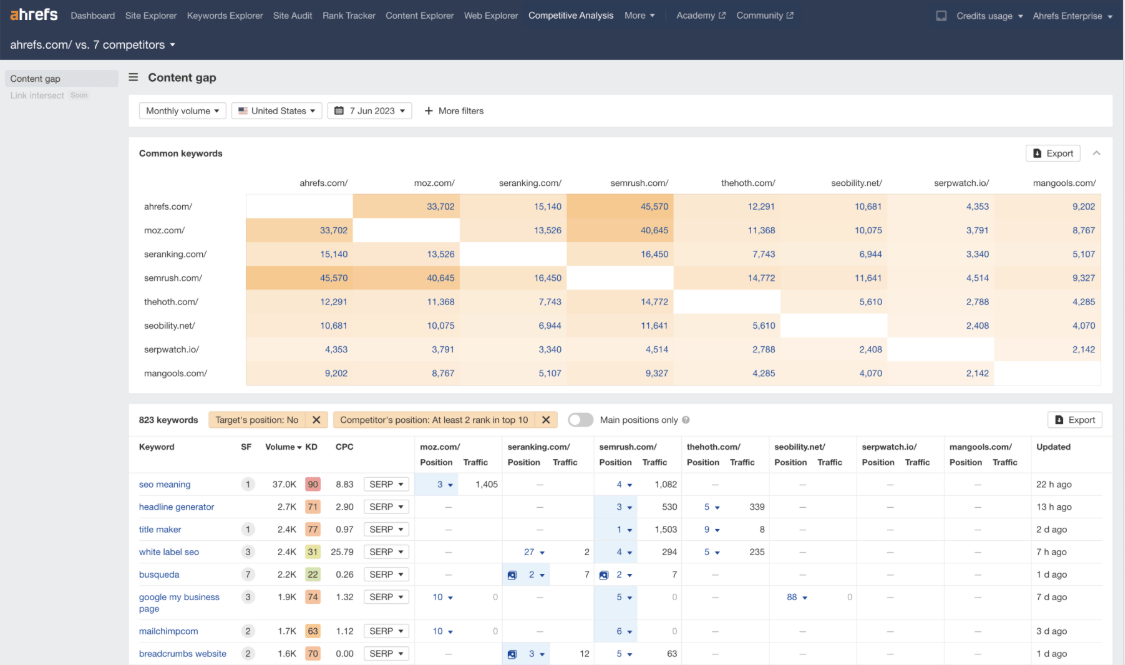
Head terms, mid-tail, and long-tail queries all have a role. Head terms are broad and high volume but hard to win; long-tail queries are more specific and often show clearer intent. A healthy content plan tends to aim a few strong assets at broader terms and fill in many more pages around the detailed questions users ask.
The filter for which topics to cover is your business model. Not every keyword your audience searches for belongs on your site. You pick those that relate your products, services, or expertise so that ranking for them can actually have a performance outcome.
Search intent and content types
Search intent is what the user hopes to achieve with a query: learn something, go somewhere, compare options, or complete a transaction. This isn’t a guess, you look at current results for the query and see what types of pages Google is already favoring. That ‘SERP reading’ tells you whether to build an explainer, a comparison, or a product page.
- Informational intent is formats like how-to guides, definitions, and deep articles.
- Commercial intent often wants comparisons, use cases, and ‘best X for Y’ content.
- Transactional intent fits product and category pages with clear pricing and calls to action.
- Navigational intent is best served by your homepage or a core hub page.
If you ignore intent and push the wrong format, you make your life harder. A sales page will struggle to rank for a query where the top results are all neutral explainers. On-page SEO is about aligning with what users clearly want first, then differentiating the content within that expectation.
Page structure and content quality
Good page structure helps scanning and indexing. A single H1 that matches the main topic, followed by H2s and H3s that break the content into logical sections, gives search engines and readers a clear outline. It also makes it easier for you to see where the page is thin or repetitive.
Short paragraphs, intentional subheadings, tables, and lists help users pick out what they need without reading every word. The goal is not to shorten content at all costs, but to make every section clearly tied to a question or task.
Quality comes down to depth, accuracy, originality, and date. That means adding complete details, examples, and references, not just rephrasing what is already ranking. Putting your own perspective on it. It also means revisiting important pages as products, pricing, and best practices change, instead of letting them age.
HTML elements
Title tags are still one of the strongest on-page signals. They should summarize the topic in plain language, include the main keyword naturally, and give users a reason to click. Stuffing titles with variations or brand terms rarely helps and often impacts negatively.
Meta descriptions do not directly drive rankings, but they affect click behavior. Clear, benefit-driven descriptions that match the page and the query can increase click-through rate.
URLs, image alt text, and filenames are additional signals. Clean, readable slugs that relate to the topic, alt text that describes the image and context, and optimized image sizes all help search engines interpret and serve your content correctly. They also make it easier to maintain the site over time.
Internal linking and context
Internal links are your main tool for showing which pages are most important and how they relate to each other. Descriptive anchor text tells both users and search engines what they should expect when they click, which builds topical relevance.

Topic clusters use internal linking as a strategy. A pillar page gives a top-level overview, while supporting articles cover subtopics in depth and link back to the pillar. This gives crawlers a clear map of the topic and gives users a path to go deeper without leaving your site.
You also need to balance navigational links and contextual links in the body. Navigation and footers keep people oriented, but links inside paragraphs and sections carry more topical weight. On-page SEO is partly about making those contextual links natural and useful rather than forced.
Off-page SEO: Why should search engines trust and recommend you?
Off-page SEO is about the factors outside of your site that influence how trustworthy and authoritative it looks. Links, mentions, and brand cues help search engines decide whether to treat your content as trustworthy and to recommend your page/site. This is where PR, partnerships, and product strength start to intersect with SEO.
Links as authority signals
A backlink is a link from another site to one of your pages. Search engines treat high-quality backlinks as trust, especially when they come from relevant, reputable domains. A single link from a strong site is more impactful than low-value directories or spammy blogs.
Quality beats quantity almost every time. Links from sites with aligned audiences, editorial standards, and organic traffic send a stronger signal. Patterns are important too: a natural profile has a mix of sources, anchor texts, and linked pages.
Manipulative link patterns, like buying links, link schemes, or running private blog networks, still work in some cases but carry risk. When they are detected, they can devalue your links or trigger manual actions that drag down performance across the site.
Earning links and mentions
The most reliable way to attract good links is to publish content people want to reference. That might be original data, industry benchmarks, useful tools, clear explainers, or strong visuals. Content that helps someone else make a point or explain a concept has a higher chance of being linked to.
Digital PR and outreach increase this. You can pitch stories, data, and guides to journalists, newsletter writers, podcasters, and other site owners. The goal is not ‘get any link from anyone,’ but place your content where relevant audiences will see and use it.
Not all mentions include a link, but they are still valuable. Brand references in major publications and social spaces can still signal relevance and authority indirectly. Over time, these mentions can lead to links, especially if your site is easy to find and your content is worth pointing to.
Brand signals and E-E-A-T
Google talks about experience, expertise, authoritativeness, and trustworthiness (E-E-A-T) as qualities it looks for when evaluating content, especially on topics that affect health, money, or safety. E-E-A-T, is something you build and earn over time, and through how you present your brand and authors.

Clear author pages, detailed About content, and clear contact and company information all help. They show there are real people behind the content. This reduces the sense that the site is a faceless content farm.
Your business name, address, and descriptions should line up across your site, social profiles, business listings, and major directories. When search engines see alignment about who you are and what you do, they can more confidently connect mentions and links back to the right entity.
Local SEO: How do nearby users discover you?
Local SEO is for showing up when people search with a location in mind, such as ‘near me’ queries or city searches. It’s classic SEO with business listings, maps, and review platforms. Any business that serves customers in a specific geographic area needs at least a basic local SEO setup.
Local search behavior
Local intent shows up in queries like ‘near me,’ ‘in [city],’ and ‘[service] + [area].’ Even when users don’t type the location, search engines often pull it from the device and show local suggestions. That means your visibility can change from street to street.
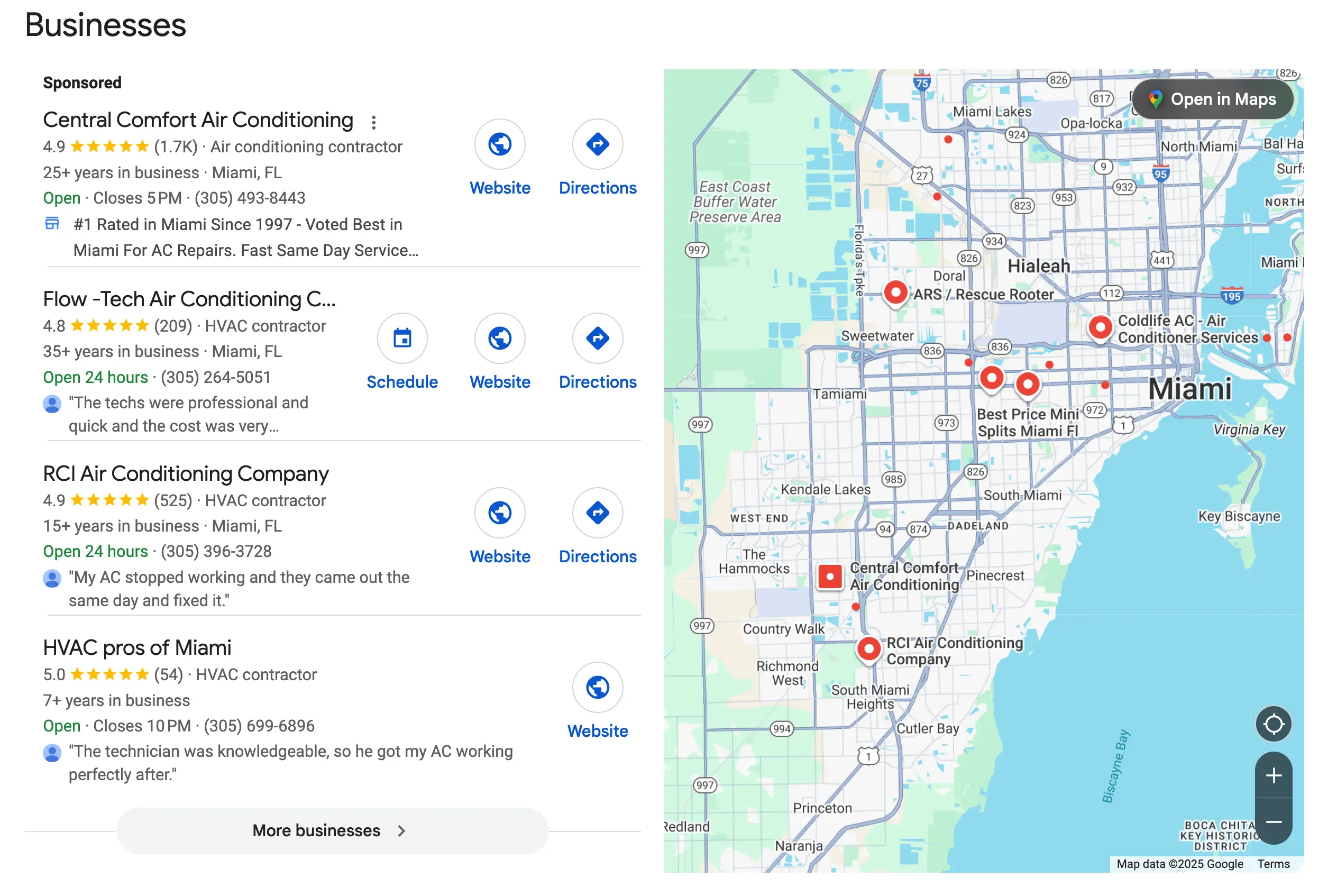
Search results for local intent are usually split into maps and organic sections. The map pack and Google Maps listings highlight a small number of businesses with key details like ratings, hours, and directions. Below that, organic results show local landing pages, directories, and review sites.
Local SEO has the goal of getting you into both areas where it makes sense. Being in the map pack helps with quick decisions and on-the-go searches, while organic rankings for local pages help with more considered research.
Google Business Profile and core listings
Your Google Business Profile (GBP) is the foundation of your local presence in Google’s ecosystem. It needs accurate name, address, phone number, URL, and business category. Photos, opening hours, and attributes (such as accessibility or service options) all help users decide whether to visit or contact you.

Keeping GBP updated is not optional. Changes in hours, services, or locations should be updated quickly to avoid confusing customers. Posts, Q&A, and messages can also give you extra ways to communicate promotions, updates, or important information.
Your NAP (Name – Address – Phone Number) details should match on major platforms like Apple Maps, Bing Places, Yelp, and directories. Conflicting information makes it harder for search engines to trust which details are correct.
Local signals on your site
Your own site should back up what your listings say. Dedicated location pages or service-area pages give search engines a clear place to learn about what you do in each city or region. These pages should include specific details, not just a city name stuffed into generic text.
Embedding maps, listing local contact information, and mentioning key landmarks or neighborhoods can help users. It also makes the content feel relevant to the area, not like a template spun for every city in the country.
Local business schema ties this together by marking up business details. When used correctly, it helps search engines match your domain, GBP, and other citations to the same entity.
Reviews and local reputation
Reviews are a major sign of trust in local SEO. Quantity, recency, and average rating all influence how likely people are to click and convert. They may also play a role in how you appear in map results compared with similar competitors.
Replying to reviews, good and bad, shows you are active and responsive. Thoughtful responses to criticism can mitigate damage and sometimes even turn a negative experience around. Ignoring reviews sends the opposite signal.
You should have a simple, repeatable process for asking satisfied customers to leave reviews on key platforms. This does not mean bribing or gating feedback. It means making it easy for happy customers to share their experience where future searchers will see it.
Where Does AI Search (GEO/AEO) Fit In?
GEO and AEO are relatively new terms that focus on AI and support SEO rather than replacing it. They describe how you adapt your content for LLMs and answer engine search experiences, where systems generate a summary and only choose the sources. The core site quality is the same as SEO, but you pay extra attention to content, clear entities, and how AI retrieves and cites pages.
What is GEO and AEO?
Generative Engine Optimization (GEO) is the process of optimizing content so it is more likely to be selected and cited in generative answers. It’s going from only ‘how do I rank this page’ to ‘how do I make sure this paragraph or section can be reused as part of an AI summary.’
Answer Engine Optimization (AEO) is about writing and structuring content so that answer engines can pull a short, direct response from your page. It started as a way to describe optimization for answer boxes and featured snippets. As AI search has grown, people now use AEO to cover both classic answer boxes and newer answer-style experiences.
Neither GEO nor AEO is an official term. They are practitioner terms for patterns that sit on top of normal SEO: same requirements for crawlability and trust, but with extra constraints on how extractable and self-contained your content is.
How does SEO compare to GEO and AEO?
SEO, GEO, and AEO all depend on the same technical and content basics, but they aim at different search areas. SEO is classic organic rankings, GEO focuses on being retrieved and cited in generative answers, and AEO focuses on being chosen as a direct answer in answer boxes and similar features.
All three rely on crawlable, indexable pages. If search engines and AI systems cannot reliably reach and store your content, it is not considered for rankings. Technical issues that block SEO also block GEO and AEO by cutting you out at the discovery stage.
They all need content that matches real search intent. Whether the output is a link, an AI overview, or a conversation in ChatGPT, the system is still trying to answer a user’s question or help them complete a task. Pages that clearly map to specific intents and cover them well are candidates across all three areas.
Authority and clear ownership are also important across each area. Links, brand signals, and clear information about who you are and what you do help ranking systems, retrieval systems, and answer engines trust your content. If you look unreliable, you are less likely to rank, less likely to be retrieved, and less likely to be cited.
What SEO Best Practices Should You Follow?
The most reliable SEO practices are simple: understand what users want, keep your site technically clean, publish content that helps, and earn trust from other sites and brands. Avoid shortcuts that try to trick ranking systems or bad SEO practices. Here’s a breakdown of some of the best SEO practices:
Strategy and planning best practices
Start by linking SEO to clear business outcomes. Decide which products, services, or segments matter most, then map topics and queries to those areas. This keeps keyword and content ideas from drifting into subjects that will never produce leads, signups, or revenue for you.
Balance net-new content with improving what you already have. Many sites get more upside from reworking existing articles and key pages than from publishing yet another post on a similar theme. A simple rule of thumb: for each new piece you publish, update or consolidate at least one older piece that still has potential.
Be deliberate. You might decide to prioritize informational content to support early research, product and category pages for high-intent terms, or local pages if you run in specific regions. You don’t need to cover every angle at once. It is better to do a few types well than to spread thinly across everything.
Technical best practices
Keep your site structure as simple as you can. Group related pages into clear sections, avoid deep nesting in URLs, and make sure important pages are reachable from navigation and internal links. If you need a complex information architecture, document it so everyone on the team understands where new content should live.
Performance and mobile usability are ongoing tasks. Periodically check how fast key templates load on common devices and connections, and address any slow-loading pages. Make sure layouts work on smaller screens, forms are easy to use on touch devices, and core content appears quickly without waiting on extras.
Canonical tags, redirects, and indexing should follow clear rules. Decide which page types can be indexed, how you handle moved or merged content, and how you treat variations created by filters or parameters. Apply basic schema on important templates where it is relevant and accurate, rather than trying to mark up everything.
On-page and content best practices
Always start with search intent, then choose the format. For each target query or topic, ask what the searcher is trying to do and which kind of page best matches that: a guide, a checklist, a product page, a comparison, a how-to, or something else. Then worry about keywords and headings.
Titles and headings should describe the content in plain language. Put the main topic early in the title, avoid keyword stuffing, and write H1s and H2s that explain what each section covers. This helps both readers and search engines understand the structure at a glance.
Write content that is concise but complete. Cut the fluff, avoid repeating the same point in multiple ways, and focus on specific questions and tasks. Use examples, steps, and clear language instead of vague claims. Include calls to action that match the page’s job, whether that is reading something next, subscribing, booking a demo, or buying.
Authority and promotion best practices
Plan and create assets that other people would cite or recommend. That could be original research, infographics, benchmarks, tools, or explanations of complex topics. If a piece wouldn’t be useful to quote or reference, it is unlikely to attract strong links on its own.
Don’t assume publish and wait is enough. Promote through channels you already have: email lists, social accounts, communities, and partnerships. Targeted outreach to sites and creators can help the right people find and link to your content or mention your brand.
Stay away from schemes that try to buy or fabricate authority. Paid link networks, link exchanges at scale, and low-quality directories usually create more risk than value. When in doubt, ask whether a link would still be useful if search engines did not exist. If the answer is no, it is probably not a good long-term tactic.
Maintenance and iteration
Regularly review your top landing pages to make sure facts, screenshots, and examples are current. Update, expand, or prune sections that have become outdated. This kind of upkeep often gets fast wins because you are working on URLs that already have some visibility.
Watch for overlapping content that competes with itself. When multiple pages chase the same query with similar angles, consider merging them into a single, stronger resource and redirecting the weaker ones.
New features, themes, or scripts can unintentionally slow pages down, break layouts, or create duplicate URL patterns. A lightweight recurring check on crawl status, index coverage, and core templates helps you catch these issues before they drag down performance.
Measurement and feedback
Measure SEO on outcomes first, then on leading indicators. Track organic conversions, assisted conversions, and other actions that come from search. Support that with metrics like non-brand organic traffic, rankings for key queries, and click-through rates from search results.
Look at performance by page and by topic, not just by keyword. Identify which pieces consistently bring in qualified traffic and which ones rarely contribute. Use that insight to decide what to update, what to expand into clusters, and what to retire or consolidate.
Let data guide your next moves. If certain formats, intents, or content types consistently perform better, put more effort there. Adjust internal links to push more traffic toward high-value pages. Use what you learn to refine briefs, templates, and your publishing schedule over time.
SEO FAQ
SEO in digital marketing is the process of improving your website so search engines can understand it, rank it, and send you organic traffic for relevant searches. It covers technical setup, on-page content, and authority signals like links and brand mentions.
SEO generates organic traffic by helping your pages appear near the top of search results for keywords your audience actually uses. When search engines see your content as relevant, high quality, and trustworthy, they show it more often, which leads to more unpaid clicks over time.
SEO usually takes a few months to show meaningful results because search engines need time to crawl new pages, re-evaluate existing ones, and compare your site to competitors. You can often see early signals in impressions and rankings within weeks, but stable organic traffic growth takes longer.
SEO focuses on earning visibility in organic search results, while SEM and PPC focus on paying for ad placements in search. With PPC you pay for each click, but with SEO you invest in content and technical work that can keep bringing in traffic without a direct per-click cost.
Small businesses benefit from SEO because local and problem-focused searches often decide which provider people contact first. Even basic SEO, like a Google Business Profile, clear service pages, and a technically healthy site, can make a local business easier to find than nearby competitors.
The main types of SEO are technical SEO, on-page SEO, off-page SEO, and local SEO. Technical SEO covers crawlability and performance, on-page SEO covers content and HTML, off-page SEO covers links and authority, and local SEO covers location-based visibility in maps and local results.
Technical SEO focuses on how your site works behind the scenes, including site structure, crawling, indexing, speed, mobile readiness, and structured data. On-page SEO focuses on what is on each page, including topics, keywords, headings, copy, internal links, and calls to action.
GEO (Generative Engine Optimization) is the practice of structuring SEO content so it is more likely to be retrieved and cited by generative AI search systems and AI overviews. GEO emphasizes clear explanations, consistent entities, and quote-ready sections that AI can safely reuse in summaries.
AEO (Answer Engine Optimization) is the practice of optimizing SEO content so it can be used as a direct answer in features like featured snippets, FAQ rich results, and other answer boxes. AEO relies on question-based headings and short, explicit answer paragraphs that search engines can extract.
AI search does not make SEO obsolete; it changes where and how SEO content is reused. You still need strong technical SEO and on-page SEO so AI and search engines can crawl, understand, and trust your pages, then potentially cite them in generative answers or answer boxes.
You should update SEO content whenever facts, examples, or products change, and you should review key pages at least a few times a year. Regular updates keep pages accurate, improve quality, and signal to search engines that the content is maintained, which supports ongoing rankings.
You know SEO is working when organic search traffic, rankings for target queries, and conversions from organic sessions all improve over time. Tools like Google Search Console and analytics platforms help you see which queries and pages are growing and which are not moving.
You can handle basic SEO yourself if you are willing to learn how search intent, content, and technical setup work. An agency or specialist becomes more useful when you have a large site, complex technical issues, or aggressive growth targets that need deeper SEO expertise.